How Domain Costs Break Down
The price of registering a domain name doesn’t come from a single source. Instead, multiple parties contribute different fees to arrive at the final cost you pay. Each layer has its own economic incentive. Understanding how they stack explains why prices vary widely, even for identical extensions.
Registry Fees Set the Foundation
Every domain extension has an organization behind it called a registry. The registry operates the central infrastructure for a specific top-level domain (TLD) like .com or .org. It sets the wholesale price that every ICANN-accredited registrar must pay. These registry fees are fixed costs that apply universally; if you register a .com domain through any registrar, that registrar pays the same base fee to the registry.
ICANN adds a transaction fee per domain registration, renewal, or transfer once a TLD reaches a certain volume threshold, along with a fixed quarterly fee per registry. These coordination costs are embedded in the wholesale price and apply equally to all registrars. Neither the registry nor ICANN costs vary between registrars; they are the same floor price everywhere.
Registrar Markup Drives Price Variation
After paying the registry’s wholesale rate, registrars add markup to cover operational expenses like customer support staff, payment processing infrastructure, server costs, and profit margin. This markup varies dramatically between registrars. It often differs between registration and renewal transactions for the same domain. Two registrars may pay the same wholesale price to the registry but charge you different amounts at checkout; their markup strategies differ.
Some registrars use aggressive first-year promotions to acquire new customers, then recoup profit through higher renewal rates. Others maintain consistent pricing across registration and renewal but compete on service quality or bundled features rather than just price. The same .com domain can cost different amounts at different registrars, not because registry costs differ, but because registrars use different business models. When evaluating registrars, always verify both the initial registration and renewal rate before committing.

Domain Name Registration
Each and every domain name comes with all you need to get online.
- Domain Forwarding and Masking: Direct any domain name you own to your website. Anyone who types that domain name into their browser is taken directly to your website.
- Domain Locking: Domain locking prevents accidental or intentional transfers of domain ownership and stops anyone from redirecting your nameservers.
- Total DNS Control: Manage your domain nameserver (DNS) records and set your email, FTP, sub-domains and website location all from one control panel.
- Change of Registration: Assign your domain name to someone else or change the contacts for your domain online anytime.
- Status Alerts: Monitor the status of your domain and get instant alerts if there's been a change.
- Auto Renew Protection: No need to watch expiration dates to make sure you renew on time! Auto renew keeps your domains, hosting, website builders, and other products in your name and under your control.
Domain Disclaimers:
- Special savings apply only to first year of registration. You must purchase entire section to qualify for special savings.
- The final price may differ because of additional sales, fees, and promotions.
- Products will automatically renew until cancelled. You may turn off the auto-renewal feature by visiting your account.
- Change of registration may require a fee for certain domains.
TLD Selection & Extension Differences
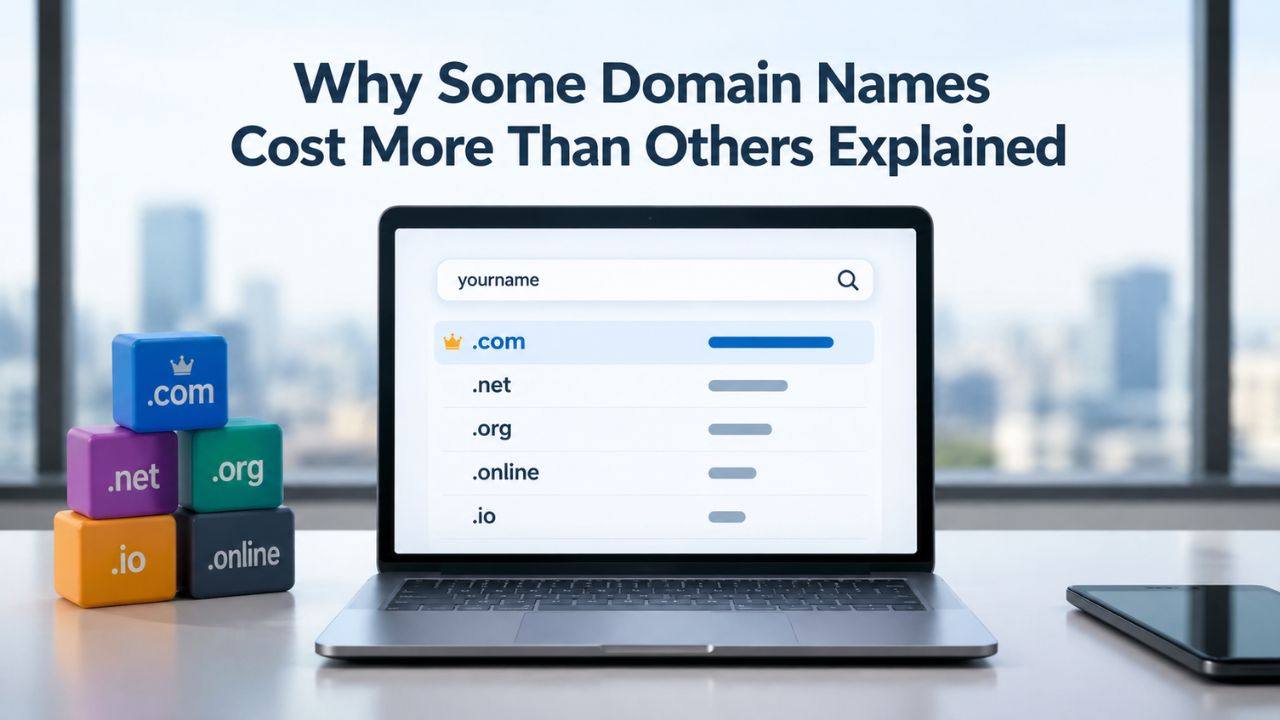
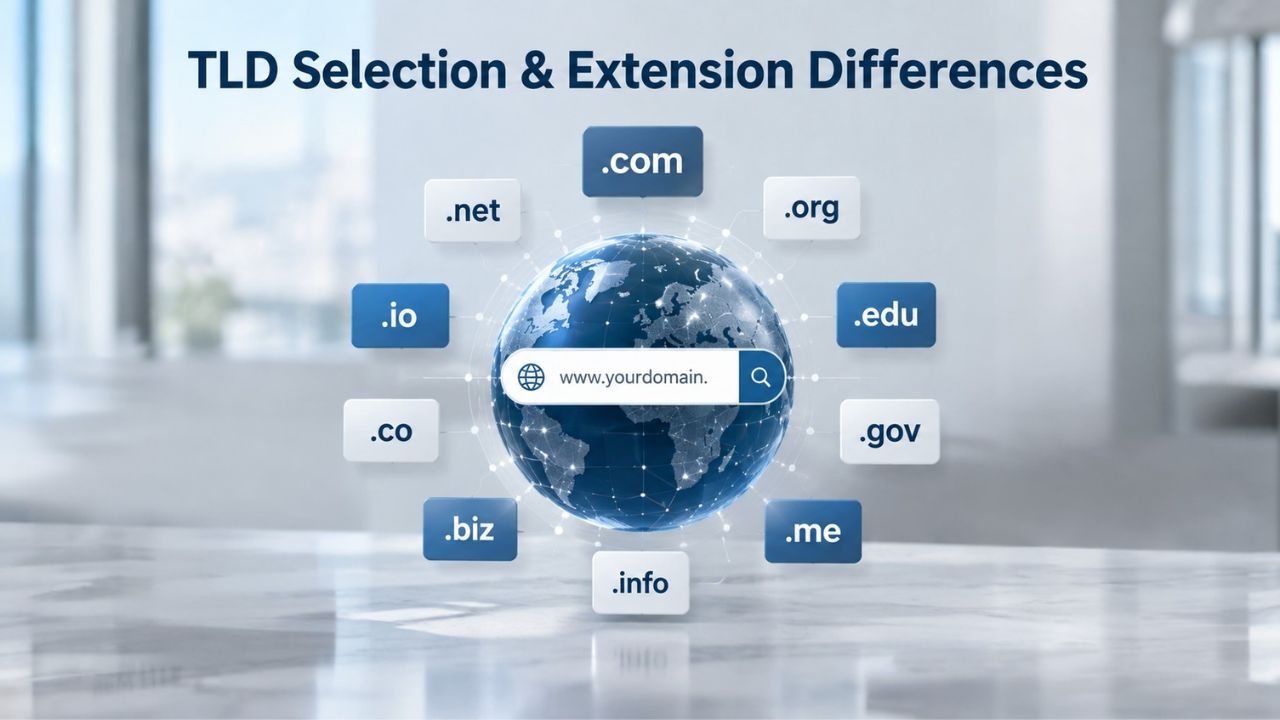
Not all domain extensions cost the same. The choice of TLD, .com versus .io versus a newer extension like .tech, is one of the most significant factors determining what you’ll pay. This difference stems directly from how registries set their wholesale costs and what they charge registrars to operate each extension.
Traditional TLDs Command Economy-of-Scale Pricing
Traditional TLDs like .com, .net, and .org have economies of scale: large user bases spread infrastructure costs across millions of registrations. Registries managing these established extensions have optimized their operations over decades, reducing per-domain overhead. Consequently, registrars can secure these extensions at lower wholesale rates, which translates to lower retail pricing. Standard .com and .org registrations are among the most accessible domain purchases in terms of cost structure, though registrar markup varies.
Newer extensions within the traditional family, like .cc and .name, often fall in a similar pricing band but may have different registry fee structures due to smaller registration bases or different registry operators. Country-code TLDs like .net and .org follow similar economics to .com, with slightly lower demand and slight price advantages because they remain as natural second choices when .com is unavailable. The structural difference is minimal; the registry sets a different wholesale price, which registrars pass along with their own markup.
Global Country-Code TLDs & Premium Positioning
Some country-code TLDs have been marketed globally as branded extensions for specific industries. For example, .io (assigned to the British Indian Ocean Territory) and .ai (assigned to Anguilla) have been branded as tech and artificial-intelligence TLDs, respectively; registries capitalized on this demand by setting substantially higher base prices. When a registry positions a TLD as a premium brand, it raises the wholesale fee, and that cost flows through to every registrar and ultimately to you at checkout.
The higher cost for .io or .ai reflects not greater technical value, but deliberate registry positioning to build brand prestige and capture higher margins. Registrars selling these extensions compete on markup so that prices may vary between providers, but they all start from a higher base cost than traditional TLDs. If you want a memorable tech-focused brand, certain newer extensions come with a higher price tag as part of their market positioning. Understanding this distinction helps you budget for the domain extension that aligns with your branding goals.
TLD Pricing Categories & Cost Drivers
| TLD Category | Typical Positioning | Primary Cost Driver | Registry Strategy |
|---|---|---|---|
| Traditional (.com, .net, .org) | Universal business standard | Economy of scale; millions of registrations | Optimize for volume and stability |
| Country-Code Global (.io, .ai) | Tech and startup branding | Global demand exceeds registrant base; premium positioning | Capitalize on secondary market appeal |
| New gTLDs (.tech, .store, .site) | Industry-specific branding | Registry adoption strategy varies | Aggressive promotion or niche positioning |
| Specialized (.edu, .gov, restricted) | Eligibility-limited use | Restricted access; specialized support | Maintain category integrity |
| High-Cost ccTLDs (.pn, .vi) | Regional or niche use | Small registrant base; high support costs | Maintain registry viability |
| Registry-Designated Premium | Scarcity-driven selection | Keyword demand and predictive value | Reserve high-demand names at launch |
The Registrar’s Role in Pricing
Registrars sit at the retail end of the domain supply chain, buying from registries at wholesale rates and selling directly to you. Their pricing strategies- how they mark up the wholesale cost, when they offer promotions, and whether they bundle add-ons- create the variation you see when comparing the same domain across different registrars.
First-Year Promotions vs. Renewal Rates
Registrars commonly use low first-year promotion pricing to acquire customers but offset this with higher renewal rates. This pricing strategy works because many domain owners, once invested in building around a domain, are reluctant to transfer to a competitor registrar to save money on renewal. Registrars betting on this customer inertia can safely raise renewal pricing well above competitors’ rates; they lose some price-sensitive customers who transfer away, but retain enough customers paying inflated renewals to generate substantial profit.
The practice becomes most problematic when registrars emphasize low first-year rates in marketing materials while burying renewal pricing in fine print or omitting it entirely. You discover the true long-term cost only when you receive your first renewal notice, at which point you’ve already built your online presence around the domain and have significant switching costs. Always request renewal rates before registering; total cost of ownership over several years matters far more than the introductory year’s price.
Service Bundling & Operational Overhead
Registrars have varying operational expenses including support staff, payment processing, infrastructure, and sometimes additional service bundles like hosting, email, or security tools. A registrar offering 24/7 multilingual support will incur higher costs than one providing email-only support; it must recover those costs through pricing or bundled services. Profit per domain registration varies by registrar; some focus on higher margins to earn more per registration, while others use upselling or product add-ons to cover expenses and fees.
Some registrars include domain privacy, DNS management, and security features for free, building these costs into their overall service model. Others sell these as separate add-ons, which may look cheaper upfront but cost more if you want full protection. Neither approach is inherently better; it depends on whether you need those services. When comparing registrar offers, think of the total value package, not just the domain registration line item.
Understanding Premium Domains
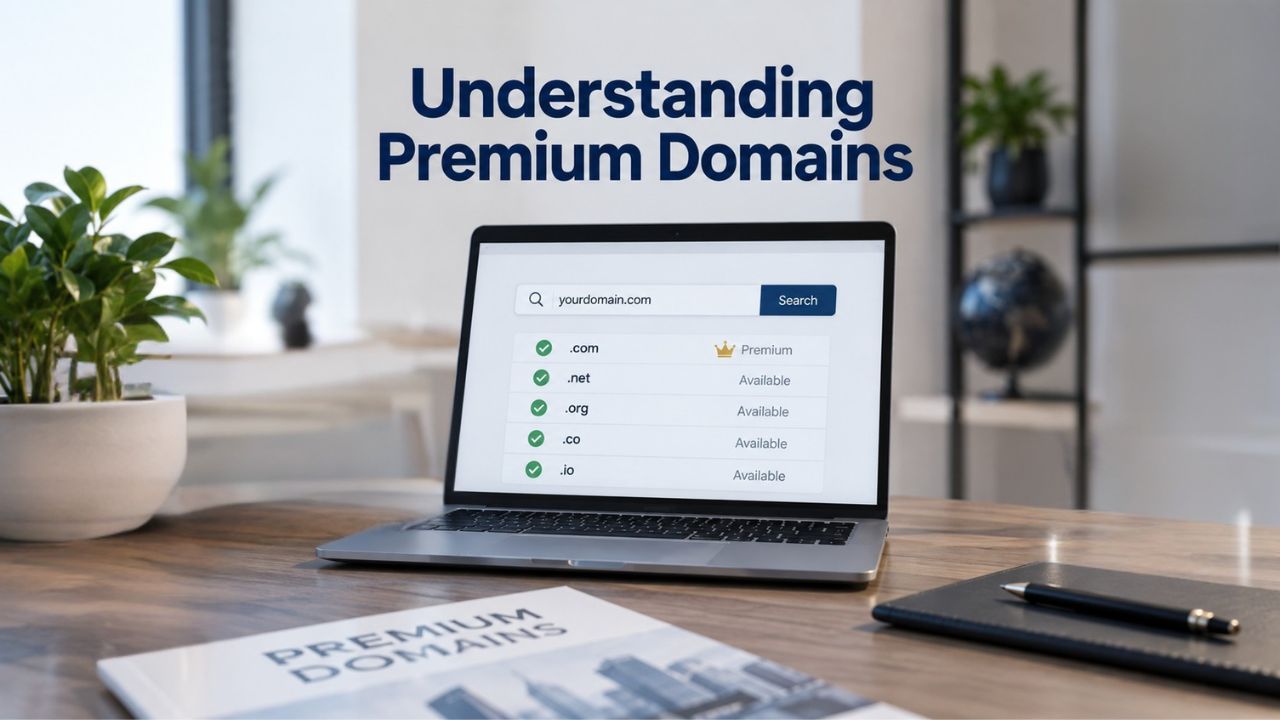
Beyond the registry, registrar, and extension-level costs, another entire pricing category exists: premium domains. These are names so valuable that they command significantly higher costs than standard registration, sometimes many times higher. Premium pricing is driven almost entirely by scarcity and market demand, not operational cost differences.
Registry-Designated Premium Domains
Registries may classify certain unregistered names as premium domains at the time of TLD launch or during reserved-names phases, pricing them significantly higher than standard registrations because they anticipate strong demand for these short, memorable, or keyword-rich names. For example, when the .shop TLD launched, the registry designated names like “coffee.shop” or “flower.shop” as premium and priced them substantially higher than standard registrations. Registry-designated premium domains often have permanently elevated renewal costs, meaning you pay the premium price not just once but every year.
The registry’s premium pricing isn’t arbitrary; it’s based on analysis of keyword search volume, industry relevance, and predicted buyer competition. The registry will reserve a generic keyword that thousands of businesses might target at a higher wholesale price. When you see a premium domain at checkout, you’re seeing the registrar passing through the registry’s premium wholesale fee plus their standard markup. You have no negotiation room; the registry sets the price, and it’s identical across all registrars for that exact domain.
The Scarcity Foundation of Premium Pricing
Premium domain names cost more because market forces shape their value; when many businesses want the same word or phrase, value rises because availability is limited and demand concentrates around similar keywords. The fundamental reason is simple: scarcity drives premium domain pricing; there is only one exact match for a given domain name, and the supply of high-quality .com domains was effectively exhausted years ago. You cannot create a second copy of “insurance.com” or “tech.io”; that name exists in only one place.
As more businesses and individuals establish online presences, the pool of desirable domain names shrinks further. This structural scarcity is why shorter domain names command significantly higher values than longer ones. The valuation gap shows how brevity and memorability strongly influence a domain’s perceived value. A single letter or numeral difference in length can mean the difference between a moderately valued and an extremely high-value domain. This isn’t registry pricing; it’s market valuation driven by competitive bidding and perceived business value.
Aftermarket & Resale Markets
Once a domain is registered, it enters the primary market. But when an owner decides to sell, that domain enters the secondary market, the aftermarket, where pricing is entirely decoupled from registry costs and driven by negotiation, competitive bidding, and perceived business value.
How Aftermarket Pricing Works
Unlike the primary market, where registrars sell available domains at standard pricing, the aftermarket lets existing owners resell valuable domains, often at premium valuations. A domain owner who purchased “widgets.com” years ago and now wants to sell it doesn’t list it at the standard .com registration rate; they list it at a valuation reflecting its current market demand. At its core, the domain aftermarket is where domain owners sell domains they no longer need, or bought specifically for resale, to interested buyers; primary market registrars sell at standard pricing, while secondary markets list already-owned domains for resale, often because they carry brandable names, SEO value, or existing traffic.
Aftermarket valuations vary wildly based on the name’s specificity, the industry it serves, and how many potential buyers are currently searching for similar names. A generic term in a high-competition space (like “fitness.com”) will command much higher value than a niche or localized name. A large share of high-value domain sales comes from the aftermarket, where domains are traded after initial registration; pricing isn’t tied to fixed registration fees but shaped by market activity and negotiations between buyers and sellers. Some domains sell for substantial multiples; others for extraordinary sums if the keyword or brand appeal is universal.
Expired Domains & Investment Strategies
Expired domains are often scooped up quickly through drop-catching platforms or auction sites, appealing because many still carry valuable assets such as existing search traffic, backlinks from reputable sources, and strong keywords that make them ideal for SEO or resale. Domain investors monitor expiring domains, bid on those with strong metrics, and either use them for projects or flip them for profit. This practice, called domain flipping, is a legitimate investment strategy that further demonstrates how aftermarket pricing is completely independent of registry costs.
Niya Digital’ team has found that domain investors often focus on names with clean history, relevant keywords, and aged registration dates, as these factors compound to increase perceived business value over time. If you’re considering purchasing an aftermarket or expired domain, evaluate not just the name but its history, backlink profile, and relevance to your intended use. A domain with negative history can harm your brand; an aged domain with strong metrics might justify significant investment.
Ready to Register or Transfer Your Domain?
Finding the right domain starts with understanding what you’re paying for. Niya Digital simplifies the process by partnering with an ICANN-accredited registrar to provide transparent domain registration information, detailed renewal details upfront, and support when you need it. Whether you’re registering a new domain or transferring an existing one, explore your options and get clear answers on total value before committing.
Domain Age & Search Engine Value
One factor that dramatically increases a domain’s aftermarket value is its age. Older, continuously registered domains carry both technical and trust advantages that search engines and potential customers recognize, making them worth far more than their original registration cost.
How Search Engines Treat Domain Age
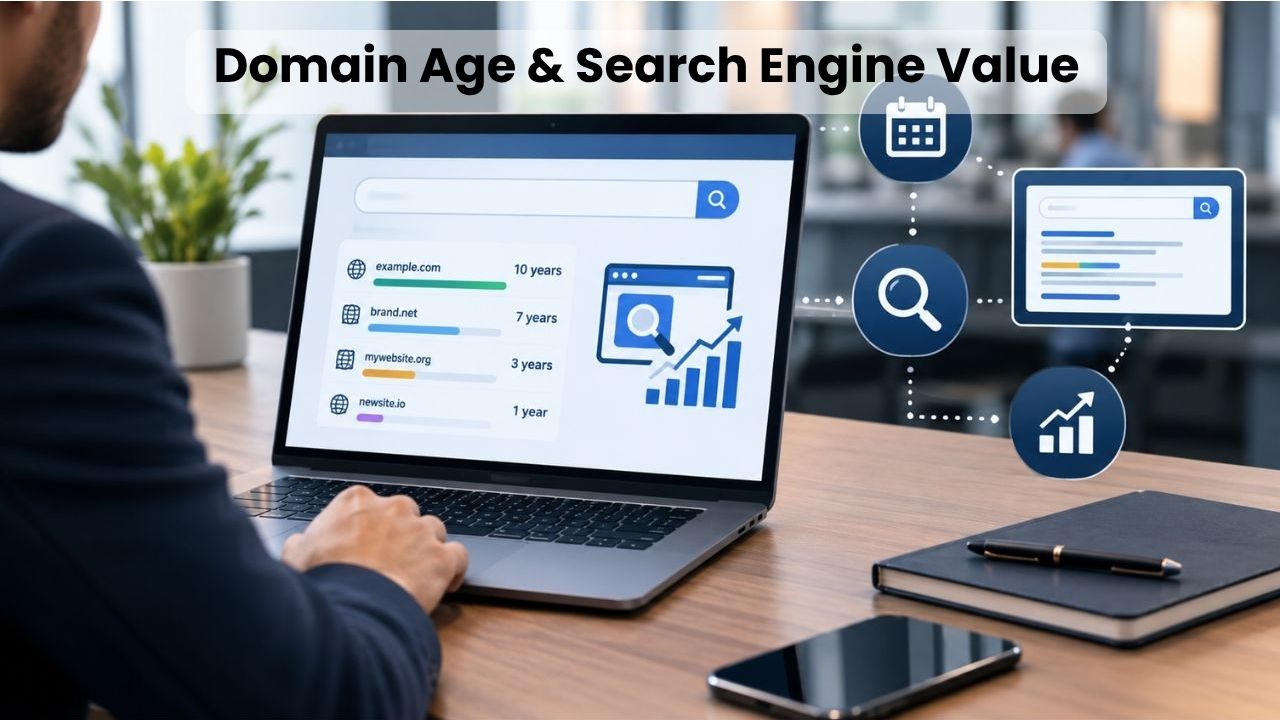
Older domains are often more valuable because they may already have established backlinks, indexed pages, and a track record of appearing in search results. While search engines don’t rank domains only based on age, they do favor websites with a long-standing presence and good history, which is why domain investors and startups often target expired or premium aged domains. An aged domain signals to search engines that the website has been around long enough to accumulate trust and relevance signals, giving it a head start over a brand-new domain in the same niche.
This advantage is especially pronounced in competitive industries like finance, legal services, and healthcare, where authority and longevity signal trust. Domain age is a silent value booster. At the same time, it should not be the only factor in your decision; it adds authority, search engine strength, and buyer confidence, which can significantly increase domain resale value. A 10-year-old domain with consistent content history and legitimate backlinks carries substantially more weight than a 6-month-old domain, even if the names are equally brandable. This explains why aged domains command premium aftermarket valuations and why investors specifically hunt for expired domains with strong histories.
Buyer Confidence & Brand Authority
Beyond technical search factors, an aged domain signals maturity and stability to potential customers and business partners. Domain names are inherently limited because each one is unique; once a name is registered, it cannot be created again in the same form, so supply is permanently fixed while demand can keep growing. When that domain has been in continuous use for years, prospective buyers view it as a proven digital asset. New domains require more marketing spend and patience to build trust; aged domains come with an implicit credential.
With these combined benefits, an expired domain can deliver search engine and traffic advantages that a brand-new domain cannot match, letting any lingering brand recognition drive user engagement and shorten your marketing ramp-up time. This is why a premium domain is a high-value domain name that’s already registered and listed for resale, often because it’s short, memorable, and contains popular keywords; examples include insurance.com or cars.com, which typically command significantly higher value due to their branding potential and likelihood of driving traffic. If you’re launching a competitive business, an aged domain with relevant history might command a high price. Still, it could accelerate customer acquisition and trust-building far beyond what a new registration offers.
Add-On Services That Affect Total Cost
Beyond the base domain registration, many registrars offer optional add-on services that increase your total annual cost of domain ownership. These services aren’t mandatory, but they add value for specific use cases, and their costs compound across multiple domains and years.
Domain Privacy & WHOIS Protection
When you register a domain name, ICANN requires you to record your contact information in a public database called WHOIS. Domain privacy protection (also called WHOIS privacy or ID protection) replaces your personal information in the WHOIS database with the registrar’s proxy information; instead of your name and home address showing up in a WHOIS lookup, searchers see the registrar’s privacy service details. This service protects you from spam, unsolicited contact, and targeted harassment based on your public domain registration data.
The cost of privacy protection varies by registrar; some include it for free, while others charge an annual fee per domain. The fee structure can significantly impact the total cost of ownership, especially when managing multiple domains. Some registrars include domain privacy for free when you purchase a domain, so you don’t need to pay separately for this service; for example, many modern registrars now offer this as a standard or free add-on with most domain registrations. Before choosing a registrar, verify whether privacy is free or charged, and whether the free version (if offered) continues at renewal or only for the first year.
Other Optional Add-Ons
Beyond privacy, registrars often sell additional services: email forwarding, DNS management tools, domain protection packages (two-step authentication, hold after expiration), SSL certificates, and security monitoring. While some registrars have shifted to free privacy, many still charge for services that cost them virtually nothing to provide. Similarly, some bundle DNS management and security features for free, while others charge per feature. These add-ons are not required to register or use a domain, but if you need them, the cumulative cost can rise significantly beyond the base registration.
When budgeting for domain ownership, list all add-on services you genuinely need- privacy, email, security monitoring- and request each registrar’s full pricing for the complete bundle. A registrar with a higher base price but free privacy and DNS management might cost less overall than one with aggressive first-year discounts but mandatory paid add-ons at renewal.
Common Domain Add-On Services & Total Cost Impact
| Add-On Service | Purpose | Availability | Cost Structure Impact | Recommendation |
|---|---|---|---|---|
| WHOIS Privacy | Protects the registrant’s personal contact information | Included free by some registrars; optional paid add-on at others | Free to an annual per-domain fee | Essential for public-facing brands; optional for personal domains |
| Email Forwarding | Redirects email sent to your domain to another mailbox | Usually included free or offered at low cost | Minimal per-domain cost | Useful for a branded email presence without full email hosting |
| DNS Management | Provides control over DNS records and routing | Increasingly bundled at no additional cost | Free or available as a premium management tier | Expected standard feature; compare DNS capabilities across registrars |
| Domain Lock | Prevents unauthorized domain transfers | Commonly included with all registrar accounts | Included at no extra charge | Keep enabled by default to reduce hijacking risk |
| Two-Factor Authentication | Adds an extra layer of account security | Standard feature at most modern registrars | Free | Enable immediately after registering or transferring a domain |
| SSL Certificates | Enables HTTPS encryption for websites | Bundled by some providers; sold separately by others | Ranges from free to significant per-certificate fees | Required for websites; free options are often available through hosting providers or automated certificate services |
Registration Period & Bulk Renewal Strategies
One pricing decision you control is how long to register your domain for upfront. You can register for 1 year or up to 10 years at a time, and longer-term pricing varies by registrar, creating opportunities to optimize total cost.
Multi-Year Registration & Bulk Discounts
Under ICANN agreements, you can renew a domain name for up to 10 years; maximum registration periods are capped at 10 years. Some registrars offer discounts or fixed rates for multi-year registrations, locking in your initial rate for 3, 5, or 10 years rather than re-registering annually. This strategy protects you in two ways: first, if your registrar raises renewal rates, you’ve locked in the original terms; second, you reduce the risk of forgetting renewal notices and accidentally letting your domain expire.
When you evaluate registrars, check first-year and renewal rates separately for all services, since promotional offers that skip certain fees may charge them at renewal. The multi-year lock-in works similarly; evaluate the total long-term commitment, not just the first-year cost. Choose a registrar based on realistic renewal terms and multi-year value, not just introductory pricing.
Avoiding Renewal Sticker Shock
Many domain owners experience renewal sticker shock because they didn’t check renewal terms before registering. The registrar you chose for a promotional first-year offer might charge substantially more at renewal, and by the time you receive that invoice, switching registrars involves a transfer process that feels risky or tedious. Registrars betting on this behavior can safely raise renewal rates above their competitors’ standard rates; they lose some price-sensitive customers who transfer away, but retain enough customers paying inflated renewals to generate substantial profit.
The solution is to research renewal terms upfront and plan accordingly. If a registrar’s renewal structure is significantly different from competitors’, evaluate whether to accept that cost or transfer when renewal arrives. Transfer is straightforward: request an authorization code from your current registrar, unlock the domain, and initiate the transfer at a new registrar (transfers are typically straightforward). If you plan to hold a domain long-term, this evaluation matters far more than saving money on the first year.
Renewal Cycles & Late-Payment Costs
Understanding what happens when your domain expires, and the increasingly expensive recovery options, helps you plan never to let that happen. ICANN policies govern renewal periods and grace windows, creating a structured but costly descent if you miss deadlines.
Grace Periods & Standard Renewal
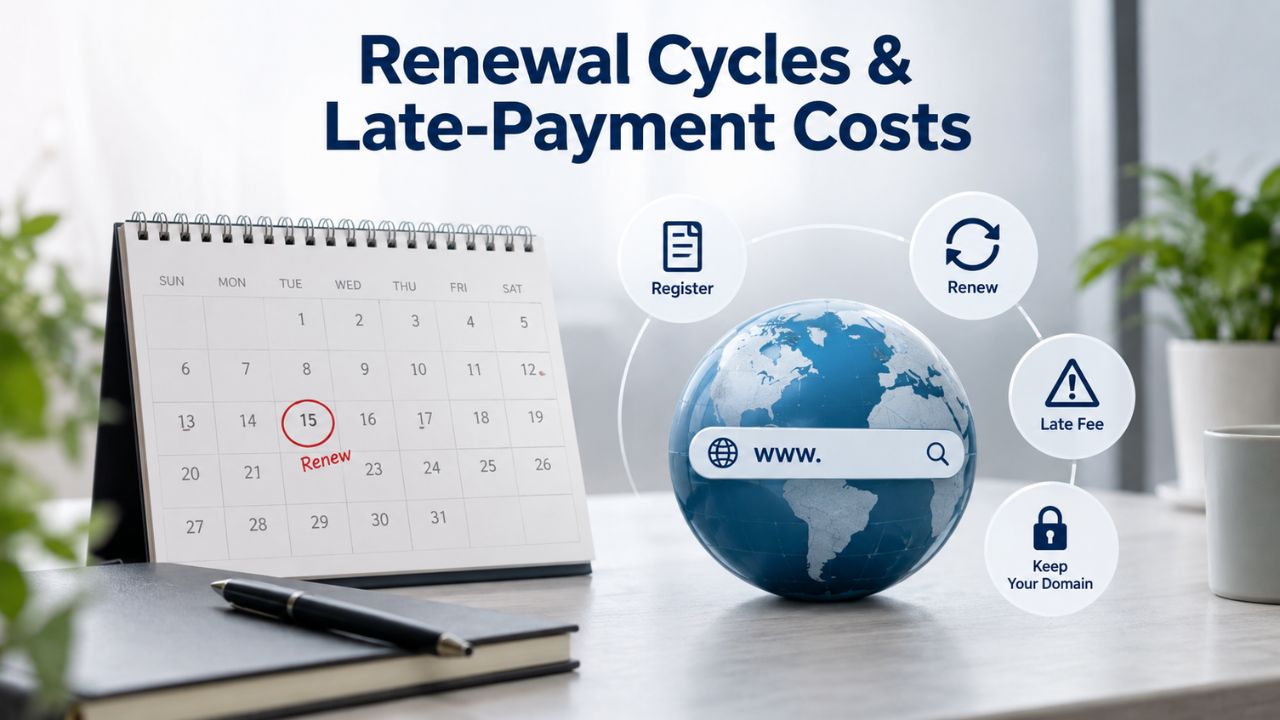
ICANN policy requires registrars to send you two renewal reminders, approximately one month and one week before expiration of a domain name; you should take immediate action when you receive these reminders to avoid the potential of losing your domain name. If you miss the expiration date, most registrars provide a renewal grace period of several days to weeks during which you may renew an expired domain name at standard renewal terms. During this window, your domain stops resolving, and your website goes down, but you can still renew it at normal terms.
The best practice is to enable automatic renewal so you never miss a deadline. However, automatic renewal requires keeping your payment method current with your registrar; if your credit card expires or is canceled, the auto-renewal fails silently, and you enter the grace period without realizing it. Check your registrar account every 6–12 months to confirm your payment method is up to date and auto-renewal is active. This simple step avoids all the complications of late recovery.
Redemption Grace Period & Escalating Recovery Costs
If you don’t renew during the grace period, the domain enters a redemption phase during which recovery is possible but increasingly expensive. During this recovery phase, the domain is removed from active service. However, it can still be restored, usually for a significantly higher cost set by the registrar, well above the normal renewal rate. Redemption recovery costs are deliberately high to incentivize timely renewal. After the redemption period expires, the registry deletes the domain and makes it available for anyone to register as a new domain.
The cost structure is deliberately escalating: standard renewal is most accessible, grace-period renewal costs the same, but your domain is inactive, redemption recovery is significantly more expensive, and after deletion, you’ve lost the domain entirely. This structure incentivizes timely renewal and penalizes procrastination. Many domain investors hunt for expired domains during the redemption period, hoping that after a domain is deleted and recycled into the available-names pool, they can register it at standard rates; until then, the original owner can recover it by paying the premium redemption cost. Understanding this timeline helps you plan and budget for domain maintenance.
Common Pricing Misconceptions
Several widely held beliefs about domain pricing are incorrect or misleading. Debunking these misconceptions helps you decide based on what matters, not marketing noise.
Myth: A Cheaper Domain Is Inferior
This is the most dangerous misconception. Domains are identical at the registry layer regardless of where you buy them; the difference is pricing structure and services, not technical quality. A .com domain registered through one registrar functions identically to the same domain registered through another. The registrar’s role is administrative, processing your registration, sending renewal notices, managing DNS records, not technical. Your domain’s functionality, security, and search-engine treatment depend on what you build on it, not on which registrar you chose.
Lower costs often reflect a promotional strategy or margin approach, not inferior service. A registrar offering different pricing is competing for your business through different strategies. What matters is the total value over the time you’ll hold the domain, your registrar’s support quality, and whether add-ons you need are included or charged separately. Choose a registrar based on the level of service you need, not just introductory cost.
Myth: Domain Privacy Hurts Search Performance
This misconception stems from confusion about how search engines evaluate websites. Privacy protection has zero impact on search performance; whether your domain’s registration details are publicly visible in WHOIS doesn’t affect how search engines rank your website. Search engines evaluate content quality, backlink authority, technical performance, and user engagement, not WHOIS privacy status. Domain privacy is purely a personal-data protection measure; it doesn’t help or harm SEO.
The confusion may arise because some registrars used to claim private registration had benefits, or because domain investors noticed that old, public registrations had accumulated backlinks (correlation, not causation; the old domain itself had value, not the public WHOIS record). Enable privacy if you value personal-data protection; disable it if you want your contact information visible. The choice affects only who can look up your registration data, not how search engines treat your website.
Myth: All Registrars Are Equally Reliable
While domains registered through any ICANN-accredited registrar are equally valid from a technical standpoint, registrar reliability does vary significantly in customer support, renewal reminders, uptime, and security practices. A registrar with limited support may respond to inquiries slowly; another might offer 24/7 phone support and proactive security monitoring. These differences affect your experience when you need help or encounter an issue, but they don’t affect the domain itself.
Choose a registrar based on the level of service you need, not just promotional cost. If you’re managing many domains and need sophisticated DNS tools and bulk management, a feature-rich registrar might justify different pricing structures. If you register one .com and never touch it again, a registrar with basic features works fine. The domain registration market offers options across the service spectrum; the “best” registrar is the one whose support level and feature set match your needs.
Start Your Domain Strategy Today
Understanding domain costs empowers you to make smarter decisions about registration, renewal, and long-term ownership. Niya Digital is here to guide you every step of the way, providing transparent information and expert support so you can focus on building your business online. Connect with our team to discuss your domain needs and find the right solution for your goals.
Frequently Asked Questions
What is the difference between a registry and a registrar?
A registry is the central organization that operates a specific top-level domain (TLD) and sets the wholesale rate that all registrars must pay. A registrar is an ICANN-accredited company that buys domains from the registry at wholesale rates and resells them to the public.
A reseller, like Niya Digital, partners with an ICANN-accredited registrar to provide domain services. Every domain you register passes through both layers: the registry sets the base cost, the registrar operates the customer relationship, and you receive the final service.
Why might my domain renewal terms differ from my registration terms?
Registrars often offer different promotional terms for first-time registrations versus renewals, reflecting different business strategies and competitive positioning. Some registrars use initial promotions to acquire customers but maintain different renewal structures.
Others offer consistent terms across both. To avoid surprises, check your renewal terms before registering. Some registrars lock in consistent terms for multi-year registrations, which can provide predictability and peace of mind.
Can I transfer my domain between registrars?
Yes, domain transfers are standard and typically straightforward. You’ll need to request an authorization code from your current registrar, unlock the domain (usually done in your account settings), and initiate the transfer at the new registrar. Your domain must be at least 60 days old and not expired to be eligible for transfer.
Transfers typically take 5–7 business days to complete, and your domain remains active and functional during the process. After the transfer, you’ll manage renewals through your new registrar.
Are premium domains worth the investment?
Premium domains command high valuations because they’re short, memorable, keyword-rich, or have strong aftermarket demand. For businesses in competitive industries, a premium domain can justify significant investment by reducing customer acquisition costs and strengthening brand recall.
However, premium valuation is driven by market perception and scarcity, not by any technical superiority. A less memorable domain combined with strong content and marketing can outperform a premium domain with weak content. Evaluate whether the domain aligns with your brand strategy and budget before committing significant resources.
How can I avoid accidentally letting my domain expire?
Enable automatic renewal in your registrar account to ensure your domain renews without action. ICANN requires registrars to send renewal reminders about a month and a week before expiration; use these reminders as a backup check. Keep your registrar account contact information and payment method up to date so auto-renewal succeeds.
Set a calendar reminder to review your domain portfolio every 6–12 months and verify that auto-renewal is active. These steps make accidental expiration nearly impossible.
Does domain privacy protect me from hackers?
Domain privacy protects you from spam and unsolicited contact based on your public registration data; it does not protect your website from hackers or your domain from unauthorized takeover. To prevent domain hijacking, enable two-factor authentication in your registrar account, use a strong unique password, and monitor your registrar account regularly for unauthorized changes.
Some registrars offer enhanced security services like domain lock (preventing unauthorized transfers) and notifications for account changes. These security measures address hijacking risk; privacy addresses spam and data-mining risk.
How long should I register my domain for?
You can register a domain for 1–10 years at a time. Longer registrations let you lock in your terms for multiple years, protecting you from future changes. If you plan to hold a domain long-term, multi-year registration can provide stability and predictability.
However, you can always renew for additional years as each registration period expires. Choose a registration length that balances your budget with your long-term confidence in the domain. Annual renewal is also fine if you prefer flexibility.
What happens to my domain if I don’t renew it?
If you don’t renew by the expiration date, your registrar typically offers a grace period (usually several days to several weeks) during which you can renew at standard terms. However, your domain will not be active during this time.
If you miss that window, the domain enters a redemption phase during which you can restore it for a significantly higher recovery cost. After redemption expires, the domain is deleted and becomes available for anyone to register as a new domain. To avoid this, enable automatic renewal and keep your payment method up to date.
Can I sell my domain to someone else?
Yes, domains are tradable digital assets. You can sell your domain privately through brokers or online marketplaces, or list it for auction. The sale valuation is negotiated between you and the buyer and is unrelated to the registry registration fee.
Once sold, the buyer must complete a transfer to their registrar following standard transfer procedures. Many domain investors buy and sell domains; this secondary market is where high-value domains command premium valuations based on market demand, not registry cost.
Does a .com domain rank better in search results than other TLDs?
Search engines do not rank .com domains higher than other TLDs by policy. While .com is the most widely recognized and perhaps more trusted by users as a result, a .org, .net, or newer TLD with quality content will rank equally well.
Focus on content quality, authority, and user experience, not TLD choice. Choose a TLD based on branding fit and availability, not search engine considerations.
Why do some registrars include privacy protection while others charge separately?
WHOIS privacy protection costs registrars almost nothing to provide; it’s an automated proxy service. Registrars that charge for it are monetizing a near-zero-cost feature. Market pressure from registrars offering free privacy has gradually shifted industry practice, but some providers still charge for the service.
If privacy is important to you, compare registrars’ full value packages: a registrar with slightly higher base terms but included privacy might cost less overall than one with different upfront pricing but expensive add-ons.
What factors add to domain cost beyond the base registration?
Common additions include WHOIS privacy protection, email forwarding, DNS management tools, domain protection packages, SSL certificates, and security monitoring.
Some registrars bundle these services as standard; others charge per service. Additional costs compound across multiple domains and years. When evaluating registrars, request pricing for all services you need and calculate the total value per domain, not just the base registration amount.
Is it worth acquiring an expired domain with existing backlinks?
Expired domains with clean history, relevant keywords, and established backlinks can be valuable assets because they carry accumulated authority and existing visibility. However, evaluate carefully: a domain with a negative history or technical penalties can harm your brand.
Use domain analysis tools to check the backlink profile, content history, and any technical issues before committing. If the expired domain’s metrics align with your niche and business goals, it can justify acquisition and accelerate growth compared to a brand-new domain.
What’s the difference between domain registration and web hosting?
A domain name is your web address (e.g., example.com); it’s like your street address on the internet. Web hosting is the service that stores your website files and serves them to visitors. You need both to run a website: the domain directs traffic, the hosting holds your content.
You can register your domain through one provider and host with another, though many registrars offer hosting services bundled with registration. Niya Digital’ registrar partner provides domain registration services; you can arrange hosting and other services separately based on your website needs.
Glossary
- TLD (Top-Level Domain): The extension at the end of a domain name (e.g., .com, .org, .io). Each TLD is operated by a registry that sets the wholesale rate for registrations under that extension.
- Registry (Domain Registry): The central organization that operates a specific top-level domain and sets the wholesale rate that all ICANN-accredited registrars must pay to register or renew domains under that TLD.
- Registrar: An ICANN-accredited company that buys domains from registries at wholesale rates and sells them directly to end users. Registrars add markup to wholesale rates to cover operational costs and profit.
- Reseller: A company like Niya Digital that partners with an ICANN-accredited registrar to provide domain services to customers. Resellers handle customer relationships and support while the registrar partner manages infrastructure.
- Premium Domain: A high-value domain name that is short, memorable, keyword-rich, or in high demand. Premium domains command higher valuations than standard registrations because of their branding potential and scarcity. Registries may designate them at launch, or current owners may value them in the aftermarket.
- Aftermarket: The secondary market where already-registered domains are bought and sold between owners, not through initial registrar registration. Aftermarket valuations are determined by supply and demand, not by registry wholesale rates.
- WHOIS Privacy: A service that replaces your personal contact information (name, address, email, phone) in the public WHOIS database with proxy information provided by your registrar, protecting your privacy from bulk data mining and unsolicited contact.
- Registry Wholesale Rate: The base cost set by a domain registry that all registrars must pay for each domain registration or renewal under that TLD.
- Registrar Markup: The amount a registrar adds to the registry’s wholesale rate to cover support, infrastructure, and profit when selling domains to customers.