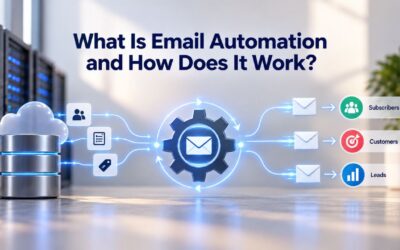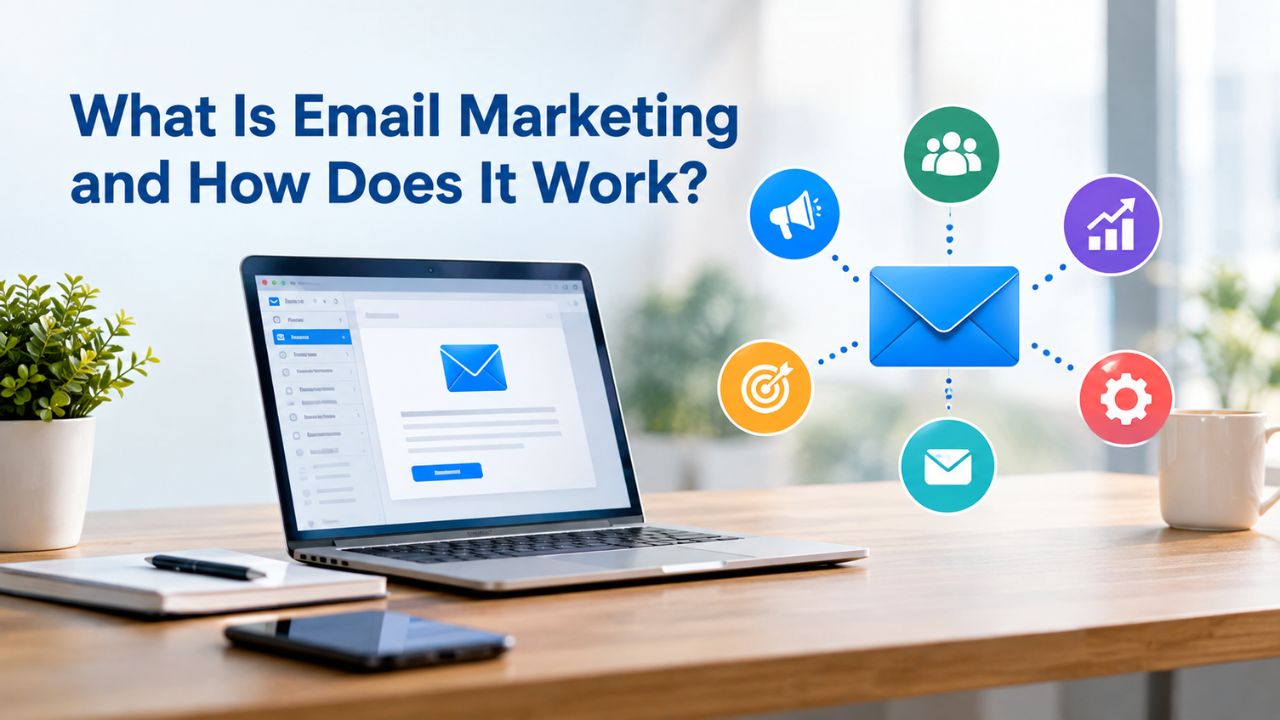
Email marketing is a direct marketing channel that lets businesses share information, promotions, and updates with customers who’ve opted in to receive messages. Unlike social media algorithms or paid ads, email gives you a direct line of communication you own and control. Email deliverability depends on technical factors like domain authentication, sender reputation, and list quality, elements that work outside any single platform’s complete control and require ongoing attention from the sender.
Why Email Marketing Matters and Delivers Results
Email marketing is one of the most effective digital marketing channels available today. It’s not a tactic businesses dabble in; it’s a core channel that consistently outperforms paid search, social advertising, and display ads by a wide margin. Understanding why email works at scale shows why building a strategy around it matters.
The Highest-ROI Digital Channel
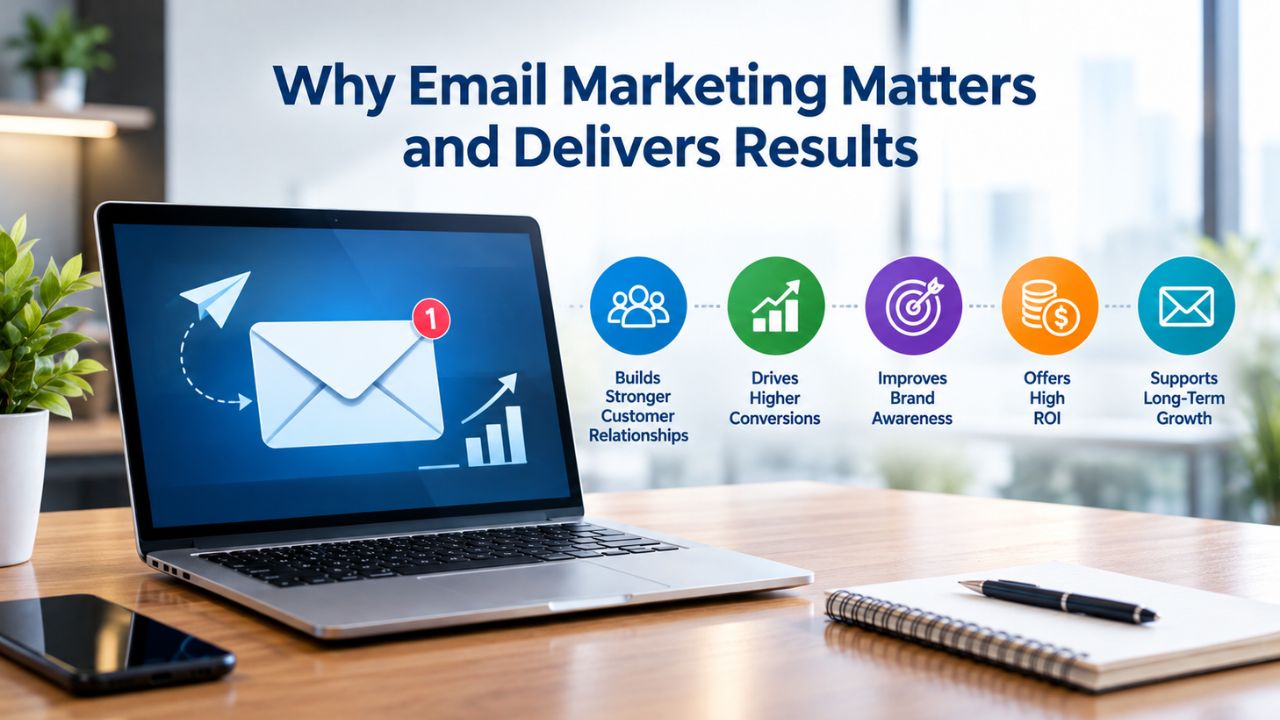
For every dollar you invest in email, you see returns paid channels cannot match. Retail, e-commerce, and consumer goods companies achieve the highest email marketing ROI at 45:1 (4,500%), driven by direct attribution and high purchase intent from email clicks.
The high ROI across industries reflects one simple fact: email reaches an engaged audience that has explicitly asked to hear from you. You’re not competing for attention in a crowded algorithm-driven feed; you’re communicating with subscribers who want your message. This permission-based model is foundational to email marketing’s effectiveness. Whether you’re running a small business newsletter or a large-scale ecommerce campaign, email consistently delivers superior returns compared to every other paid digital channel.
Email Is Owned Media
Email is one of the few places a brand is invited in. No algorithm decides who sees your email. No platform can take it away. Every subscriber has opted in, so you’re reaching people who’ve already said they want to hear from you, not people you’re hoping to catch off guard. This fundamental difference shapes how email works compared to every other channel. You control the message, the timing, and the frequency. You’re not subject to platform changes, feed algorithm updates, or budget increases that suddenly make your reach disappear.
Email remains one of the more powerful and stable channels when it comes to reaching an audience. It serves as a direct line of communication that businesses fully own and control, offering a wider impact at a lower cost compared to channels where you need to pay to surface messaging. That stability and control are why email has remained central to marketing strategy for decades and why it continues to grow. When social media platforms change their algorithm or restrict reach, email is unaffected. Your subscriber list is an asset you build and own indefinitely.
Email Marketing Plans
Email Marketing Beginner
For anyone getting started with email marketing.
- Up to 500 Contacts
- Add more anytime
- Send up to 5,000 Emails/Month
- Single Signup Form
- Basic Image Storage
- Unsubscribe Handling
- Works with Facebook, Etsy & More

Email Marketing Up & Running
Already have clients? This plan’s for you.
- Up to 2,500 Contacts
- Add more anytime
- Send up to 25,000 Emails/Month
- Unlimited Signup Forms
- Unlimited Image Storage
- Unsubscribe Handling
- Works with Facebook, Etsy & More
- Automated Welcome Email
- Converts Blog Posts to Email
- Unsubscribe Options
- Hot Leads List
Email Marketing Pro
For savvy marketers with growing mailing lists.
- Up to 5,000 Contacts
- Add more anytime
- Send up to 50,000 Emails/Month
- Unlimited Signup Forms
- Unlimited Image Storage
- Unsubscribe Handling
- Works with Facebook, Etsy & More
- Automated Welcome Email
- Converts Blog Posts to Email
- Unsubscribe Options
- Hot Leads List
- Auto-sends Event Emails
- Automated Email Campaigns
- Record Signup IPs
- Share Statistics w/Others
The Three Core Components of Every Email Marketing Campaign
Email marketing isn’t one tool; it’s a system made up of three essential elements. Understand these three components, and you understand how email marketing works and what you need to get started.
An Engaged, Permission-Based Email List
The backbone of any email marketing campaign is the email list, a database of subscribers who have consented to receive your emails. The key is to have an active, engaged list. Building such a list isn’t just about accumulating email addresses; it’s about attracting the right kind of subscribers who are genuinely interested in what you have to offer. Every subscriber on your list must have opted in, meaning they gave you explicit permission to send them emails. This permission-based model is foundational to email marketing. It’s also what makes the channel so effective: your audience wants to hear from you. They’re not accidentally seeing your message in their feed; they signed up for it because they value what you have to say.
A great way to start is to add a simple sign-up form to your website where people explicitly opt in to receive your emails. That opt-in signal starts your list-building process. Whether it’s a form on your homepage, a landing page gate, or a pop-up triggered by specific behavior, every new subscriber should actively choose to join your list. This voluntary enrollment predicts higher engagement and lower unsubscribe rates than purchased or scraped lists.
Choosing an Email Service Provider (ESP)
An Email Service Provider (ESP) is the technology platform that manages your email list, campaign creation, sending, and performance tracking. You never send marketing emails from your personal inbox. Instead, you use an ESP, a specialized platform built for sending email at scale. Niya Digital’s Email Marketing Service is one such platform, offering list management, campaign design, automation, and performance reporting all in one place.
An ESP provides the infrastructure, compliance tooling, and deliverability support that ensures your emails reach inboxes rather than spam folders. It handles authentication (SPF, DKIM, DMARC), maintains sending reputation across the network, monitors bounce rates and complaint rates, and provides detailed analytics on campaign performance. The ESP is the backbone that makes modern email marketing possible at any scale, from a solo entrepreneur’s first campaign to a large enterprise sending millions monthly.
Clear, Measurable Marketing Goals
Before launching campaigns, set email marketing goals that align with your overall brand goals. For example, if you’re starting, your goal might be email list growth. If you have a solid base of subscribers who are ready to buy, your goal might be revenue or retention. Without clear goals, it’s hard to know which campaigns are working and where to invest your time. Common email marketing goals include growing your list, increasing engagement (opens and clicks), driving sales, improving customer retention, re-engaging inactive subscribers, or building brand awareness.
Your goals shape every decision downstream, from list-building strategy to campaign type to measurement approach. If your goal is revenue, you’ll focus on conversion rates and ROI attribution. If it’s brand awareness, you might prioritize reach and engagement. Defining goals before you start keeps your email marketing aligned with broader business objectives.
Building and Maintaining Your Email List
A quality email list is the foundation of email marketing. It’s the asset you build and own. List building starts with a simple decision: you invite people to hear from you, and they decide to accept. The stronger and cleaner your list, the better your results across every campaign type.
How List Building Works: Opt-In and Consent
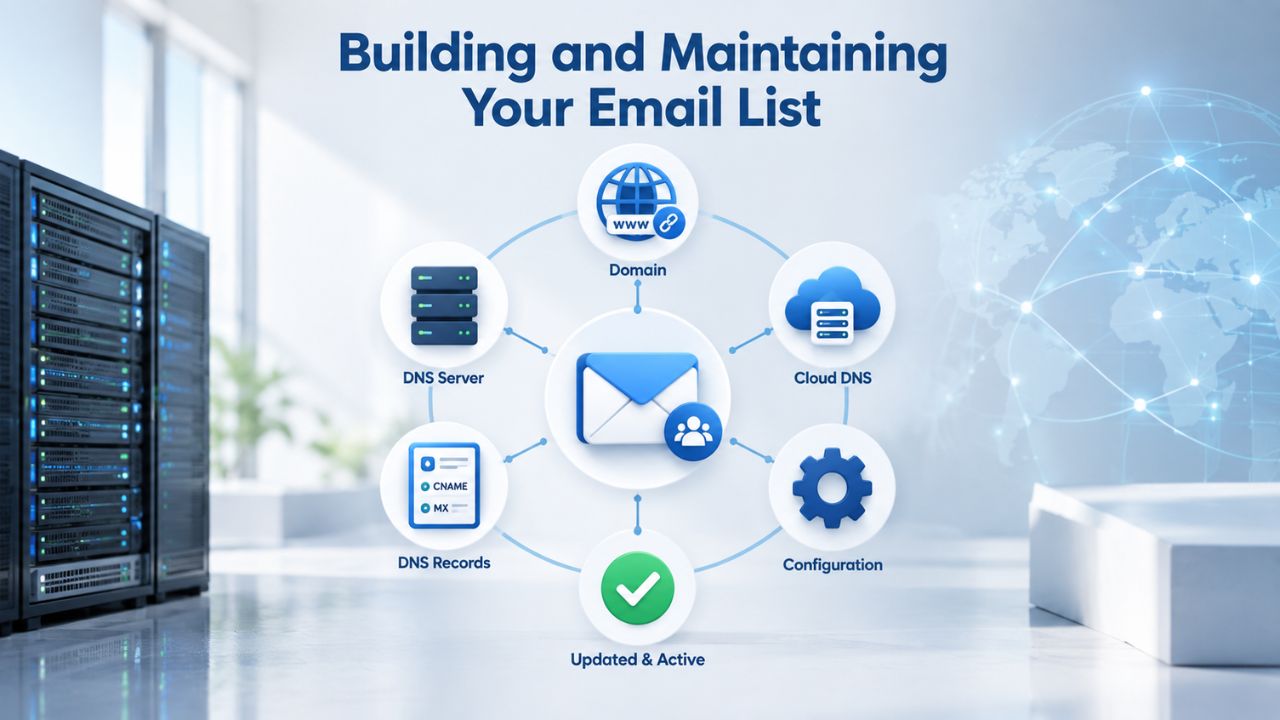
To build your list, you start by gathering email addresses from people who have explicitly given you permission (an “opt-in”) to email them. Your list’s foundation is subscribers who actually want to receive your messages. An opt-in can be as simple as a checkbox on your website, a welcome gate on a landing page, or a form embedded in a blog post. The key is that it’s explicit; people actively choose to hear from you. Some businesses use double opt-in (a two-step process where subscribers confirm via email before joining), which ensures even higher intent and list quality.
Why does opt-in matter so much? Because it predicts engagement. Subscribers who opted in are more likely to open your emails, click your links, and take action. They’re a qualified audience from day one. In contrast, purchased lists or scraped addresses perform poorly and damage your sender reputation. Building your list organically ensures every subscriber actually opted in to hear from you, and the content you send matches what they signed up for, keeping engagement high and complaints low.
List Hygiene: Keeping Your List Clean and Engaged
Over time, email lists decay naturally. Subscribers change jobs, abandon old email addresses, move to competitors, or lose interest in your category. A clean list is an engaged list. Review your email list regularly and clean it over time. A subscriber who was “inactive” six months ago might now be one of the most engaged buyers on your list, or they might be unengageable; either way, cleaning and segmenting matter. Many email marketers conduct list-cleaning campaigns periodically, removing subscribers who haven’t engaged in a defined period (e.g., 6–12 months of no opens or clicks).
Niya Digital’s Email Marketing Service helps you track engagement metrics, identify inactive subscribers, and maintain list hygiene through built-in reporting and segmentation tools. A well-maintained list is the foundation for every campaign. Regular cleaning improves your sender reputation, lowers bounce rates, and ensures your metrics accurately reflect engagement from active subscribers who care about your message.
Creating and Sending Email Campaigns
Once you have a list, the next step is to create and send the email message. Campaign creation is where email marketing gets tangible. You design the message, write the copy, and decide who gets it and when.
Campaign Design and Content Strategy
When you create your campaign, you design an email, write your message, and craft a subject line that grabs their attention. You could even A/B test two different subject lines to see which one gets more opens. The design phase is where templates, drag-and-drop editors, and email builders make campaign creation accessible to non-designers. Most ESPs offer hundreds of professionally designed templates you can customize with your brand colors, logos, and messaging. A drag-and-drop editor lets you add text, images, buttons, and other elements without coding.
Creating valuable content that captivates and converts is fundamental to any successful email marketing campaign. The opening line of your email is crucial for capturing your audience’s attention. Subject lines, preview text, email copy, and calls to action all work together to drive opens and clicks. The subject line is your first and often only chance to convince someone to open; make it specific, relevant, and honest. Your email body should deliver on the subject line’s promise with clear value and a single, focused call to action.
A/B Testing and Campaign Optimization
Before sending to your full list, many marketers A/B test key campaign elements. You could A/B test two different subject lines to see which one gets more opens. This simple practice- sending two slightly different versions to a small percentage of your list, then rolling out the winner to everyone- can improve your campaign performance significantly. You might test different subject lines, preview text, email copy, images, or call-to-action button colors and text.
A/B testing removes guesswork and replaces it with data. Run tests on 10–20% of your list, wait for results (usually 24–48 hours), then send the winning version to the remaining subscribers. Over time, these incremental improvements compound. A 5% improvement in open rate on your next campaign, repeated across twelve campaigns annually, yields substantial ROI gains. Most email platforms make A/B testing simple with built-in functionality.
Segmentation and Personalization Fundamentals
Segmentation is the practice of dividing your email list into smaller groups. Personalization is tailoring your message to each group. Together, they’re what transform email from a one-size-fits-all broadcast channel into a targeted, relevant communication tool that drives higher engagement and conversion.
What Segmentation Is and Why It Works
Email segmentation divides an email list into smaller, more targeted groups based on specific criteria or characteristics. List segmentation aims to create more effective email campaigns with higher open rates by sending highly relevant messaging to each subgroup in a brand’s overall audience. Segmentation can be based on purchase history, browsing behavior, demographics, interests, engagement level, or any other data point you track about your subscribers. You won’t send the same message to everyone. You’ll group your subscribers based on their interests or actions. For example, you could create a segment of customers who bought from you in the last 30 days.
That segment has fundamentally different needs and interests than someone who’s never purchased. Sending them the same generic email wastes the opportunity to speak to their actual situation. A customer who bought recently wants follow-up content (usage tips, related products, loyalty offers), while a prospect still considering wants educational content and social proof. Segmentation lets you speak directly to where each subscriber is in their journey.
Static vs. Dynamic Segmentation and Personalization
A static segment is a list built once, based on data from a specific point in time, say, “everyone who purchased in December.” A dynamic segment updates automatically based on live data: recipients enter and exit it as their behavior changes. Dynamic segments are more powerful because they stay current. As soon as a subscriber meets the segment criteria (e.g., adds an item to their cart), they’re automatically included. As soon as they no longer meet the criteria (e.g., complete the purchase), they’re removed. No manual list updates needed.
Use dynamic content to automatically adjust email elements based on individual subscriber characteristics, ensuring a personalized experience for each recipient. This is where segmentation and personalization intersect: you create segments, and then you personalize the message for each segment. The result is that every subscriber sees an email that feels written specifically for them. Dynamic personalization at scale is where email proves its value; one workflow serves thousands of subscribers, each receiving messages tailored to their unique interests and behavior.
Ready to Start Your Email Marketing Journey Today?
Email marketing starts with a single decision: build a list and stay in touch with your audience. Niya Digital’s Email Marketing Service makes it simple to manage list growth, create campaigns, set up automations, and track performance all in one platform. Start with a clear goal, build your list through authentic opt-ins, and create your first campaign today.
Email Automation and Triggered Workflows
Automation makes email marketing scalable. Instead of manually sending emails to each segment, you set up rules and let the system automatically send the right message at the right time. This is how email drives outsized returns and why automation accounts for such a high percentage of email-generated revenue.
How Email Automation Works
Triggered emails based on customer actions, like welcome messages for new subscribers or transactional emails after a purchase, happen automatically. This frees up your marketing team to focus on strategy and creative work instead of sending individual emails. An automated email workflow is a sequence of emails that triggers based on a specific action or event. The system watches for that event, and when it happens, the workflow automatically enrolls the subscriber and sends the appropriate message at the right time.
Niya Digital’s team has found that automated emails consistently reach customers at the moment they’re most receptive, when they’ve just taken an action that signals intent, making automation one of the highest-leverage email marketing tools available. Automated emails account for 37% of all email-generated sales despite making up just two percent of total sends. This impact comes from automated flows reaching customers at exactly the right moment in their journey. That efficiency makes automation a powerful investment for any business with email marketing goals.
Common Automation Workflows
Welcome series automation triggers when a new subscriber joins your list. The first email introduces your brand and sets expectations for future communication. Subsequent emails share early value, explain your offerings, and begin building the relationship. This sequence starts relationship-building immediately and educates new subscribers on what to expect. Most welcome series run 3–5 emails over 1–2 weeks and see open rates above 50% because subscribers are most engaged right after they sign up.
An abandoned cart email is an automated message triggered when an online shopper places an item in their cart and doesn’t complete a purchase. It re-engages shoppers by reminding them about the products in their cart and enticing them to complete their purchase. You can send one-off cart abandonment emails, or create a series of automated emails. The typical flow sends a gentle reminder 1–2 hours after abandonment, then a second email with added urgency (limited stock, limited-time discount) 24 hours later. The average cart abandonment rate is more than 70% across all devices and even higher on mobile. That means for every 10 shoppers who click “purchase,” only three actually complete the transaction. Abandoned cart flows recover a material portion of that lost revenue.
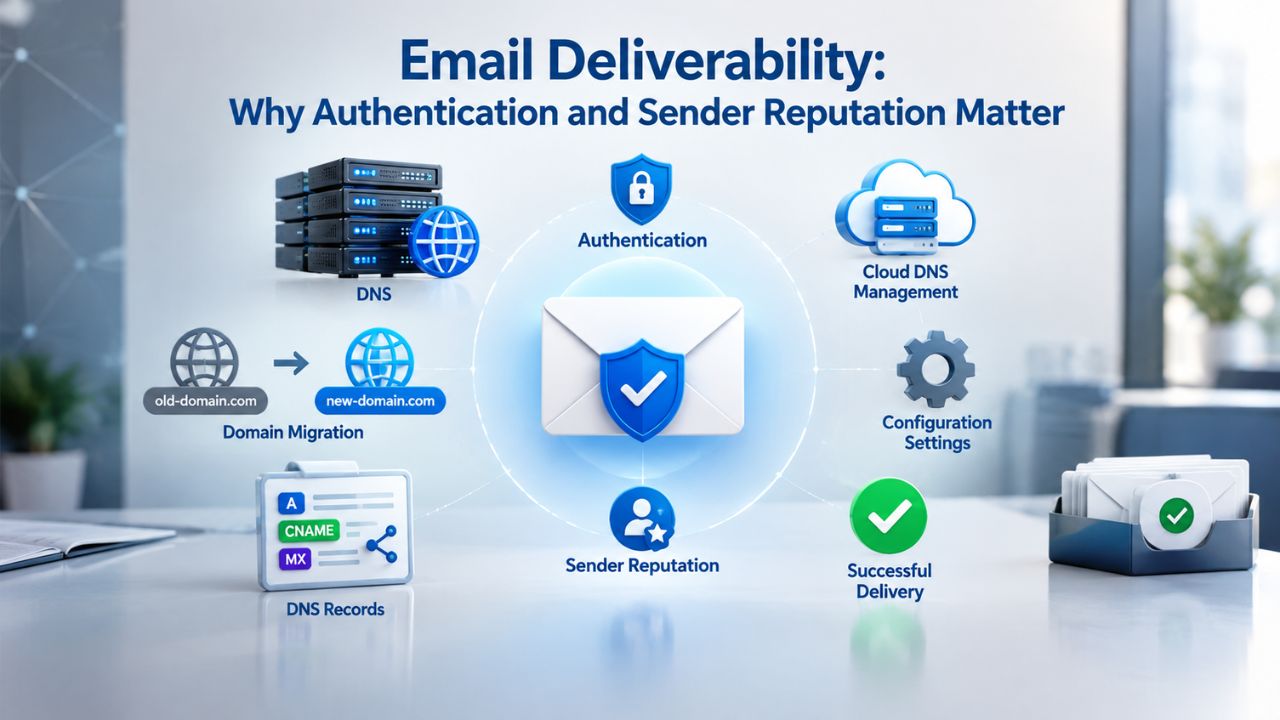
Email Deliverability: Why Authentication and Sender Reputation Matter
Not every email you send reaches the inbox. Spam filters, ISP reputation systems, and sender authentication protocols all influence whether your message lands in the inbox or the spam folder. Understanding these factors helps you maintain strong deliverability and ensure your campaigns are seen.
SPF, DKIM, and DMARC: The Three Authentication Protocols
Email authentication is built on three technical protocols that work together to verify sender legitimacy and protect your domain. SPF is an email authentication technology that lets a domain owner specify which IP addresses are authorized to send email on behalf of that domain. When a receiving mail server gets an email, it checks your SPF record to verify that the sending server is authorized to send mail for your domain. SPF is the first line of defense against domain spoofing; it prevents someone else from sending email that appears to come from your domain.
DKIM is an email authentication technology that uses cryptographic signatures to verify the authenticity of email messages. When you send an email, DKIM adds a digital signature to the message header, which the recipient’s email server can verify to ensure the message hasn’t been tampered with in transit and originated from the claimed sender domain. DKIM ensures your message hasn’t been altered after you sent it. It’s a cryptographic promise that says “this email came from us and hasn’t been changed.”
Why Authentication Matters Now
DMARC adds policy enforcement and visibility. It lets domain owners set a policy (“none,” “quarantine,” or “reject”) that tells receiving mail servers what to do with emails that fail SPF or DKIM checks. DMARC also generates reports showing authentication results, giving you visibility into how your domain is being used and attacked. As Gmail, Yahoo, and other providers enforce stricter sender requirements, deliverability has shifted from a creative challenge to a technical one, and authentication is now one of the biggest factors influencing whether your message gets seen.
In February 2024, Gmail and Yahoo implemented strict sender requirements that fundamentally changed email deliverability. If you send more than 5,000 emails per day to Gmail or Yahoo addresses, you must now implement all 3 authentication protocols, no exceptions. This isn’t optional guidance; Gmail and Yahoo now actively block emails from senders who don’t comply. Even if you send fewer than 5,000 emails daily, implementing SPF, DKIM, and DMARC significantly improves your inbox placement across all providers. Authentication is table stakes for modern email marketing.
Email Marketing Metrics: What Actually Matters
Measuring email campaign performance is essential for understanding what works and where to improve. But not all metrics are created equal. As privacy protections and email client behavior evolve, the most important metrics are shifting.
Understanding the Key Metrics
The open rate is defined as the percentage of recipients who open your email relative to the total number of emails successfully delivered. It excludes emails that bounced or were not delivered. Open rate is calculated as (unique opens ÷ total emails delivered) × 100. However, with increasing reliance on privacy-focused email clients (e.g., pre-loading, image blocking), open rate is now an unreliable signal of true human engagement. Apple Mail Privacy Protection automatically opens emails for users, inflating reported open rates by 15–20 percentage points.
The CTR represents the number of email subscribers who clicked at least one link, image, or call-to-action button in your email, calculated against the total number of opened emails. CTR is widely regarded as a stronger indicator of genuine interest than open rate. CTR requires a deliberate action, so it’s a more reliable measure of real engagement than open rate. Click-to-Open Rate (CTOR) measures the percentage of people who clicked a link among those who opened the email. Unlike the standard click-through rate, which measures clicks against the total number of delivered emails, CTOR measures clicks as a percentage of opens. CTOR reveals your content quality independent of subject-line effectiveness.
2026 Email Benchmark Ranges
| Metric | Industry Average | High Performers | Notes |
|---|---|---|---|
| Open Rate | 25–30% (adjusted for privacy) | 40–50% (varies by industry) | Reported rates inflated 15–20pp by Apple MPP; real engagement is lower |
| Click-Through Rate (CTR) | 2.0–2.5% | 4.0%+ | Requires deliberate action; more reliable than open rate |
| Click-to-Open Rate (CTOR) | 6.81% | 10%+ | Shows content quality independent of subject line performance |
| Bounce Rate | Below 2% | Below 1% | Threshold: Gmail/Microsoft reject above 2%; compliance mandatory |
| Spam Complaint Rate | Below 0.3% | Below 0.1% | Threshold: ISPs increase filtering above 0.3%; compliance mandatory |
| Conversion Rate | 1–2% | 3%+ | Varies by industry; revenue attribution more important than vanity metrics |
Email Marketing Compliance and Legal Requirements
Email marketing is regulated in most countries and jurisdictions. The specific rules vary depending on where your subscribers are located. Compliance is not optional; it affects deliverability, builds subscriber trust, and protects you from significant fines.
Three Primary Regulatory Frameworks
CAN-SPAM (United States): CAN-SPAM laws require commercial emails to include a physical address and an unsubscribe option. However, it does not require explicit consent to send an email. CAN-SPAM operates on an opt-out model; you can send until someone asks you to stop, but you must honor that unsubscribe request within 10 business days. Violating the CAN-SPAM rules can get you fined up to $43,792 per violation, which can apply to each separate email.
GDPR (European Union): GDPR demands a documented lawful basis for processing contact data, which typically requires opt-in consent before sending commercial messages. GDPR requires explicit opt-in consent before sending any commercial email; consent must be documented, affirmative, and freely given. No pre-checked boxes. GDPR is the strictest framework, and fines can reach up to 4% of annual revenue, making compliance essential.
CASL (Canada): CASL stands for Canadian Anti-Spam Legislation and is widely considered one of the strictest anti-spam laws globally. It generally requires express or implied consent before you can send commercial electronic messages. Non-compliance can result in fines of up to $10 million CAD for businesses. CASL applies to any commercial email sent to or from Canada, regardless of where you’re based.
Core Compliance Practices
Regardless of which jurisdiction applies to your subscribers, best practices overlap across all frameworks. Collect consent properly using clear opt-in forms with no pre-checked boxes, and document that consent for audit purposes. Every email must clearly state who you are and how to contact you, including a physical mailing address. Provide a one-click unsubscribe link in every email. Honor requests within 10 days (immediately under GDPR).
Implement SPF, DKIM, and DMARC; these are now compliance and deliverability requirements, not optional. Keep your list clean by regularly removing hard bounces and inactive subscribers, and monitor complaint rates. Compliance isn’t bureaucracy; it’s the foundation of sustainable email marketing that respects subscribers and maintains your sender reputation.
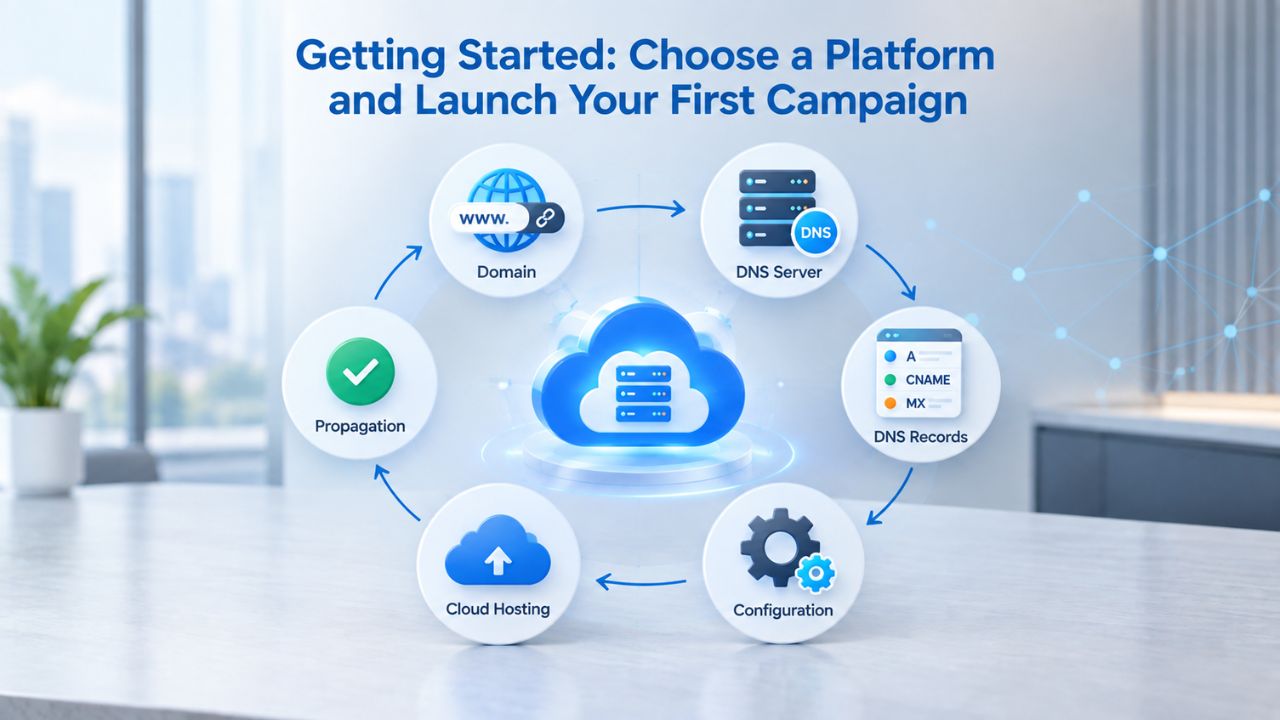
Getting Started: Choose a Platform and Launch Your First Campaign
You now understand what email marketing is, how it works, and why it matters. The next step is simple: choose a platform and start building your list. The right email marketing platform makes every step easier, from list growth to campaign creation to automation setup to performance measurement.
How to Evaluate an Email Marketing Platform
When choosing an email platform, prioritize these core capabilities. List management and segmentation should let you easily import contacts, create dynamic segments based on behavior or demographics, and maintain list hygiene. Campaign design should include templates, a drag-and-drop editor, and mobile responsiveness so your campaigns look great on every device. Automation should enable triggered workflows for welcome series, abandoned carts, and re-engagement campaigns without coding.
Deliverability support should authenticate your domain and monitor bounce rates, complaint rates, and sender reputation. Analytics and reporting should track opens, clicks, conversions, and segment performance in detail. Compliance features should support double opt-in, one-click unsubscribe, and help with GDPR/CAN-SPAM/CASL compliance. Integrations should connect to your CRM, ecommerce platform, or other business tools so data flows seamlessly. Niya Digital’s Email Marketing Service includes all of these capabilities in one platform.
Your First Campaign
Your first email marketing campaign doesn’t need to be complex. Start with one of these three approaches. A welcome series creates a 3–5 email sequence for new subscribers that introduces your brand, shares your value proposition, and encourages action. A monthly newsletter commits to sending one consistent email per month with updates, tips, or news relevant to your audience. An abandoned cart recovery sets up a 2–3 email series for ecommerce that reminds customers about items they left behind and encourages them to complete checkout.
Email Campaign Types: Purpose, Frequency, and Expected Performance
| Campaign Type | Primary Purpose | Typical Send Frequency | Expected Open Rate | Best For | When to Use |
|---|---|---|---|---|---|
| Welcome Series | Introduce brand, set expectations, build initial relationship | 3–5 emails over 1–2 weeks | 50%+ (first email) | New subscribers, list onboarding | Immediately after signup |
| Newsletter | Regular content sharing, audience engagement, brand building | Weekly, bi-weekly, or monthly | 40–45% | Consistent engagement, thought leadership | Scheduled cadence (e.g., every Thursday) |
| Promotional Campaign | Drive sales, announce offers, limited-time deals | As-needed (seasonal, event-based) | 35–40% | Revenue generation, seasonal peaks | Holiday seasons, product launches, flash sales |
| Abandoned Cart | Recover lost sales, remind of items left behind | Immediate + 24–48 hours (series) | 49% | eCommerce recovery, revenue recovery | When cart abandonment detected |
| Re-engagement Campaign | Win back inactive subscribers, clean list | Quarterly or semi-annually | 30–35% | List hygiene, identifying unengaged segments | After 6–12 months of inactivity |
| Post-Purchase | Thank customer, provide usage tips, encourage next purchase | 1–3 emails over 2–4 weeks | 45%+ | Customer retention, upsell, loyalty | After purchase completion |
| Educational/Content | Share valuable information, build authority, nurture leads | Varies (weekly to monthly) | 40–50% | Lead nurturing, thought leadership | Aligned with content calendar |
| VIP/Loyalty | Exclusive offers, early access, rewards recognition | Monthly or quarterly | 50%+ | High-value customer retention | For segmented VIP audience |
Start Your Email Marketing Journey Now
Email marketing is accessible to every business. You don’t need a huge list or sophisticated technology to get started; you need an audience that wants to hear from you, a platform to reach them, and a message worth sending. Niya Digital’s Email Marketing Service makes every step simple: build your list, create campaigns, automate workflows, and measure results. Success in email marketing comes from consistent execution, genuine value to subscribers, and willingness to learn from data. Start today.
Frequently Asked Questions
What’s the difference between email marketing and transactional email?
Transactional emails must focus primarily on the customer’s existing relationship or activity, not marketing content. Transactional emails include order confirmations, password resets, or shipping notifications; a customer action triggers them, and they contain the information the specific customer needs. Email marketing campaigns, in contrast, are promotional or informational messages sent on a schedule you control. Most compliance regulations treat them differently: transactional emails have fewer restrictions because they’re not promotional. Your compliance obligations depend on the message type.
How large does my email list need to be to see results?
Results depend on quality, not just size. A list of 500 highly engaged subscribers who opened your last email will likely generate better results than a list of 50,000 unengaged addresses. Start with whoever is genuinely interested in your offering, focus on engagement and growth, and scale from there. Build your list organically through website signups, content magnets, and social sharing. A smaller, engaged list outperforms a larger, disengaged one every time.
Can I buy an email list to get started faster?
No. Purchased lists perform poorly and damage your sender reputation. Building your list organically ensures every subscriber actually opted in to hear from you, and the content you send matches what they signed up for, keeping engagement high and complaints low. Start with whoever opts in through your website, social media, or content. Grow organically from there. The time investment upfront pays dividends in better engagement and deliverability long-term.
What’s the best day and time to send email campaigns?
It depends on your audience and what you’re sending. The best practice is to test. Send the same campaign at different times and days to small segments of your list, track the open and click rates, and identify the pattern that works for your specific audience. Most email platforms make this testing easy with scheduling and detailed reporting. Your audience’s behavior and preferences are unique to your business.
How often should I email my subscribers?
Frequency depends on the value you’re delivering and what your audience expects. A weekly newsletter might be right for one brand; a monthly email might work better for another. The key is consistency and relevance. Allow subscribers to set their preferences and opt out of certain segments if they choose. Respecting subscriber preferences builds trust and helps maintain a positive sender-receiver relationship. Many platforms let subscribers choose their preferred frequency or content types.
What’s a good open rate to aim for?
Aim for 15–25% across most industries. Still, privacy changes mean click-to-open rate (CTOR) now offers a clearer view of engagement. Remember that reported open rates are inflated by Apple Mail Privacy Protection, so real human engagement may be lower than what your platform reports. Focus on CTR and CTOR as more reliable signals of content quality and audience interest. Compare your metrics against your own historical performance and industry benchmarks.
Why did my emails go to the spam folder?
Multiple factors influence spam filtering: poor sender reputation (low engagement, high complaints, or high bounce rates), missing or incorrect authentication (SPF, DKIM, DMARC), suspicious content (spam trigger words, too many links), or list quality issues (old addresses, purchased lists). Address each factor systematically: authenticate your domain, maintain list hygiene, keep engagement high, and avoid spam trigger language. Monitor your bounce rate and complaint rate closely, as high rates signal problems to ISPs.
How do I create an effective subject line?
A subject line catches the reader’s attention and prompts them to open the message. The high volume of daily emails means competition is strong in recipients’ inboxes, so a stellar subject line can help you stand out from the crowd. Effective subject lines are specific, relevant, and honest. Test different approaches: personalization (“John, here’s your discount”), curiosity (“What we learned from 10,000 emails”), urgency (“Last chance today”), and value (“Free guide inside”). A/B test to see what your audience responds to.
Is email marketing still effective in 2026?
Yes. For many businesses with good subscriber lists and strong email marketing strategies, email marketing delivers the highest ROI by far. In 2024, 50% of consumers said they purchased directly from an email, more than from social media posts or ads. Email continues to outperform every other digital marketing channel in terms of return on investment and engagement. The channel grows stronger as businesses improve personalization, segmentation, and automation.
How do I handle unsubscribe requests and list maintenance?
Honor opt-out requests within 10 business days under CAN-SPAM (immediately under GDPR). Log every opt-out with a timestamp. A preference center is useful for letting subscribers choose what types of emails they receive, but offer a one-click unsubscribe as the default method. Regular list maintenance, removing bounces and inactive subscribers, keeps your sender reputation strong and your metrics accurate.
What email marketing features matter most to prioritize first?
Start with list management and campaign creation. You need the ability to collect emails through signup forms, segment your audience, and design and send campaigns. Automation can wait until you’ve mastered the basics. Reporting and analytics are essential from day one so you understand what’s working. Choose a platform with strong fundamentals, then grow into advanced features as your team’s skills develop.
Can I automate all my email marketing?
Most of your email marketing can be automated: welcome series, abandoned cart flows, re-engagement campaigns, and lifecycle emails all run on rules you set up once. However, some campaigns benefit from manual strategy: newsletters, promotional campaigns, and content announcements are often planned and sent intentionally based on business events or seasonal timing. Most businesses use a mix of automation and intentional campaigns.
How do I know if my email marketing is working?
Track the right metrics: click-to-open rate (CTOR), click-through rate (CTR), conversion rate, and revenue attribution. Compare these metrics against industry benchmarks and your own historical performance. Set up goals for each campaign type and review performance weekly or monthly to spot trends and opportunities. Are your most engaged subscribers converting? Are certain segments outperforming others? Let data guide your optimization.
What if I get low open and click rates?
Low engagement typically signals one of three issues: list quality (too many inactive or uninterested subscribers), content relevance (your message isn’t aligned with what subscribers signed up for), or delivery problems (emails going to spam). Address list quality first by removing inactive subscribers who haven’t engaged in 6–12 months. Then audit your content for relevance. Finally, ensure your domain is authenticated, and your sender reputation is strong. Improve one factor at a time and measure the impact.
Glossary
- Open Rate: The percentage of delivered emails that recipients opened, calculated as (unique opens ÷ delivered emails) × 100. Note: Apple Mail Privacy Protection inflates rates; real human engagement is typically 15–20 percentage points lower than reported.
- Click-Through Rate (CTR): The percentage of delivered emails containing at least one clicked link, calculated as (unique clicks ÷ delivered emails) × 100. A stronger engagement signal than open rate because it requires deliberate user action.
- Click-to-Open Rate (CTOR): The percentage of opened emails that resulted in at least one click, calculated as (unique clicks ÷ unique opens) × 100. Reflects content quality independent of subject-line effectiveness; preferred metric for 2026 measurement.
- Segmentation: The practice of dividing an email list into smaller groups based on specific criteria (behavior, interests, demographics, purchase history, engagement level) to send targeted, relevant messages to each group.
- Email Automation: A rules-based system that automatically sends emails or sequences of emails in response to subscriber actions or time-based triggers (e.g., welcome series, abandoned cart, re-engagement) without manual intervention.
- Personalization: Tailoring email content, subject lines, send times, or calls-to-action to individual subscriber characteristics or behavior to increase relevance, engagement, and conversion rates.
- Deliverability: The likelihood that a sent email reaches the recipient’s inbox rather than the spam folder or being blocked by ISP filters. Influenced by sender reputation, domain authentication (SPF/DKIM/DMARC), engagement metrics, and list quality.
- Double Opt-In: A two-step consent process where a subscriber signs up through a form, then confirms their email address by clicking a link in an automated confirmation email before being added to the active list. Highest standard of consent and list quality.