Niya Digital resells domain registration and hosting services in partnership with an ICANN-accredited registrar.
Understanding Domain Premium Status
Short, memorable domain names are scarce, and as the internet expands, that scarcity drives value. Understanding what qualifies as premium and why registries or market demand attach premium fees is the essential first step in deciding whether the investment makes sense for you. This section covers the technical definition and the characteristics that create market value.
Defining Premium Domains and Registry Designation
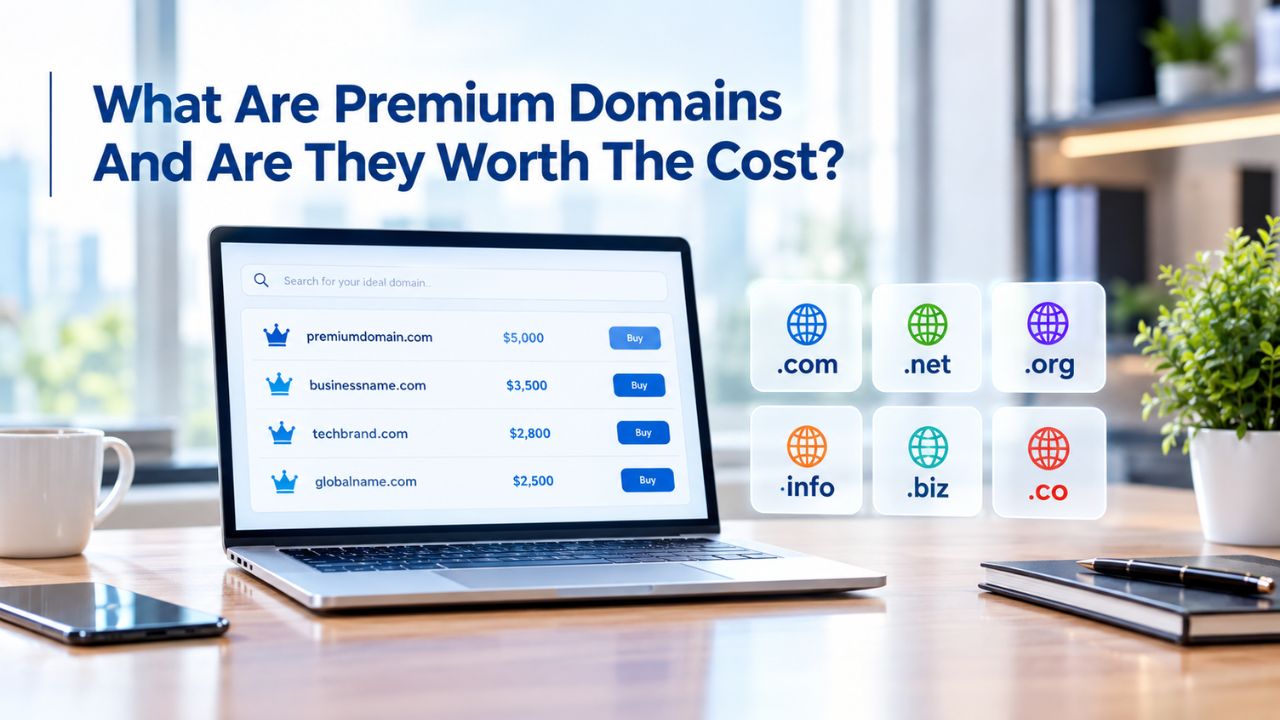
A premium domain is any domain name that a registry operator has identified as having exceptional market value, according to ICANN policy. Registry operators, the organizations that manage top-level domains (TLDs) like .com or .co, have the authority to designate certain names as premium and charge higher registration and renewal fees. These designations typically apply to single-word domains, dictionary terms, location names, and short alphanumeric strings that generate high buyer demand. Unlike standard domain registrations, registry-designated premiums carry substantially elevated acquisition and renewal costs.
ICANN policy requires registries to disclose premium designations upfront so registrants understand the higher renewal commitment. This transparency is critical; registries cannot move a domain into premium status mid-ownership or surprise renewals with inflated fees. The rationale is straightforward: scarcity drives value. With 378.6 million domain names registered in 2024 and the market projected to reach 459.9 million by 2030, truly short and memorable options become increasingly rare, making those that remain strategically valuable.
Characteristics That Define Premium Status
Premium domains share consistent traits: brevity, memorability, keyword relevance, and brandability. A single-word domain like “furniture.online” or “coaching.com” inherently commands more attention and traffic potential than a longer alternative like “affordable-furniture-store.com.” Industry research shows that premium domains are typically short, meaningful, and contain high-intent keywords or strong brand potential. They’re easy to spell, simple to share verbally, and stick in memory, three qualities that drive both direct typing behavior (users remembering the domain and visiting directly) and brand credibility.
The TLD extension also influences premium status. A .com domain remains the gold standard for global credibility. In contrast, newer extensions like .ai or .tech carry growing premium positioning driven by interest in emerging technology. Domains containing keywords in high-demand categories, financial services, real estate, technology, naturally attract premium designation because businesses compete aggressively to acquire them. Geographic specificity matters too; domains tied to major cities or regions are often reserved by registries and priced as premiums. Short numeric or alphanumeric combinations are similarly scarce and expensive because they appeal to both businesses and domain investors alike.

Domain Name Registration
Each and every domain name comes with all you need to get online.
- Domain Forwarding and Masking: Direct any domain name you own to your website. Anyone who types that domain name into their browser is taken directly to your website.
- Domain Locking: Domain locking prevents accidental or intentional transfers of domain ownership and stops anyone from redirecting your nameservers.
- Total DNS Control: Manage your domain nameserver (DNS) records and set your email, FTP, sub-domains and website location all from one control panel.
- Change of Registration: Assign your domain name to someone else or change the contacts for your domain online anytime.
- Status Alerts: Monitor the status of your domain and get instant alerts if there's been a change.
- Auto Renew Protection: No need to watch expiration dates to make sure you renew on time! Auto renew keeps your domains, hosting, website builders, and other products in your name and under your control.
Domain Disclaimers:
- Special savings apply only to first year of registration. You must purchase entire section to qualify for special savings.
- The final price may differ because of additional sales, fees, and promotions.
- Products will automatically renew until cancelled. You may turn off the auto-renewal feature by visiting your account.
- Change of registration may require a fee for certain domains.
Premium Domain Characteristics & Value Drivers
| Factor | Why It Matters | Typical Valuation Impact |
|---|---|---|
| Domain Length | Shorter domains are rarer and more memorable | 1-word domains command premium valuations; 2-3 word domains have moderate appeal; 4+ words are treated as standard |
| Keyword Relevance | High-intent keywords attract search traffic and buyer demand | Generic high-demand keywords: highly valued; industry-specific keywords: moderately valued; niche keywords: lower valuation |
| TLD Extension | .com remains the gold standard; newer TLDs emerging | .com domains typically command 2–5× higher valuations than newer TLDs; established extensions are more valuable than experimental ones |
| Brandability | Catchy, easy-to-spell names drive user recall and sharing | Strong brand potential significantly increases valuation; neutral branding receives standard valuation; poor branding reduces valuation |
| Existing Traffic | Sites with backlinks and historical traffic transfer authority | Domains with established traffic and backlinks receive substantially higher valuations; new domains with no history remain at baseline valuation |
| Domain Age & History | Older domains with a clean history command higher trust signals | Domains 5+ years old with a clean record increase valuation; newer domains are valued lower; spam history significantly reduces value |
| Search Volume | Keywords with high monthly search volume attract more buyers | High-volume keywords command substantially higher valuations; moderate-volume keywords receive standard valuations; low-volume keywords are valued lower |
Domain Scarcity and Competitive Positioning
As the global domain namespace becomes more crowded, the advantage of owning a short, recognizable domain name grows. Explore why scarcity creates value and how a premium domain can help your brand stand out in a competitive market.
Market Saturation and the Scarcity Driver
The domain registration landscape grew by 1.2% year-over-year in 2024, with 364.3 million total domains registered, an increase of 4.4 million. This growth continues across the decade, with new generic top-level domains (gTLDs) adding 5 million registrations in 2024 and becoming the primary driver of overall growth. The expansion means that the pool of available short, memorable .com domains shrinks each year. When a business launches today, the one-word domains matching their industry are often already claimed, either by established competitors or by domain investors holding them for resale. This reality pushes new entrants toward longer names, hyphenated domains, or newer TLDs, all of which carry weaker brand signals than a concise, single-word .com.
The competitive pressure is real. In competitive verticals like financial services, e-commerce, and SaaS, a premium domain provides immediate credibility and differentiation. Prospects encounter your domain before anything else about your business; it’s your first impression in email, advertising, and word-of-mouth referrals. A short, brandable name signals that you’re an established player or a serious contender, while a longer or hyphenated domain can read as a compromise or second choice.
For businesses in trust-sensitive industries, that first impression directly impacts conversion rates and customer confidence. The scarcity of desirable names means that as your business grows and your market expands, your competitors will be competing for the same limited pool of recognizable domains.
Building Long-Term Brand Resilience
Owning a premium domain anchors your brand and reduces future risk. A business that secures a strong domain name early avoids the costly and disruptive rebranding that comes with growing into a longer or less memorable web address later. Every marketing asset, from business cards to billboards to social media profiles, carries the domain name. Changing domains mid-growth means updating all collateral, redirecting old links, rebuilding search engine authority, and potentially losing direct traffic from customers who remember the old address. A premium domain, especially one that matches your business name or core keyword, removes this friction and provides decades of stability.
Premium domains are also valuable digital assets that can appreciate over time, like real estate in the digital landscape. Many businesses view premium domain acquisition as a strategic investment that strengthens brand positioning and protects against future scarcity. If you ever consider selling or pivoting your business, a strong domain name increases your company’s asset value and makes the enterprise more attractive to buyers. The combination of reduced operational risk (no future rebranding) and potential resale value makes premium domains a strategic hedge for growing organizations.
Two Paths to Premium Domain Ownership
Premium domains can be acquired through two distinct channels: registry-designated premiums purchased at registration, and aftermarket domains that were previously registered and are now for resale. Each has different acquisition mechanics, timelines, and considerations. Understanding the distinctions helps you evaluate feasibility and strategy for your specific acquisition target.
Registry Premiums: Direct Purchase at Registration
Registry premiums are domains that the TLD registry has identified and designated as premium at launch or during ongoing availability. When a registry designates a domain as premium, you acquire it at a higher fee set by the registry operator and renew it annually at that same designated rate. Registry premiums typically apply to newer gTLDs (.ai, .tech, .co, .xyz) and some country-code domains, while legacy gTLDs like .com, .net, and .org don’t have registry-level premiums for most names. The advantage of registry premiums is transparency and speed; the fee structure is fixed and non-negotiable, so you know exactly what you’re committing to for both initial acquisition and future renewals.
The trade-off is that registry premium acquisition can be substantially more expensive than comparable aftermarket alternatives, with minimal room for negotiation. A short dictionary word in a popular new gTLD might be designated premium at a high cost, while the same word in a less-popular extension might cost significantly less. For businesses absolutely committed to a specific TLD (perhaps because it matches their industry or geographic focus), registry premiums offer certainty. However, intelligent buyers often search aftermarket platforms first to find similar names at different price points before committing to a registry premium. If a business needs a particular domain but can achieve its goals with a variant, exploring aftermarket alternatives is a prudent step.
Aftermarket Premiums: Negotiated and Marketplace Acquisition
Aftermarket premiums are previously registered domains now listed for resale. Unlike registry premiums, which renew annually at the premium rate, aftermarket domains are acquired through a one-time transaction fee; renewal afterward occurs at the standard TLD rate. An investor might have registered a desirable domain years ago for standard registration fees and now offers it on a marketplace for acquisition. If you acquire it, you pay the acquisition fee, but renewal costs only the standard TLD rate afterward. This economics can make aftermarket acquisition attractive for high-value names, since the total cost of ownership drops significantly after the initial purchase.
Aftermarket pricing varies widely and is driven by negotiation, comparable sales data, and perceived business utility. Aftermarket premium domains vary widely based on domain characteristics, keyword strength, and market demand, with some commanding extraordinary valuations and others remaining more modestly priced. High-profile examples show that rare, highly soughthighly sought names have attracted significant investment from businesses and entrepreneurs seeking distinctive digital assets.
For most businesses, aftermarket acquisition happens through marketplaces (established domain marketplaces and platforms) or via a professional domain broker who negotiates directly with the domain owner. The aftermarket domain market is growing steadily, reflecting strong demand and healthy transaction volumes from businesses seeking premium digital assets, and is expected to continue expanding as more businesses recognize the strategic value of memorable, brand-aligned domains.
Acquisition Channels and Marketplace Options
The channel you choose to acquire a premium domain- registry, marketplace, auction, or broker- significantly impacts timeline and your likelihood of success. Each has distinct advantages and drawbacks.
| Acquisition Path | Typical Acquisition Model | Timeframe | Key Consideration |
|---|---|---|---|
| Registry Premium (New gTLD) | Direct purchase through registrar at registry-set rate | Instant (at registration) | Transparent pricing structure; annual renewal commitment is known upfront |
| Aftermarket Marketplace (Fixed Price) | Seller lists at a fixed price; buyer purchases immediately | 1–3 days (immediate purchase + transfer) | Seller-determined pricing; bypasses negotiation; built-in escrow protection |
| Aftermarket Auction (Competitive Bid) | Multiple buyers bid over a set period; highest bidder wins | 3–7 day bidding period + transfer processing | Market-driven pricing; competitive bidding can increase the final acquisition cost |
| Professional Broker Negotiation | Broker facilitates direct negotiation with the current owner | 30–90 days | Expert guidance reduces negotiation risk and provides access to off-market inventory |
| Direct Owner Negotiation | Buyer contacts the owner directly and negotiates terms | 2 months–2+ years | No intermediary involved; time-intensive with an unpredictable outcome |
| Expired Domain Acquisition | Purchase through specialized auctions when a domain lapses | Per-auction cycles (weekly) | Lower-cost acquisition opportunity with limited inventory; requires timing expertise |
Valuing Premium Domains: Frameworks for Decision-Making
Before committing significant capital to a premium domain acquisition, you need a structured approach to evaluation and ROI assessment. This section covers the most practical methods for estimating whether a domain’s value aligns with its business utility.
Comparable Sales and Market Benchmarking
The most direct valuation method uses comparable sales data. Domain marketplaces publish transaction history showing what similar names have sold for recently. If you’re evaluating a particular domain, you search for recent sales of other domains with similar characteristics, matching length, keyword focus, and extension, to build a sense of fair market value. This approach works best for standardized, high-demand categories with many transactions, allowing you to identify clear benchmarks. A broad keyword like “insurance,” “real estate,” or “technology” has extensive public sales history, so finding comparable transactions is straightforward.
Comparable Sales Process:
- Identify 5–10 recently sold domains matching your target’s length, keyword theme, and extension.
- Note the sale dynamics and any contextual data (timing, marketplace, buyer profile if available).
- Adjust your target’s estimated value based on specificity, current market conditions, and demand trends.
- Cross-check across multiple data sources for consistency and pattern validation.
- Apply a confidence level based on data quantity and agreement; sparse or conflicting comparables warrant caution.
For niche or unusual domains with few sales comparables, this method becomes less reliable. A specialized domain matching a specific industry vertical or emerging technology might have no direct sales history, forcing you to infer value from broader categories and apply your judgment about market demand in that specific sector.
Automated Valuation Tools and Professional Appraisal
Several platforms offer automated domain valuation services that analyze historical sales data, keyword metrics, and market trends to estimate a domain’s value range. These algorithms consider factors such as domain length, keyword search volume, TLD popularity, and recent comparable sales to generate estimates. Automated tools are fast and useful for initial screening; they help you quickly evaluate whether an asking price aligns with market benchmarks, but they have limitations. Algorithms struggle with niche keywords, undervalue brandability factors, and may overweight keyword search volume in markets where brand recognition matters more than search traffic volume.
Professional domain appraisers combine automated estimates with manual analysis of market conditions, buyer intent, and the specific business context of your acquisition. If you’re acquiring a domain that represents a significant strategic investment, consulting a professional appraisal service or a domain broker adds credibility to your decision. Without expert analysis, negotiated acquisitions often result in unfavorable terms relative to fair market value, so professional guidance is a reasonable investment for high-value acquisitions.
Business-Impact ROI Framework
Beyond market prices, the real question is: how much value does this domain add to your specific business? This requires estimating how the domain affects three key metrics: traffic, conversion, and brand asset value.
Traffic Impact: Premium domains attract direct visits from users who remember the domain and visit without searching. This effect is typically strongest for short, memorable domains in high-demand categories. A business with a memorable, single-word domain in its core industry category might receive significant direct visits monthly from users typing the domain into the browser. In contrast, a competitor with a longer or less distinctive domain gets minimal direct traffic. That direct traffic reduces reliance on paid acquisition (search ads, social media advertising), lowering customer acquisition costs. Estimate: What percentage of your target monthly traffic could come from direct typing if your domain is memorable vs. if it’s longer or less distinctive?
Conversion Impact: A premium domain signals legitimacy and professionalism, which can increase conversion rates, especially in trust-sensitive verticals like financial services, healthcare, and e-commerce. Research indicates that 46% of small businesses report that a custom domain increases credibility, and mobile users are twice as likely to trust sites with branded addresses versus generic alternatives. If your premium domain improves conversion rate relative to your current web address, quantify that benefit over a year or five years of business growth. Estimate: What is the monetary value of a modest conversion-rate improvement given your typical monthly visitor volume and average transaction size?
Asset Value: Premium domains appreciate over time, especially if market demand for that keyword or brand direction increases. When you eventually sell the business or the domain separately, the domain contributes to overall valuation. Estimate: Based on comparable acquisitions and domain transactions, could this domain appreciate, or is the market saturating?
When Premium Domains Deliver Real Value
Premium domain acquisition makes the most sense in specific business contexts where brand trust, memorability, and competitive positioning create measurable returns. Understanding these scenarios helps you decide whether the investment is justified for your situation.
High-Trust, High-Competition Verticals
Certain industries place an extraordinary premium on brand trust and domain memorability. Financial services, healthcare, e-commerce, and professional services- sectors where customer hesitation and risk-aversion run high- are natural fits for premium domain investment. A prospect researching financial or insurance solutions might click a domain with implicit trust because of its simplicity and authority. That same prospect encountering a longer, more complex domain might feel skeptical or uncertain. In trust-sensitive verticals like financial services and healthcare, domain branding is a direct conversion lever; the credibility signal is immediate and powerful.
Competition intensity also matters. In crowded markets where dozens of competitors vie for the same customer attention, a premium domain becomes a differentiator. An e-commerce company selling specialized products faces intense paid advertising costs; a memorable, on-brand domain becomes an asset that reduces reliance on paid channels by capturing direct and brand-search traffic. The domain essentially serves as a free, always-on marketing channel that competitors must match with additional ad spend.
Brand-First and Early-Stage Startups
Early-stage companies with strong brand identity or distinctive positioning often benefit from premium domain investment. If your business is built on a unique brand name, not a generic descriptor, acquiring that exact .com domain is often strategically valuable. A startup with a distinctive brand identity should prioritize securing that exact brand domain if it’s available, because the domain becomes central to branding, communication, and customer acquisition. Conversely, a startup with a descriptive business model (e.g., an app for “expense tracking”) might be better served with a longer descriptive domain if premium acquisition costs are prohibitive, since the business model itself communicates value.
Brand-first investments also protect against future rebranding friction. If your company builds decades of market presence around your brand name, changing domains later would be catastrophically disruptive. The upfront premium domain investment is effectively insurance against rebranding costs and customer confusion down the road. This logic is especially compelling for companies expecting to grow into global brands; that investment in domain brand equity pays dividends for decades.
Find and Secure Your Premium Domain
Niya Digital offers end-to-end support for domain registration services and domain name management across any TLD or marketplace. Whether you’re evaluating acquisition options, exploring marketplace listings, or negotiating a strategic acquisition, our team can assist with valuation guidance, acquisition support, and ongoing domain security. Start your premium domain strategy today with expertise from professionals who understand both the acquisition decision and long-term ownership.
Measuring Domain Performance and Avoiding Overpayment
Not all premium domain acquisitions pay off, and many businesses acquire domains without disciplined ROI assessment. This section covers realistic performance benchmarks and red flags that should make you reconsider an acquisition.
Setting Realistic Performance Expectations
Premium domains do not magically improve search engine rankings. A domain with high-intent keywords may improve click-through rates and brand recognition, which can indirectly support search performance; however, content quality, backlinks, and technical SEO remain the primary ranking factors. This distinction matters because some businesses justify premium acquisitions based on false SEO assumptions. Yes, a memorable domain might rank well for related queries, but that’s because the domain has accumulated authority and quality content investment, not because the domain name itself is a ranking shortcut.
Direct traffic, however, is a realistic benefit. A memorable domain does attract visitors who remember the name and type it directly into the browser. This direct traffic is valuable because it’s high-intent (users already know what they want) and zero-cost (no advertising spend required). Estimate direct traffic realistically: in mature markets, a memorable domain might capture a meaningful percentage of monthly traffic as direct visits; in niche markets, the percentage could be lower. If that direct traffic percentage doesn’t materially reduce your customer acquisition costs, the premium domain’s ROI weakens.
Red Flags and Overpayment Scenarios
Be cautious of premium domain acquisitions in these situations:
Generic Keywords Without Market Urgency: A generic keyword domain can be valuable, but only if you’re building a business where that exact keyword drives customer search and trust. If you’re a niche service provider serving a specific geographic area, a domain aligned with your actual business positioning might be more effective than a costly, generic domain.
Emerging or Niche TLDs Without Proven Demand: Newer extensions can position your brand, but they lack the global recognition and trust signals of .com. If a niche TLD premium domain costs as much as a .com alternative, the .com wins nearly every time for brand trust and memorability.
No Clear Competitive Differentiation: If your business is in a mature market where competitors already own domain variations, acquiring another premium domain might not move the competitive needle. Your differentiation comes from business model, content quality, and customer service, not domain name alone.
Additionally, market data shows that negotiated acquisitions without professional guidance often result in unfavorable terms relative to fair market value. If you’re acquiring a domain in a heated negotiation or auction, emotions often override ROI logic. Use valuation tools, consult comparable sales data, and (for significant strategic acquisitions) consider hiring a professional broker to represent you and validate the transaction.
Understanding Renewal Costs and Long-Term Ownership
Acquiring a premium domain is only the first step; sustaining it over years or decades requires understanding renewal economics and planning for long-term management. A domain that seems valuable at acquisition might become burdensome if renewal obligations exceed your business’s capacity or if your strategic priorities shift.
Registry Premium Renewals vs. Aftermarket Economics
Registry premiums renew annually at the designated rate, so a substantial first-year acquisition cost becomes a recurring annual obligation. Over a decade, that commitment accumulates significantly. Aftermarket domains, by contrast, renew at the standard TLD rate, typically modest annual fees, after the one-time acquisition payment. This economics favors aftermarket acquisition for long-term planning when renewal costs matter. For businesses planning ten-plus year ownership, the aftermarket’s lower renewal structure creates substantial long-term cost advantages compared to registry premiums with sustained annual designation costs.
However, renewals vary by TLD and registry policy. ICANN policy requires registries to disclose premium renewal rates at the point of registration, so you should know renewal obligations upfront. Some registries offer higher-registration / lower-renewal models to attract initial buyers, while others maintain consistent premium designation. Always verify renewal obligations before committing, and calculate your total cost of ownership over your expected holding period. A domain that seems strategically valuable at acquisition might become prohibitively expensive if renewals outpace your business growth or market demand shifts.
Auto-Renewal, Redemption, and Loss Prevention
Premium domains are valuable assets, and losing them due to expiration or non-renewal is costly. ICANN policy includes a “redemption grace period” during which you can recover an expired domain for a recovery fee before it is deleted and becomes available again. To avoid this scenario, enable auto-renewal on all premium domains so renewals happen automatically before expiration.
If your registrar doesn’t remind you of upcoming renewals or auto-renewal fails, you could lose decades of brand equity and online presence. Additionally, domain transfer policies vary; some registrars impose transfer fees, while others include transfers as standard service. Understanding your registrar’s transfer and renewal policies upfront prevents surprises and ensures business continuity.
Domain Security, Branding, and Portfolio Strategy
Beyond the acquisition decision, sustainable premium domain ownership involves security, brand protection, and strategic portfolio management. A compromised or abandoned domain can damage your brand and business.
Protecting High-Value Domains from Hijacking and Unauthorized Transfer
Premium domains are attractive theft targets. Hackers and domain hijackers try to access domain accounts without permission, often by compromising email credentials or exploiting weak account security. To protect your premium domain, implement these security measures:
Enable Two-Factor Authentication (2FA) on your registrar account so a compromised password alone cannot grant access to your domain.
Use a Dedicated Registrant Email that is distinct from your primary business email and is used only for domain account management; monitor that email closely for unauthorized access attempts.
Set a Registry Lock, a registrar-level protection that prevents unauthorized transfers without explicit authorization; many registrars offer this feature at no additional cost.
Review Account Access Regularly to ensure no unknown users have administrative permissions or access.
Building a Sustainable Domain Portfolio Strategy
Organizations managing multiple domains benefit from treating domain portfolio management as a strategic process. Prioritize domains that directly support your business (your primary brand domain and core keyword domains) with robust security and auto-renewal. You can manage secondary or exploratory domains (potential future brands or market expansion) with less intensive oversight, though you should still monitor renewals.
Consider your long-term branding strategy: If your business expands globally or undergoes significant repositioning, premium domains acquired for a previous market focus might become less central to your strategy. Portfolio management includes periodically reassessing whether your domain holdings still support current business priorities or if capital would be better deployed elsewhere.
Domain Registration Services and Professional Support
Choosing the right domain registration service is about more than simply securing a domain name. For businesses managing premium domains, multiple registrations, or strategically important web addresses, reliable registrar infrastructure and professional support can make ownership easier to manage and reduce avoidable risks.
Essential Registrar Features for Domain Management
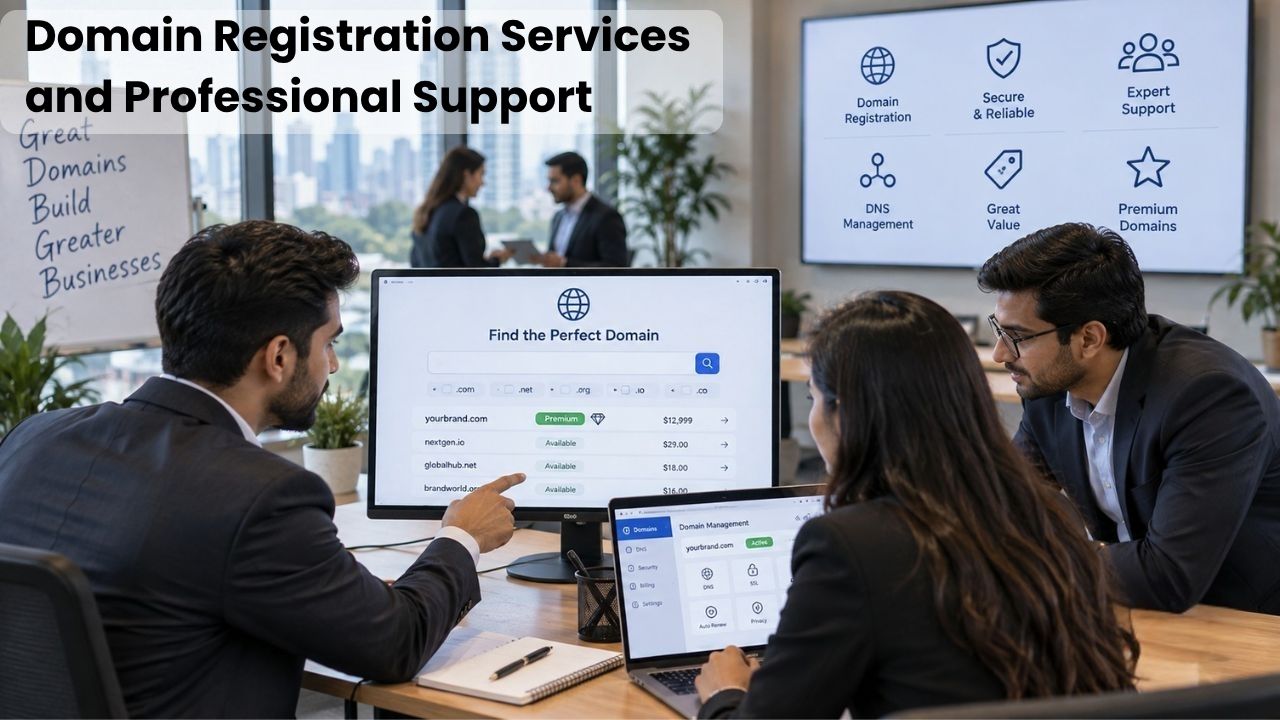
A professional domain registrar should provide the core features you need to register, protect, and manage your domains efficiently. These typically include straightforward domain registration and renewal, DNS management, domain locking, transfer controls, WHOIS privacy where supported by the domain extension, and secure account authentication. Multi-year registration can also reduce the risk of accidental expiration, while automated renewal notifications provide an added safeguard.
Before registering a premium or strategically important domain, review the registrar’s available management and support features rather than focusing only on the registration process. Confirm how domain transfers are handled, how ownership information can be updated, what security controls are available, and whether assistance is available when technical or administrative problems occur. Businesses should also understand which services are included with their registration and which may require additional arrangements.
Professional Support for Premium Domain Acquisitions
Professional support becomes even more valuable when acquiring a premium domain that another party already registers. Aftermarket acquisitions can involve valuation, owner communication, negotiation, payment arrangements, transfer authorization, and verification. Domain brokerage services can help businesses navigate these stages, particularly when the domain represents a significant strategic investment.
Professional assistance is also useful after an acquisition has been agreed upon. The domain still needs to be transferred correctly, ownership information may need updating, and DNS or email services may need to remain operational throughout the transition. A support specialist can help coordinate these activities and identify potential issues before they affect the domain’s availability or associated services.
Long-Term Ownership and Portfolio Strategy
Organizations managing multiple domains benefit from treating domain portfolio management as a strategic process. Prioritize domains that directly support your business (your primary brand domain and core keyword domains) with robust security and auto-renewal. You can manage secondary or exploratory domains (potential future brands or market expansion) with less intensity, though you should still monitor renewals.
Building a Sustainable Domain Portfolio Strategy
Organizations managing multiple domains benefit from treating domain portfolio management as a strategic process, not an afterthought. As your business grows, your domain needs evolve. What made sense as a single-domain strategy five years ago may no longer align with your current market position, geographic footprint, or product focus. Systematic portfolio management helps you maintain only the domains that drive strategic value while divesting assets that no longer serve your business.
Start by categorizing your domains into tiers: Tier 1 includes your primary brand domain and core keyword domains directly tied to revenue-generating business units; these deserve premium security, auto-renewal, and active monitoring. Tier 2 includes secondary domains supporting specific product lines, geographic markets, or future growth vectors; these warrant standard security and renewal discipline but not intensive daily management. Tier 3 includes exploratory or speculative domains held for potential future use; you can hold these more loosely, but set calendar reminders for renewals to prevent accidental loss.
Protecting Your Portfolio Against Market Changes and Future Challenges
Premium domains remain valuable over time, but market demand can shift unexpectedly. A domain valuable for one business model may lose utility if your market, audience, or positioning changes. Regular portfolio appraisals help you track whether each domain is appreciating, stagnating, or declining in value relative to current market conditions.
If a domain you acquired is appreciating because demand for that keyword or industry focus has increased, hold it as a strategic asset. If a domain is declining despite your business growth, that mismatch suggests it no longer serves your strategy and might be better sold or allowed to lapse. Additionally, protect your portfolio against personal circumstances; if you’re a solo founder or small team, ensure that domain access doesn’t depend solely on one person’s email account or password.
Start Your Premium Domain Strategy Today
Niya Digital provides comprehensive support for domain and hosting services, from acquisition guidance and valuation to ongoing security and portfolio management. Whether you’re evaluating your first premium domain acquisition or scaling a multi-domain strategy, our team delivers expert insights tailored to your business goals. Discuss your domain strategy with professionals who understand both the acquisition decision and the long-term ownership experience.
Frequently Asked Questions
What exactly makes a domain “premium,” and who decides?
The domain registry operator determines premium status, not registrars or the market. Registries designate certain domains as premium based on characteristics like length, keyword relevance, and brand potential. Legacy gTLDs like .com and .net typically don’t have registry premiums, while newer extensions like .ai or .co often do. Aftermarket domains (previously registered and now resold) are priced by current owners and marketplaces, not by the registry. Understanding the source of the premium designation helps you evaluate whether the investment is justified.
How much should I actually pay for a premium domain?
Research comparable sales on aftermarket platforms and use multiple valuation tools to understand fair market value for similar domains. Calculate your own ROI based on expected direct traffic, conversion improvements, and potential asset appreciation. Never pay more than the domain’s utility to your business. For significant strategic acquisitions, hire a professional broker to negotiate on your behalf; their guidance typically more than pays for itself through better deal terms.
Will a premium domain improve my search engine rankings?
Not directly. Search rankings depend primarily on content quality, backlinks, technical SEO, and user engagement signals. A premium domain may contain high-intent keywords, which can improve click-through rates and brand signaling. Those improvements can indirectly support SEO by increasing traffic quality and reducing bounce rates. However, the domain name itself is not a ranking shortcut. Premium domains are most valuable for brand authority, direct traffic, and customer trust, not for Google rankings.
Should I buy a registry premium or wait for an aftermarket domain to become available?
If your target domain is a registry premium (typically in newer gTLDs), weigh the ongoing commitment against the utility to your business. If the annual renewal cost is modest and the domain is strategically essential, the commitment may be justified. If renewal costs are substantial, search aftermarket platforms for similar domains; you’ll often find comparable alternatives with much lower renewal obligations. For .com domains, aftermarket acquisition is almost always preferable because .com doesn’t have registry premiums.
What happens if I let my premium domain expire?
Your domain enters a “redemption grace period” (typically 30 days after expiration) during which you can recover it by paying a recovery fee plus the renewal fee. After the redemption period, the domain is deleted and returns to the registry for resale. Losing a premium domain is costly: you lose the domain, any associated email, and associated search engine authority. Enable auto-renewal on all premium domains and monitor your registrar account to prevent accidental loss.
Are newer TLDs (.ai, .tech, .online) as valuable as .com?
Newer TLDs are growing in popularity and can help position your brand. An AI startup might benefit from a .ai domain as a positioning signal. However, .com remains the global standard for trust and memorability. A .com domain typically attracts more direct traffic than the same name in a newer extension. If budget allows, prioritize .com. If .com is unavailable or doesn’t fit your strategy, a newer TLD aligned with your business focus is a reasonable alternative.
How do I know if a premium domain is overpriced?
Compare the asking cost to recent sales of similar domains (matching length, keyword, TLD) and use multiple automated valuation tools. If the asking cost significantly exceeds comparable acquisitions or your appraisal tools, the domain is likely overpriced. Emotion and auction momentum often drive buyers to accept unfavorable terms. Take time to research, consult appraisals, and (for significant acquisitions) hire a broker to validate the transaction.
Can a registry change a domain from standard to premium after I register it?
Generally, no. ICANN policy prevents registries from reclassifying an existing registered domain from standard to premium pricing. Registries can change the base cost for all renewals. Still, they cannot move your specific domain into premium status and surprise you with higher obligations. This protection is built into the Registry Agreement to prevent registries from exploiting businesses that have invested in building a web presence on a domain.
What support should I expect from a domain registrar for premium domains?
Industry-standard registrars offer 24/7 support via phone, live chat, and email for all customers, including premium domain holders. For high-value acquisitions or complex scenarios, enterprise-tier registrars provide dedicated account managers and priority support. Basic support for routine renewals, DNS changes, or security settings should be free and accessible 24/7. For premium domain management, confirm that your registrar offers reliable 24/7 support before acquisition.
Is domain flipping (buying and reselling premium domains) profitable?
Domain acquisition for resale requires expertise, capital, and market knowledge. The aftermarket domain market is growing steadily, indicating healthy demand. However, successful domain investment requires acquiring domains below fair market value (through expired domain auctions or strategic negotiations) and selling them at a higher price. Without deep market knowledge and disciplined portfolio management, domain acquisition is speculative. For most businesses, domain acquisition is a business investment, not an investment strategy.
How often should I appraise my premium domain to track value?
For high-value domains, periodic appraisals help you track market trends and shifts in demand; for larger portfolios or less critical domains, annual appraisals are typically sufficient. Regular appraisals help you understand whether your domain is appreciating or declining in value, which informs decisions about holding, selling, or divesting.
Use multiple tools and track results over time to identify trends. If your domain is appreciating despite changing market conditions, hold it as a strategic asset; if it’s declining, consider whether you would be better off deploying the capital elsewhere.
Should I purchase privacy protection (WHOIS privacy) for my premium domain?
Yes. WHOIS privacy masks your personal registrant contact information from the public WHOIS database, reducing spam and privacy risks. Many registrars include WHOIS privacy at no additional charge; others offer it as an optional service. For premium domains (especially personal brands or high-value acquisitions), privacy protection is worthwhile. It prevents domain-hijacking attempts that exploit publicly listed contact information and keeps competitors from discovering your registrant details.
Does domain length really matter that much for my business?
Yes. Shorter domains are easier to remember, type, share verbally, and promote through word of mouth. A one-word domain is typically far more memorable than a three-word or hyphenated alternative. Memorability translates to direct traffic, brand recall, and customer trust. If you’re in a competitive market, domain length becomes a competitive factor. However, if your business is highly specialized or your customers find you through search or referral, a longer but more descriptive domain can work if it aligns with your actual business positioning.
Glossary
- ICANN-accredited registrar: An entity licensed by the Internet Corporation for Assigned Names and Numbers (ICANN) to facilitate domain name registration on behalf of registrants. Registrars operate in partnership with registry operators and must comply with ICANN policies and contracts. Niya Digital partners with an ICANN-accredited registrar.
- Registry operator / TLD registry: The organization that maintains the authoritative database of registered domain names within a specific top-level domain (TLD) and sets policies, including premium domain designations. The registry is distinct from the registrar; registrars are the customer-facing entities through which registrants acquire domains.
- Aftermarket domain: A previously-registered domain name listed for resale by its current owner, typically through established marketplaces. Aftermarket domains are acquired through a one-time transaction; renewal thereafter occurs at standard TLD rates.
- Type-in traffic: Direct visitors who type a domain name directly into the address bar without searching. Memorable premium domains attract higher type-in traffic, which is valuable because it represents high-intent users and costs nothing to acquire.
- Domain authority: A metric reflecting the credibility and search-engine weight accrued by a domain over time, based on factors like age, backlink profile, content quality, and user engagement. Older, well-established domains typically carry higher authority than new domains.
- WHOIS privacy: A service that masks the registrant’s personal contact information (name, address, phone number, email) from the public WHOIS database, reducing spam and privacy risks. WHOIS privacy is sometimes called “privacy protection” or “domain privacy.”
- Redemption grace period: A period (typically 30 days) after a domain expires during which the registrant can recover the domain by paying a recovery fee plus the renewal fee. After this period, the domain is deleted and returns to the registry.
- Registry lock: A registrar-level security feature that prevents unauthorized domain transfers without explicit authorization from the account holder, protecting high-value domains from hijacking.