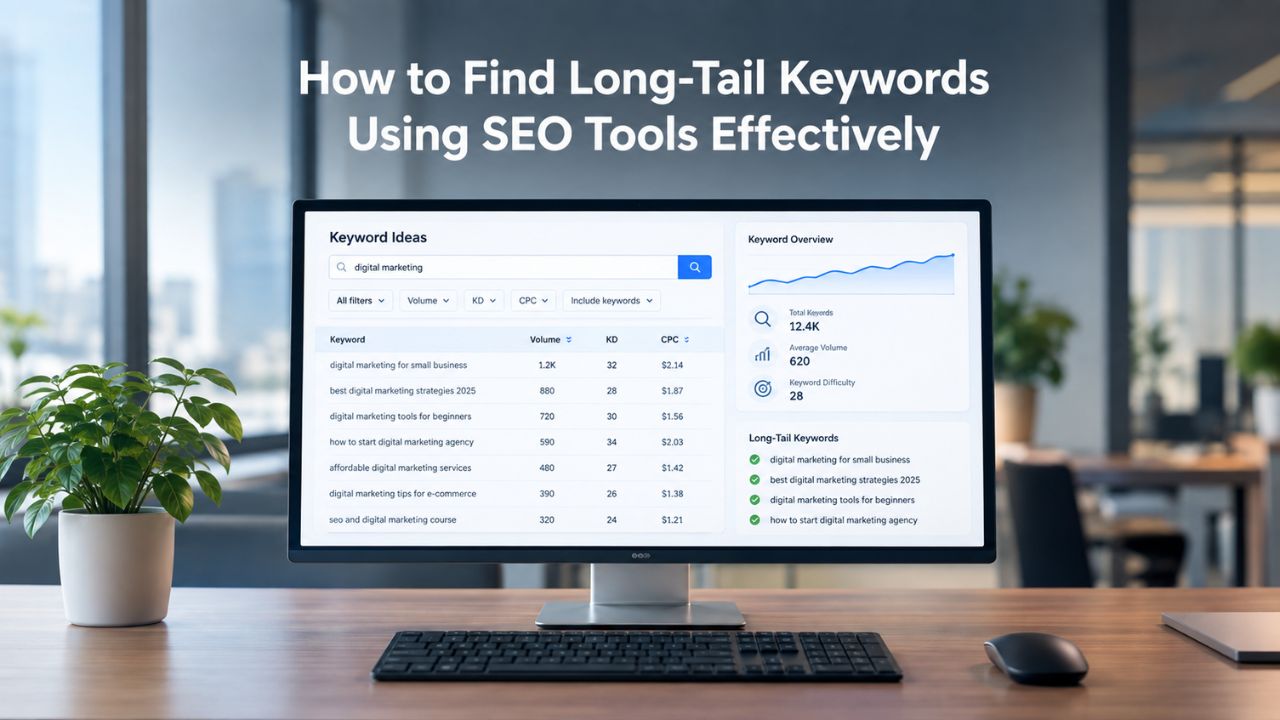
Why Long-Tail Keywords Drive Real Business Results
Long-tail keywords are the foundation of sustainable organic growth for small businesses and DIY marketers. Unlike broad terms that attract casual browsers, specific phrases bring visitors who know what they want and are ready to act. Understanding the value of long-tail keywords is one thing; actually building your strategy around them is where most small businesses gain a competitive advantage over larger, slower-moving competitors.
Conversion Intent: The Hidden Advantage of Specificity
When someone searches “running shoes,” their intent is unclear; they might browse for hours without deciding. When they search “best wide-fit men’s running shoes for marathon training,” purchase intent becomes obvious and specific. Long-tail keywords attract users further along the buyer journey, delivering conversion rates 2.5 to 5 times higher than short-tail keywords because these searchers have clearer needs and higher purchase readiness.
Search volume tells an incomplete story about keyword value. A 200-monthly-search long-tail keyword with high purchase intent often generates more qualified leads than a 50,000-monthly-search head term buried under competitor domains with massive authority. Niya Digital’s team has found that businesses targeting long-tail phrases consistently see faster ranking wins and lower customer-acquisition costs than those competing for high-volume head terms right out of the gate. That specificity turns organic traffic from a vanity metric into a real revenue driver.
Lower Competition Means Faster Ranking Wins
Long-tail keywords have less competition because fewer websites target them, creating a realistic path to first-page rankings. Your domain doesn’t need years of accumulated authority to rank for “affordable project management software for nonprofits”; the audience is smaller and more defined, so the competitive barrier is considerably lower than competing for “project management software.” New websites and smaller businesses routinely rank on page one for long-tail phrases within 3 to 6 months, while fighting for a head term might take 12 months or more.
This reality makes long-tail keyword research the strategic advantage for DIY SEO practitioners. Instead of fighting enterprise sites head-to-head for broad keywords, you’re capturing specific demand where relevance and content quality outweigh domain authority. Small teams and newer sites thrive by focusing here first, building authority over time, then gradually tackling more competitive phrases.
Search Engine Optimization Plans & Pricing
Choose the right SEO plan for your website. Improve search engine visibility, discover relevant keywords, monitor rankings, and access customized optimization services to support your business growth.
Search Engine Optimization (SEO)
Bring more traffic to your website with Search Engine Optimization.
- Search Optimization: Improve search engine rankings with keyword and suggested topics tool
- Keyword suggestions: Get personalized phrases and words to add to increase traffic to your website and help it rank better.
- Tracking your ranking: Track the progress of your website’s rank on Google over time
- Create your sitemap: Customize, create and submit a site map to aid search engines in crawling your site.

Customized SEO Plan
Get Customized Plan For your Business Website SEO (Search Engine Optimization)
- On-Page & Off-Page Optimization: Update Meta Tags, Titles, Descriptions, Alt Tags, Schema / JSON-LD / Microdata Format, HTML + TXT + XML Sitemap, Robots.TXT, Google Analytics & Google Search Console integration
- Keyword Research & Analysis: Improve Keyword Effectiveness Index (KEI) with main heading & sub-heading tags, Content Review by professional content editor
- Competitor Research & Analysis: Compare and Compete with competitors search engine ranking positions, Track and analyse competitor trends
- Diversify Back Link Profile: Relevant Business Directory Submission, Article Submission, Blog Creation, Web 2.0 asset creations, Author Profile Links, Social Book Marking links
- Monthly Task Review & Progress Reporting: Get Monthly SERP Reports and Task Performance Reports
Understanding Search Intent Behind Long-Tail Queries
Every keyword, short or long, reflects what a user actually needs in that moment. Search intent is the reason behind a search query. It falls into three distinct categories: informational (seeking knowledge or answers), navigational (looking for a specific website), and transactional (ready to purchase, sign up, or take action). Long-tail keywords make search intent unmistakably clear because the specificity narrows down exactly what a searcher wants.
Matching Content to Intent Wins Rankings and Clicks
“How to find long-tail keywords” is clearly informational; the searcher wants an educational guide or tutorial. “Best long-tail keyword tool for small business” is transactional; they’re actively comparing solutions and ready to try something. “Long-tail keyword research methods for nonprofits” is educational, leading toward purchase intent and targeting a specific niche. When DIY SEO tools help you identify the intent behind each phrase, you create content that matches what people actually want, not content that chases traffic regardless of fit or usefulness.
If you target a transactional keyword but publish an educational blog post, rankings stay low because Google’s algorithm detects the mismatch between search intent and content type. Long-tail keywords shrink the intent spectrum, making it easier for your content to hit the target precisely. Google Search Console reveals which search queries already land on your site, letting you refine content around the intent signals your audience is sending and optimize pages accordingly.
Ranking Your Content for the Right Reason, Not Just Any Reason
The goal isn’t just to rank; it’s to rank for phrases that drive meaningful business outcomes. An article about “expensive mistakes in keyword research” might eventually rank well, but if you sell keyword research tools, that article rarely converts visitors into customers who pay. Long-tail keyword research demands strategic discipline: align intent upfront and filter out traffic that looks impressive in analytics but delivers zero revenue.
This distinction separates successful DIY SEO strategies from ones that waste time and effort. Targeting the right long-tail keywords with the right intent alignment ensures your time investment in content creation, optimization, and link building actually moves your business forward.
Leveraging Google Autocomplete for Fast, Free Discovery
Google’s autocomplete feature reveals real-time patterns from billions of searches. Start typing a phrase and watch Google suggest variations based on actual search volume and user behavior. These suggestions aren’t guesses or generic recommendations; they’re direct signals from millions of real queries people enter every day.

How Autocomplete Reveals Long-Tail Variations Instantly
Type “SEO tools” into Google and autocomplete suggests “SEO tools for small business,” “SEO tools for beginners,” “best SEO tools,” “free SEO tools,” and dozens more variations instantly. Each suggestion is a long-tail keyword with genuine, proven search demand. This method is completely free, works instantly, and requires no tool subscription or steep learning curve. The limitation is that you see only the most popular variations, not comprehensive search-volume data or competitive difficulty metrics.
Use autocomplete as your brainstorming starting point, then layer in more detailed data from paid keyword research tools. For “SEO tools,” autocomplete might surface “SEO tools comparison,” and then you can research whether this phrase gets meaningful monthly search volume and ranks at a difficulty level your site can realistically achieve. This two-step approach gives you both speed and data-driven confidence in your keyword selection.
Building Keyword Clusters from Autocomplete Suggestions
When autocomplete shows related phrases, you’re seeing topic clusters that Google’s algorithm has already identified and validated. Instead of targeting just “SEO tools” alone, you can map out “best SEO tools for small business,” “free SEO tools,” “SEO tools for WordPress,” “SEO audit tools,” and “technical SEO tools,” all variations Google recognizes as related. This cluster approach strengthens topical authority: one pillar page about SEO tools can link to multiple cluster pages, each targeting a specific long-tail variation and collectively dominating the entire topic.
Clusters also make content planning more efficient. Instead of creating 50 random blog posts, you create 1 pillar page (comprehensive guide) and 8–10 cluster pages (each targeting a long-tail variant), all linking together. This structure signals expertise to Google and improves rankings for related keywords at the same time.
Discovering Hidden Queries in Google’s “People Also Ask” Box
Google’s “People Also Ask” section appears in most search results and displays real questions other users searched for related to your query. These are genuine long-tail keyword goldmines because they reflect actual user confusion, curiosity, or decision-making that Google’s algorithm has validated as important and relevant.
Expanding Your Keyword List Through Real User Questions
When you search “how to do keyword research,” the “People Also Ask” box might show “What is keyword difficulty?” “How to find low-competition keywords?” “How long does keyword research take?” and “Which keyword research tool is best?” Each is a legitimate long-tail keyword opportunity with proven search demand. Unlike autocomplete, this feature reveals question-formatted searches, a powerful signal that your audience thinks in questions and searches conversationally.
Expand each question by clicking it; Google then reveals a second level of related questions, multiplying your keyword list exponentially. This method takes just a few minutes and requires no special tools or subscriptions. The data is completely free and drawn directly from real user behavior, making “People Also Ask” a trusted discovery method even before you validate search volume with paid tools.
Using PAA Questions to Drive FAQ Content Strategy
Every “People Also Ask” question is a content signal from your actual audience. If Google surfaces “How accurate are keyword search-volume estimates?” it means real people are searching this question and want answers. Creating FAQ sections or dedicated blog content that directly answers these questions improves your chances of ranking and genuinely meets visitors’ information needs. This alignment between search intent and content format is why “People Also Ask”-driven keyword research often converts better than volume-chasing approaches.
This also creates a natural content calendar. Spend 20 minutes clicking through “People Also Ask” boxes for your main keywords, and you’ll have 30–50 content ideas ready to execute. Each question becomes a blog post outline or FAQ entry, and you know it has proven search demand.
Selecting and Using Keyword Research Tools Effectively
Keyword research tools provide the infrastructure for advanced DIY SEO success. They deliver search volume estimates, difficulty scores, related keywords, seasonal trends, and SERP overviews- data that isn’t available for free from Google and would take hours to research manually. The challenge is choosing a tool that matches your skill level and workflow, then using it consistently and strategically.

| Tool Type | Best For | Key Features | Learning Curve | Best Decision Factor |
|---|---|---|---|---|
| Free (Google Keyword Planner, Autocomplete) | Beginners, tight budgets | Basic volume, competition hints | Very low | No cost, quick start |
| Mid-tier tools | Growing small businesses | Volume, difficulty, related keywords, intent | Low to moderate | Efficiency gain after 20+ hours |
| Advanced tools | Scaling businesses, agencies | Backlink data, trend analysis, API access | Moderate to high | Comprehensive competitor analysis |
Core Features to Evaluate When Choosing a Tool
Every keyword research tool should provide search volume estimates (monthly searches), difficulty or competition metrics (how competitive a keyword is), related keywords (variations you might have missed), and a SERP overview (which pages currently rank in the top 10). Some tools include intent classification (informational vs. transactional), seasonal trends (when search volume spikes), and cost-per-click data for paid ads. User interface matters as much as features; if a tool is confusing or unintuitive, you’ll use it inconsistently or abandon it entirely.
Free tools offer basic volume and competition data at no cost but with limited filtering options and smaller keyword databases. Paid tools offer expanded databases, more granular filtering, faster result delivery, and additional features like rank tracking and competitor analysis. Most DIY marketers find a balanced approach enough to build strong long-tail keyword research workflows without unnecessary complexity.
Workflow: Seed Keywords to Long-Tail Expansion
Start with a seed keyword, a broad term relevant to your niche (e.g., “project management software”). Enter it into your keyword research tool and filter for long-tail variations: 3 or more words, search volume under 1,000 monthly, and low-to-medium difficulty scores. This filtering quickly surfaces rankable opportunities your team can realistically target.
Next, use the tool’s “related keywords” feature to find variations you didn’t brainstorm yourself. Many tools also show questions people search related to your seed term; these are question-based long-tail keywords that often match “People Also Ask” results. Export your filtered list, rank by priority (search volume, business relevance, keyword difficulty), and build a content calendar around your top 20–30 long-tail targets. This systematic approach removes guesswork and focuses effort on keywords that matter.
Ready to Find Long-Tail Keywords That Rank?
Long-tail keyword research is foundational to DIY SEO success, yet many small businesses tackle it haphazardly or skip it entirely, leaving traffic and revenue on the table. Niya Digital’s DIY SEO platform brings structure and efficiency to the entire process: built-in keyword research features, competitor tracking and analysis, and ranking monitoring, all designed for business owners handling SEO themselves without agency support.
Analyzing Competitor Keywords to Spot Missed Opportunities
Competitors have already conducted keyword research and published content. By systematically analyzing their keyword strategy, you reverse-engineer the long-tail opportunities they’ve discovered and identify gaps where they haven’t yet competed. This competitive intelligence informs your strategy without requiring you to repeat their research from scratch.
Reverse-Engineering Competitor Long-Tail Keywords
Keyword research tools let you enter a competitor’s domain and see which keywords drive their traffic. You’ll discover long-tail phrases you never brainstormed because competitors already rank for them and are capturing demand. The insight: if a competitor targets “best project management software for remote teams” and ranks well with traffic flow, that’s validated demand, a long-tail keyword worth targeting yourself, either by creating superior content or finding adjacent long-tail variants they haven’t yet claimed.
The goal isn’t to copy competitors but to identify demand signals you overlooked in your initial brainstorm. If multiple competitors rank for long-tail variants around “project management software,” that niche is proven; you can create content targeting related long-tail phrases and capture the portion of demand your competitors haven’t fully dominated. This insight accelerates your keyword research process considerably.
Finding the Gaps: Long-Tails Competitors Ignore
Not every competitor does thorough keyword research or keeps content current. Some target only high-volume head terms and completely overlook lower-volume long-tail opportunities. This is your opening to fill a gap. If a competitor ranks for “project management software” but not “project management software for nonprofits,” that’s a long-tail gap you can fill with targeted content.
Set up regular competitor analysis (monthly or quarterly) to track their keyword evolution and content changes. When they add new long-tail targets, investigate why; often there’s a business reason (new feature launch, new audience segment) that signals emerging demand. This ongoing competitive listening keeps your long-tail keyword strategy ahead of the curve and ensures you’re not always reacting after competitors move.
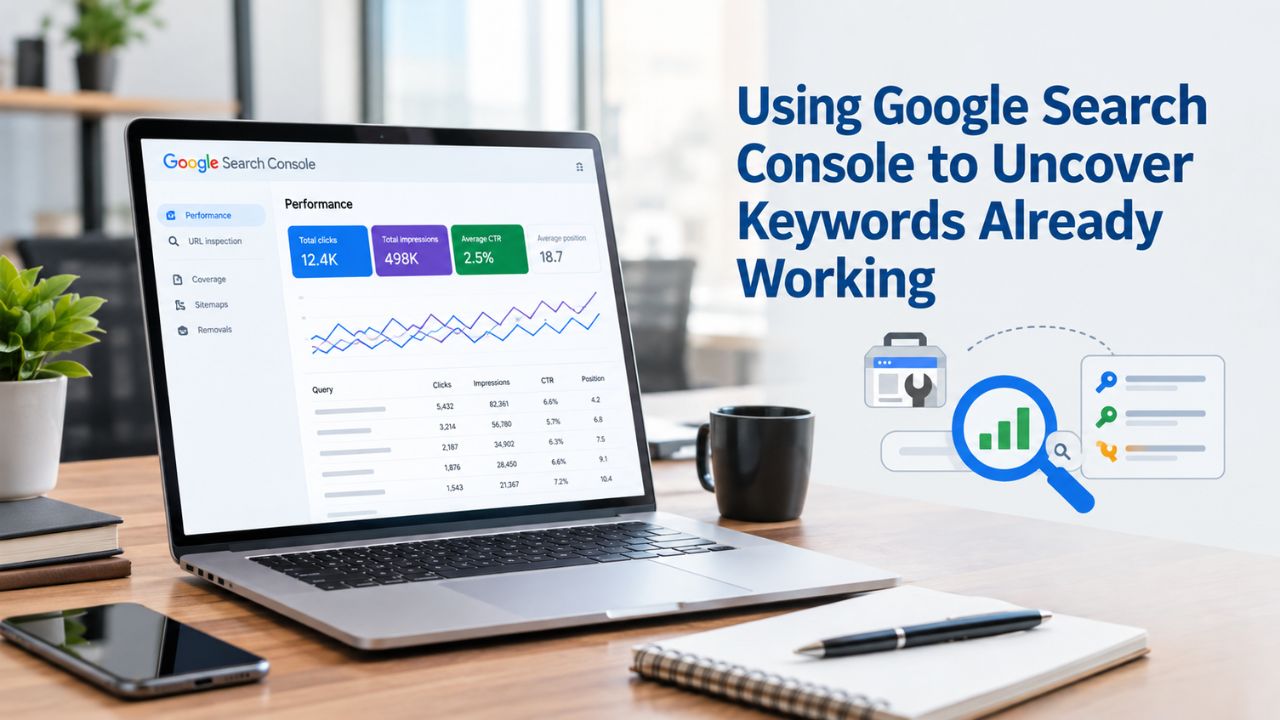
Using Google Search Console to Uncover Keywords Already Working
Google Search Console is a free tool from Google itself and reveals the exact search queries driving traffic to your site today. This data is invaluable because it shows which long-tail keywords are already working for you and which need optimization or better positioning. Your own search data is more trustworthy than any tool prediction.
Mining Search Console for Content Optimization Opportunities
In Google Search Console, go to the Performance report and filter for pages with high impressions but a low click-through rate (CTR). These are long-tail keywords your site appears in results for but doesn’t rank high enough to get clicks, or your title and description don’t match searcher expectations well enough to motivate clicks. Optimize these pages first: improve the title tag to better match keyword intent, rewrite the meta description to boost CTR, or strengthen the page content to better address the searcher’s question.
You’ll also spot keywords you rank for but didn’t intentionally target. These “accidental rankings” often reveal unmet search intent in your niche that you should capitalize on. If you rank position 5–10 for “sustainable packaging for small businesses” without having written about it specifically, that’s a signal to create focused content around that long-tail phrase to capture more of that demand.
Tracking Long-Tail Keyword Performance Over Time
Set up a monthly review of your Google Search Console data as part of your ongoing SEO routine. Track which long-tail keywords are climbing in rank, which are stuck or declining, and which are new opportunities. Pages stuck at positions 8–15 for 90 days or more often need a refresh: add more depth, update outdated data, strengthen internal linking, or improve technical SEO elements like page speed and Core Web Vitals.
This ongoing monitoring transforms Google Search Console from a reporting tool into your most accurate keyword research tool. Your own traffic data is the most trustworthy source available: it shows what your audience actually searches for in real life, not what a tool predicts based on historical patterns.
Evaluating Long-Tail Keywords: Volume, Difficulty, and Intent
Not every long-tail keyword deserves equal effort and investment. A disciplined evaluation process filters out phrases that look promising but won’t drive meaningful business value. This strategic approach prevents wasted effort on keywords that won’t move the needle for your business.
| Evaluation Criterion | High Priority | Medium Priority | Low Priority | Action |
|---|---|---|---|---|
| Search Volume | 200–1,000/month | 50–200/month | Under 50/month | Create content for high/medium; batch low into clusters |
| Keyword Difficulty | 15–30 | 30–50 | 50+ | Easier to rank; invest effort here first |
| Conversion Intent | High (transactional) | Medium (commercial) | Low (informational) | Prioritize high-intent for immediate ROI |
| Business Relevance | Direct fit | Adjacent fit | Tangential fit | Only pursue with great intent/low difficulty |
| Combined Score | 20+ | 15–19 | Below 15 | Target aggressively; monitor; skip |
The Tradeoff: Lower Volume vs. Higher Conversion Likelihood
A long-tail keyword with 50 monthly searches and high purchase intent (transactional, buyers actively seeking a solution) often beats a long-tail keyword with 500 monthly searches but research intent (informational, people gathering knowledge but not buying). This tradeoff is central to strategic keyword selection. When you’re evaluating which keywords deserve content investment, volume matters less than intent and business relevance.
Create a simple priority model to guide decisions: Search Volume (0–10 points) + Business Relevance (0–10 points) + Conversion Intent (0–10 points) − Keyword Difficulty (0–10 points) = Priority Score. Target keywords scoring 20 or higher first. This approach moves you past “highest volume” thinking into “highest ROI” thinking, which is what matters for business growth.
Filtering Out Time-Wasters: Difficulty and Domain Authority Reality
Keyword difficulty estimates how many backlinks competitor pages have for a given keyword. If competitors have 50+ referring domains for a keyword and your site has only 2, expect 6–12 months before you rank, regardless of content quality. Early in your DIY SEO journey, target low- to medium-difficulty keywords to build early wins and momentum. As your domain authority grows and you accumulate more backlinks, gradually tackle harder phrases.
“High volume + easy difficulty” sounds ideal but rarely exists in reality; if it does, others likely haven’t discovered it yet, or the keyword is losing search volume. Validate long-tail keywords by studying the actual top-10 ranking pages: if they’re low-quality or outdated, opportunity exists. If they’re high-quality and recently updated, competition is real, and the difficulty estimate is accurate.
Avoiding Common Pitfalls in Long-Tail Keyword Research
Most DIY SEO mistakes stem from rushing the research phase or using gut instinct instead of data-driven decisions. Small shifts in approach can prevent months of wasted effort and speed up your path to sustainable rankings. Learning from these common mistakes saves time and resources.
Mistake 1: Assuming Your Audience Searches As You Do
Your industry jargon and internal terminology aren’t how your audience searches. You might call your service “stakeholder engagement software,” but customers search “team communication tool” or “collaboration platform.” Keyword research uncovers these language gaps. Tools, autocomplete, and Search Console reveal how real customers phrase their searches, not how you describe your business internally from a marketing perspective.
This mistake is especially costly because content optimized for your internal language ranks poorly for customer language. You end up creating content nobody searches for, wasting months of effort. Always validate keyword language against real search behavior before investing in content creation.
Mistake 2: Targeting Only High-Competition Head Terms
Competing only for “project management software” wastes enormous effort fighting massive, established competitors. A diversified portfolio of 20–30 long-tail keywords targeting specific niches (“project management software for nonprofits,” “project management tool for freelancers,” “agile project management for remote teams”) often generates more traffic, faster rankings, and higher conversions than chasing one high-competition head term. Long-tail clustering is the time-efficient path to organic growth for small businesses.
This shift in strategy from volume chasing to niche targeting transforms DIY SEO results. Instead of ranking position 25 for “project management software” after 18 months, you rank position 1–3 for 5 long-tail variants within 6 months, capturing meaningful traffic from day one.
Mistake 3: Evaluating Keywords in Isolation, Not as Clusters
Each long-tail keyword shouldn’t be treated as a standalone ranking target. Instead, group related long-tail phrases into clusters, then create a pillar page (comprehensive guide to the entire topic) and multiple cluster pages (each targeting a specific long-tail keyword variant), all linking together. This topical authority approach improves rankings for all cluster keywords, not just one.
Clustering also makes content planning more efficient and improves SEO results. Instead of creating 50 random blog posts, create 1 pillar page and 8–10 cluster pages around each main topic. This structure signals expertise to Google and improves rankings for related long-tail keywords at the same time.
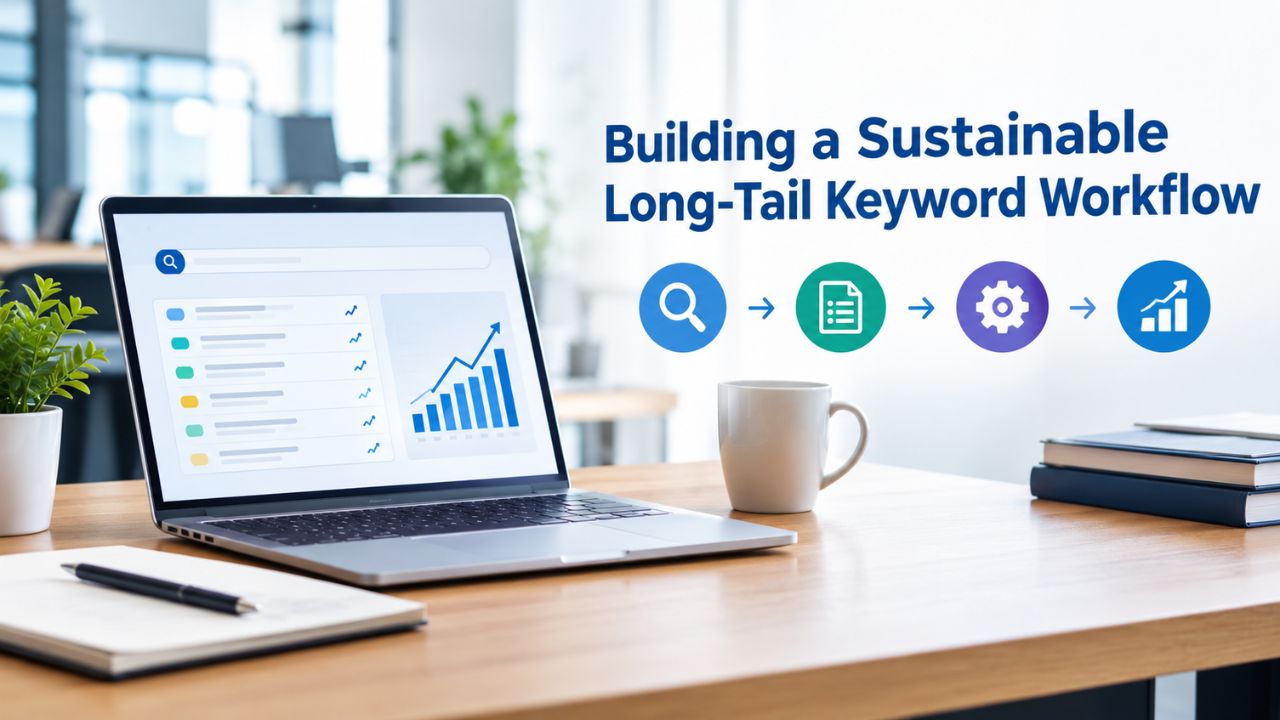
Building a Sustainable Long-Tail Keyword Workflow
One-time keyword research doesn’t work long-term. Markets shift, competitors adapt, and search trends evolve continuously. A repeatable, low-friction workflow keeps your long-tail strategy current without overwhelming your schedule or burning out your team.
Monthly Research Cadence: 4 Hours per Month
Dedicate 4 hours monthly to keyword research and strategy updates: 1 hour to search for new long-tail ideas using tools and autocomplete, 1 hour to review competitor changes and strategy shifts, 1 hour to analyze your own performance data in Google Search Console, and 1 hour to update and prioritize your keyword list. This rhythm takes minimal time while maintaining strategic awareness and ensuring you respond to market changes.
Use a simple spreadsheet to track keywords: target phrase, estimated monthly volume, current ranking position, target ranking position, content status (needs creation, needs update, published), and priority score. Review this tracking document quarterly; use topics with the highest priority scores to build your content calendar for the next 3 months. This simple system prevents keyword research from becoming scattered or disorganized.
Monthly Research Cadence: Practical Implementation Steps
Set a recurring calendar reminder for the first Monday of each month. Block off 2 hours in the morning for research and 2 hours in the afternoon for analysis and updates. Use the morning session to brainstorm new long-tail keywords using autocomplete and “People Also Ask,” review competitor strategies, and check for emerging trends. Use the afternoon session to update your keyword tracking document, analyze Search Console performance, and adjust your content calendar.
This structured approach prevents keyword research from becoming an ad-hoc task that never happens. Monthly consistency compounds over time, creating an increasingly comprehensive keyword strategy and content library that drives consistent organic growth.
Take Your Long-Tail Research to the Next Level
Building long-tail keyword research into your SEO process separates thriving DIY strategies from struggling ones that chase generic traffic without strategy. Niya Digital’s DIY SEO platform streamlines discovery, competitor analysis, and performance tracking- all the infrastructure you need to scale long-tail research systematically without hiring an external agency or team.
Frequently Asked Questions
What exactly is a long-tail keyword, and how is it different from a regular keyword?
A long-tail keyword is a search phrase typically containing 3 or more words reflecting specific, detailed search intent. “Running shoes” is a short-tail keyword; “best cushioned running shoes for marathon training under $150” is a long-tail keyword. Long-tail keywords are more specific, have lower search volume, less competition, and higher conversion rates because they target users further along the decision-making process with clearer intent.
How many long-tail keywords should I target for my small business?
Start with 15–25 long-tail keywords for your first 3 months. This is enough to build a meaningful presence without spreading resources too thin or getting overwhelmed. As your experience grows and your content library expands, move toward 50–100 keywords across multiple clusters. Quality always matters more than quantity: 10 long-tail keywords you rank for beat 100 keywords buried on page 3. Focus on building topical authority around clusters rather than chasing volume.
What’s the difference between search volume and keyword difficulty?
Search volume is the estimated number of monthly searches for a keyword. A long-tail keyword might have 100 monthly searches. Keyword difficulty estimates competitiveness by analyzing backlink profiles of top-ranking pages. A keyword can have high search volume but low difficulty (easy to rank for) or vice versa. For DIY SEO, prioritize keywords with high purchase intent and moderate difficulty (20–40) over high-difficulty phrases, even with higher search volume.
Can I use free tools for long-tail keyword research, or do I need paid options?
Start with free tools: Google Keyword Planner, Google Autocomplete, “People Also Ask” boxes, and Google Search Console. These provide enough data to discover long-tail opportunities and validate demand. Paid tools offer faster workflows, broader databases, and deeper filtering, but aren’t mandatory for beginners. Try free tools for 30 days; if you spend more than 5 hours weekly on research, a paid tool likely saves time and money.
How long does it take to rank for a long-tail keyword I’ve optimized?
Most long-tail keywords take 3 to 6 months to reach the first page of Google, depending on domain age, competition, backlinks, and content quality. Very easy long-tail keywords (difficulty under 15) may rank in 4–8 weeks. Harder ones (difficulty 40+) may need 9–12 months. Google states SEO typically takes 4 months to a year. Patience is critical; impatience is the biggest mistake DIY marketers make.
What if I optimize a page for a long-tail keyword but it doesn’t rank?
Pages fail to rank for several reasons: the keyword is harder than tools predict, your domain authority is too low relative to the competition, content quality doesn’t match top-ranking pages, or technical SEO issues prevent crawling. Review the top-10 ranking pages for your keyword: if they’re substantially better (longer, more recent, more authoritative), that keyword might be harder than difficulty scores suggest. Reassess; consider less-competitive variants or invest in domain authority.
Should I focus on search volume or conversion intent when choosing long-tail keywords?
Focus on conversion intent first, then search volume. A 50-monthly-search keyword with high purchase intent often beats a 500-monthly-search keyword with low intent. Build your list with a mix: high-intent keywords that drive immediate conversions plus lower-volume keywords that attract early-stage researchers. Both support your business; high-intent keywords drive direct revenue.
How do I know which long-tail keyword variants are worth creating content for?
Use your keyword research tool to identify clusters of related long-tail keywords. If you find 8 long-tail variants around “project management software for nonprofits,” that signals you should create multiple content pieces (blog posts, comparison pages, guides) around that cluster. If you find only 1–2 variants, a single content piece suffices. Clusters indicate sustained search demand worth serving with multiple pages.
Can I rank for the same long-tail keyword on multiple pages of my site?
Generally, no; Google will choose one page as the primary rank holder for a keyword. Creating multiple pages targeting the same long-tail keyword confuses Google and dilutes ranking power. Instead, create one definitive page per long-tail keyword and link related pages to it. This internal linking funnels authority to the primary page and strengthens overall topical authority.
What’s the fastest way to discover long-tail keywords for my niche?
Google Autocomplete is the fastest for brainstorming (5 minutes per seed keyword). “People Also Ask” boxes reveal question-based long-tails (5 minutes per query). A paid keyword research tool can generate 100+ suggestions in 15 minutes. Combine all three: spend 30 minutes on autocomplete and “People Also Ask” variations, validate with a tool, and you’ll have a solid 20–30 keyword list ready for content planning within an hour.
Should I include long-tail keywords in my meta title and meta description?
Yes, but naturally. Your meta title should include your primary long-tail keyword if it fits without sounding robotic or stuffed. “How to Find Long-Tail Keywords Using SEO Tools Effectively” includes keyword phrases and reads naturally; this is good. “Long-Tail Keywords Finder Tool Research Keywords Phrases Software” sounds stuffed and hurts click-through rate. Prioritize readability and click appeal; keyword placement comes second.
How do I track competitor long-tail keyword rankings?
Use keyword research tools to add competitor domains and track keywords they rank for. Set up monthly alerts for ranking gains or losses. When competitors rank for long-tail keywords you missed, analyze why; often there’s an emerging demand signal or a content format you overlooked. Competitive listening is passive intelligence gathering that informs strategy without constant manual work.
What’s the relationship between long-tail keywords and topical authority?
Topical authority means Google recognizes your website as a comprehensive, trustworthy source on a specific topic. Build it by creating multiple content pieces around related long-tail keywords and linking them through a pillar-and-cluster structure. Create 1 pillar page (comprehensive topic guide) and 10 cluster pages (each targeting a long-tail variant), all linking together. This structure signals expertise and improves rankings for all related keywords.
When should I stop pursuing a long-tail keyword that isn’t ranking?
After 6 months with no improvement beyond position 15, reassess and decide. Check whether competitors have stronger backlink profiles or more authoritative domains. If yes, reallocate effort to lower-difficulty keywords. If no, improve your content: add 50% more depth, refine search intent matching, improve page speed, strengthen internal linking. Give it another 3 months. If still stuck, it’s low-ROI; move on.
How do I balance long-tail keywords with broader keywords in my overall SEO strategy?
Long-tail keywords are your foundation because they’re easier to rank for and often convert better. Broader keywords are your long-term goal once you build domain authority and topical expertise. Start with 80% long-tail, 20% broader keywords. As rankings improve and authority grows, gradually shift toward 50/50. This balanced approach captures qualified traffic now while building authority for competitive terms later.
Glossary
- Keyword Difficulty (KD): A score (typically 0–100) estimating competitiveness based on backlink profiles of top-ranking pages. Low difficulty (0–30) means easier to rank for; high difficulty (60–100) means harder, usually requiring significant domain authority or backlinks to compete.
- Search Volume: Estimated number of monthly searches for a keyword. Long-tail keywords typically have lower search volume (under 1,000 monthly) than broad keywords. Tools provide estimates; actual volume varies month to month based on seasonality and trends.
- Search Intent: The reason behind a search query, informational (seeking knowledge), navigational (looking for a specific site), transactional (ready to purchase or sign up), or commercial (comparing options before deciding). Long-tail keywords make intent clearer than short-tail keywords.
- SERP (Search Engine Results Page): The page Google displays when someone performs a search. Ranking “on the first page” means appearing in positions 1–10 of the SERP. Long-tail keywords are often easier to rank on page one than competitive head terms because they have lower competition.
- Topical Authority: The extent to which Google recognizes your website as a comprehensive, authoritative source on a specific topic. Built by creating multiple content pieces around related keywords and linking them to a central pillar page in a cluster structure.
- Domain Authority: A measure of overall site reputation and ranking power. Higher domain authority improves your chances of ranking for competitive keywords. Newer sites have lower domain authority and typically find more success targeting long-tail keywords first.
- Conversion Rate: The percentage of website visitors who complete a desired action (sign up, purchase, request demo). Long-tail keywords typically deliver higher conversion rates than broad keywords because searchers have more specific needs and higher purchase intent.
- Backlink: A hyperlink from an external website to your site. Search engines view backlinks as credibility votes. Pages ranking for competitive keywords typically have many backlinks; pages ranking for long-tail keywords often have fewer backlinks because competition is lower.