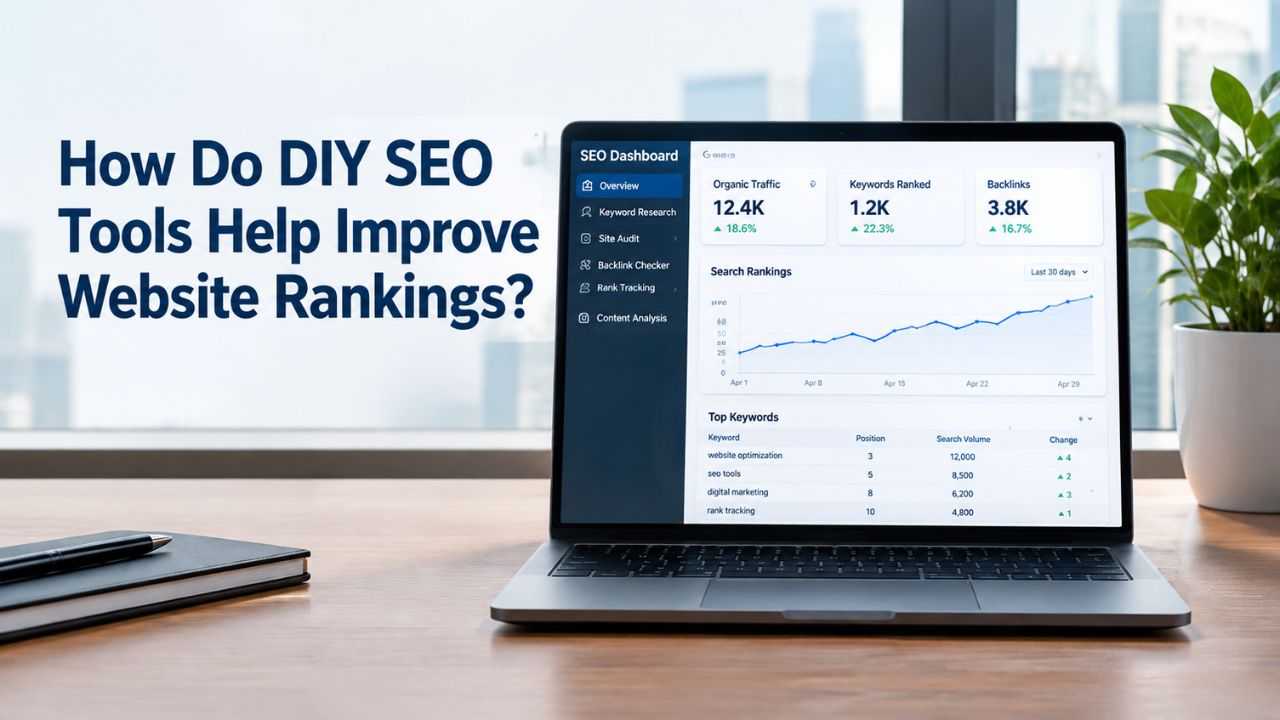
Most website owners understand that search visibility drives traffic, but many feel caught between expensive agency fees and the technical complexity of managing SEO alone. DIY SEO tools bridge that gap by automating the four core workflows that improve rankings: keyword research, technical audits, rank tracking, and competitor analysis. Understanding how these tools connect to Google’s ranking factors helps you decide which tools matter most for your business.
How Google Actually Ranks Websites
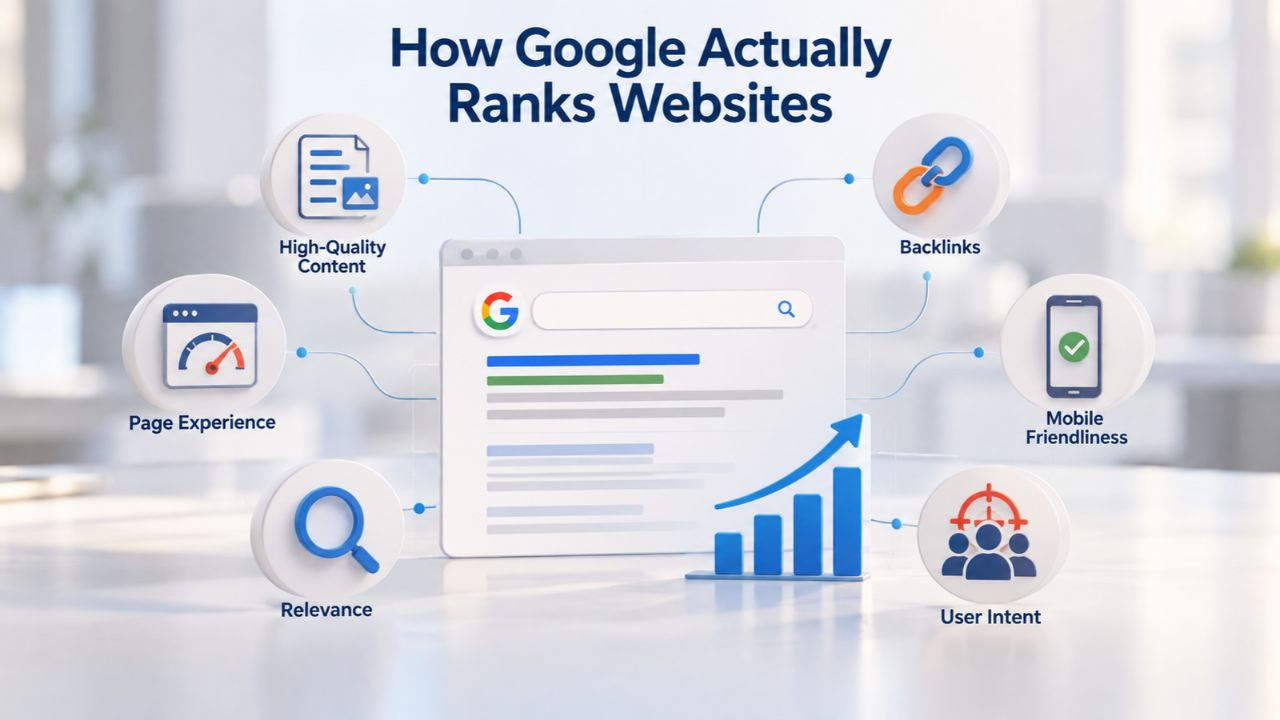
Search engines evaluate hundreds of signals when deciding which pages appear first for a given query. Google’s ranking systems weigh many factors and signals, including content relevance and quality, backlinks, page speed, mobile usability, and security features. However, Google has never published an official fixed list of these factors. In practice, every search query uses its own algorithm shaped by the user’s location, search history, device, and search intent.
The Three Core Ranking Levers
Google’s ranking systems evaluate three broad categories of signals: on-page factors you control directly, off-page factors that depend on others linking to your site, and technical factors that affect how search engines crawl and understand your content. Backlinks signal that other sites trust your content enough to reference it. Quality content matches what users are actually searching for and provides real answers. Page experience means your site loads fast on all devices, feels responsive to user interaction, and inspires trust through security and accessibility.
DIY SEO tools address each lever in different ways. Keyword research tools help you identify the on-page opportunity. Technical audit tools uncover crawlability and performance blockers. Rank tracking tools show you whether your efforts move the ranking needle. Competitor analysis tools reveal what works for sites in your space. Together, they transform ranking improvement from guesswork into measurable strategy.
Why Rankings Take Time to Build
A realistic expectation for SEO is that it takes an average of three to six months to start showing measurable results. However, some cases stretch to a year or longer before significant ranking movement appears. Pages that typically rank in the top 10 for competitive keywords are around two years old, and pages ranking in the 1 position average nearly three years old. This timeline isn’t arbitrary; Google needs time to crawl and index your content, and ranking signals compound over weeks and months as your site accumulates evidence of relevance, authority, and trustworthiness.
Google needs hours or weeks to discover new content, crawl your site, and index updates you make. During this waiting period, search engines evaluate your page against thousands of competing pages for the same keywords. Building authority, the signal that your site and content are trustworthy on a topic, requires consistent implementation of best practices across multiple pages over time. Early SEO efforts often feel invisible because Google is still evaluating your content. DIY tools keep you motivated by showing progress week to week, even when major keyword rankings take longer to move.
SEO Implementation Timeline and Realistic Expectations
| Phase | Timeline | Key Activities | Expected Results | Ranking Improvements |
|---|---|---|---|---|
| Foundation Building | Months 1–3 | Site audit, keyword research, technical fixes, page optimization, initial content creation | Minimal visible results; groundwork laid for future gains | Little to no ranking movement; foundation established |
| Momentum Building | Months 3–6 | Continue content creation, publish keyword-targeted pages, quick-win optimization, monitor results | Rankings improve for long-tail keywords; organic traffic noticeably increases | Long-tail keywords rank; existing pages improve slightly |
| Accelerating Growth | Months 6–12 | Expanded content strategy, reinforce top-ranking pages, build backlinks, monitor competitor activity | Significant traffic growth; multiple keywords ranking on page one; business ROI evident | 2–3x traffic growth; competitive keywords begin ranking |
| Exponential Compounding | Month 12+ | Continued content at scale, topical authority reinforcement, strategic link-building | Continued 2–3x monthly traffic growth; high ROI achieved; self-reinforcing cycle | 5–10x initial traffic by month 18–24; exponential growth |
Search Engine Optimization Plans & Pricing
Choose the right SEO plan for your website. Improve search engine visibility, discover relevant keywords, monitor rankings, and access customized optimization services to support your business growth.
Search Engine Optimization (SEO)
Bring more traffic to your website with Search Engine Optimization.
- Search Optimization: Improve search engine rankings with keyword and suggested topics tool
- Keyword suggestions: Get personalized phrases and words to add to increase traffic to your website and help it rank better.
- Tracking your ranking: Track the progress of your website’s rank on Google over time
- Create your sitemap: Customize, create and submit a site map to aid search engines in crawling your site.

Customized SEO Plan
Get Customized Plan For your Business Website SEO (Search Engine Optimization)
- On-Page & Off-Page Optimization: Update Meta Tags, Titles, Descriptions, Alt Tags, Schema / JSON-LD / Microdata Format, HTML + TXT + XML Sitemap, Robots.TXT, Google Analytics & Google Search Console integration
- Keyword Research & Analysis: Improve Keyword Effectiveness Index (KEI) with main heading & sub-heading tags, Content Review by professional content editor
- Competitor Research & Analysis: Compare and Compete with competitors search engine ranking positions, Track and analyse competitor trends
- Diversify Back Link Profile: Relevant Business Directory Submission, Article Submission, Blog Creation, Web 2.0 asset creations, Author Profile Links, Social Book Marking links
- Monthly Task Review & Progress Reporting: Get Monthly SERP Reports and Task Performance Reports
Keyword Research: Finding the Terms Your Audience Searches
Keyword research is the foundational step of SEO. It’s the process of discovering which search terms and phrases your audience actually uses when looking for products, services, or information related to your business. Without research, you might write excellent content for a topic nobody searches for, or pursue keywords so competitive that ranking takes years. Keyword research reveals three critical data points: search volume (how many people search for a term monthly), keyword difficulty (how hard it is to rank given the competition), and search intent (whether searchers want to buy, learn, compare, or navigate).
The mechanism is direct and powerful. By identifying and targeting relevant keywords, website owners can optimize content to match user search intent, improving visibility in search results and boosting overall ranking potential. When you write content for a keyword with genuine demand and manageable competition, your page has a realistic chance to rank. When you guess at keywords based on what sounds important, you build content into a void where nobody finds it.
How Keyword Research Improves Rankings
Keyword research forms the backbone of any effective SEO strategy. By identifying and targeting relevant keywords, you ensure your content answers questions people are actively searching for. This alignment between content and search demand is one of the most direct paths to ranking improvement. A DIY keyword research tool shows which terms have meaningful search volume and which ones your site can realistically compete for given its current authority.
Many small business owners create content around assumed topics rather than researched demand, leading to content that ranks for keywords they never intentionally targeted, sometimes good keywords, sometimes not. Niya Digital’s team has repeatedly seen this pattern across DIY SEO audits: without structured keyword research, businesses waste content opportunities on low-value or zero-value keywords. A keyword research tool prevents this waste by surfacing actual search demand, search volume, and competitive difficulty before you invest time creating content.
Long-Tail Keywords vs. Competitive Keywords
Long-tail keywords are more specific, multi-word phrases typically containing three or more words. These keywords generally have lower search volume than broad terms, but searchers using them often have clearer intent and are more likely to convert. Short-tail keywords are broader, one- or two-word phrases with much higher search volume but also significantly more competition. Most successful DIY SEO strategies begin with long-tail keywords because they’re easier to rank for and often convert better.
A keyword research tool lets you filter by difficulty and volume, helping you identify “quick wins”, keywords with meaningful search volume that newer sites can realistically rank for. Starting with long-tail keywords builds early momentum and authority, which later supports ranking for broader, more competitive terms. As your site establishes topical authority and earns more backlinks, you can gradually shift toward more competitive keywords that drive higher volume. This phased approach prevents years of work spent competing for keywords your site isn’t strong enough to rank for yet.
Technical SEO Audits: Fixing Hidden Ranking Blockers
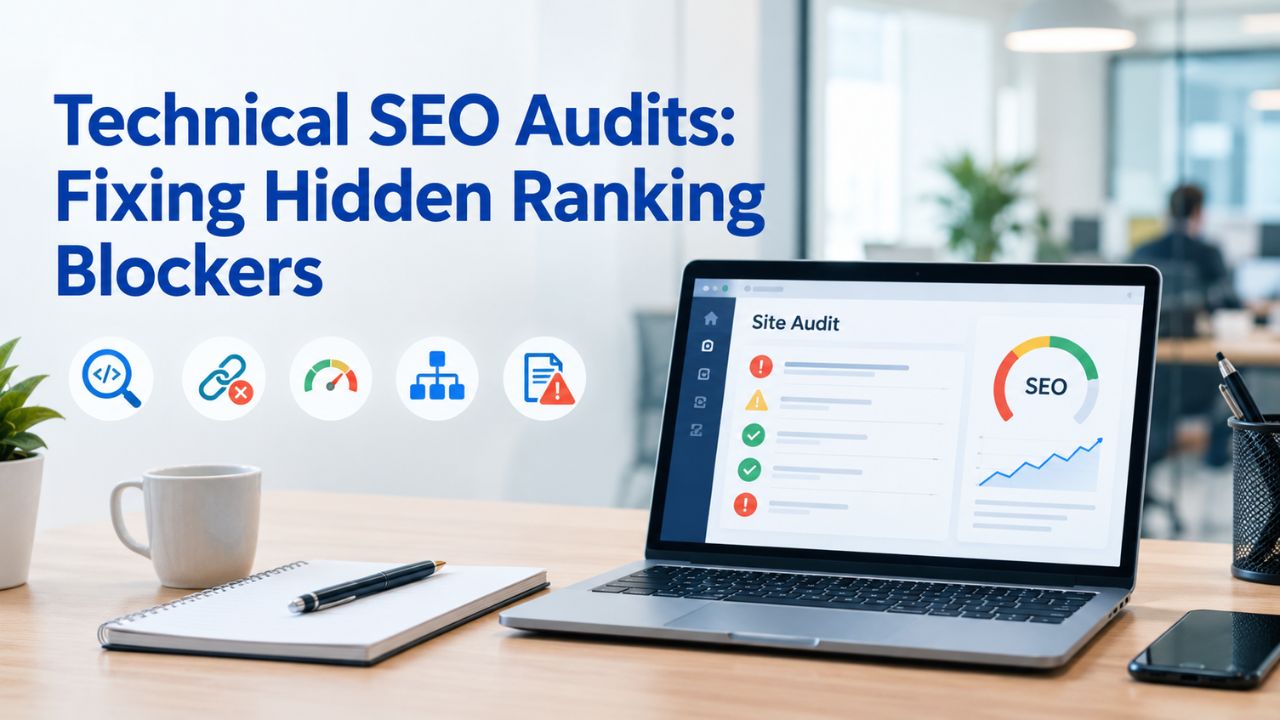
Technical SEO directly affects how search engines crawl, understand, and rank your website. Technical SEO tools optimize your website’s structure to improve search engine visibility, helping ensure fast load times and accessibility across all devices. Regularly using technical audit tools is essential to a comprehensive SEO strategy because technical issues can silently damage rankings, and you may not see the impact in analytics until you fix the problem. Common technical issues include broken internal links, missing or duplicate meta tags, slow page speeds, poor mobile rendering, and pages that prevent search engines from crawling effectively.
A DIY technical audit tool crawls your entire site and generates a report of issues organized by severity and impact. The report typically highlights missing critical meta descriptions, broken internal links, duplicated content, slow-loading pages, and indexing problems. Beyond identifying issues, quality audit tools provide clear guidance on how to fix each problem, making resolution straightforward without requiring you to hire a technical expert.
What a Technical Audit Reveals
Technical audit tools scan your website automatically and flag issues that would take weeks to identify manually. They reveal on-page problems like missing title tags or meta descriptions, technical issues like redirect chains or broken links, and content issues like thin pages or duplicate content across multiple URLs. The audit also checks whether your site follows mobile-first indexing best practices, loads quickly on various connection speeds, and provides a good user experience across devices.
The real value of automated audits is in scope and prioritization. Running a manual technical review of 100+ pages is impractical and error-prone. A crawl tool completes the same analysis in minutes and prioritizes fixes by impact. A missing title tag on your homepage matters far more than one on an obscure archive page. A slow homepage affects user experience and rankings more than a slow blog post from two years ago. By prioritizing, you focus your limited time on fixes that move the ranking needle most.
Mobile Optimization and Page Speed as Ranking Factors
Search engines crawl the mobile version of your website first and use that version as the primary basis for ranking and indexing. Mobile optimization is no longer optional; it’s foundational. Google Search Console provides mobile usability reports showing which pages have mobile rendering issues. These reports help guide improvements in your site’s mobile experience, which is crucial in today’s mobile-first indexing environment. Pages that don’t render properly on smartphones or load slowly on mobile connections will struggle to rank well.
Page speed is a confirmed ranking factor for both desktop and mobile. Users expect pages to load in under three seconds; pages that take longer see higher bounce rates, which signals to Google that the page isn’t meeting user needs. A technical audit tool measures your page load speed, identifies what’s slowing your site down (unoptimized images, render-blocking resources, uncompressed CSS or JavaScript), and suggests specific optimizations. Fixing these technical issues often produces immediate ranking improvements because you’re removing barriers that prevent your content from ranking at its potential.
Rank Tracking: Proving That Your Efforts Work
Rank tracking is the ongoing process of monitoring where your website’s pages rank on search engine results pages for specific keywords. By regularly checking these positions, you measure SEO progress, spot new opportunities, and stay competitive. Rank tracking transforms SEO from a guessing game into a measurable discipline. You can see exactly which tactics move keyword rankings, which content topics resonate with search engines, and where your site stands relative to competitors.
Rank tracking tools automatically monitor your rankings for target keywords daily or weekly, showing you performance over time. Over weeks and months, you see trends. Do rankings for certain keywords consistently climb? Do others plateau or decline? This data connects your SEO actions to outcomes. When you optimize a page for a keyword, update its content, add internal links, or build backlinks, rank tracking shows whether that effort actually improved rankings or had no effect.
Why Tracking Is Essential
Without rank tracking, you’re managing SEO blind. You might optimize a page, wait months, and have no idea whether your optimization worked or something else drove ranking changes. When rankings suddenly drop across many keywords in the same week, that’s typically a Google algorithm update affecting your entire site, not a problem with individual pages. When only one page drops, that specific page may need attention or optimization. This insight lets you respond strategically instead of panicking, and it helps you understand whether your SEO strategy is working.
Rank tracking also reveals algorithm updates in real time. Search engines constantly refine their algorithms. When you see a sudden, unexplained ranking shift across multiple keywords at once, that usually signals that Google released an update affecting many sites. Understanding this prevents wasted time troubleshooting pages that are fine; the issue is external, not something you caused. Conversely, if one page’s rankings drop while others stay steady, you know that specific page needs investigation and improvement.
Identifying “Quick Wins” for Faster Momentum
Rank tracking reveals which keywords are close to page one but not quite ranking there yet. Keywords sitting in positions 11–20 (page two of Google) are quick wins: keywords your site is already ranking for but needs a small push to reach the first page. Often a quick win requires only a handful of additional internal links, updated content, or one new backlink to move from page two to page one. This small change can produce measurable traffic gains immediately.
Quick wins build momentum and confidence in your SEO strategy. Ranking on page one for even a low-volume keyword proves that your optimization efforts work and generates real traffic. This early win fuels motivation and resources for longer-term keyword targets. Many successful DIY SEO practitioners focus on quick wins in the first 3–6 months, building authority and momentum before tackling more competitive keywords. Rank tracking makes these quick wins visible and actionable, preventing you from wasting effort on keywords you’re nowhere near ranking for yet.
Competitor Analysis: Learning What Works
DIY SEO tools reveal which keywords competitors rank for, what content topics drive their traffic, and how their backlink profiles compare. This reverse-engineering reveals gaps in your own strategy. You might discover that a competitor ranks for 50 keywords your site doesn’t, signaling an entire content category you’ve overlooked. Or you might find that competitors are targeting a specific long-tail keyword category that you haven’t explored yet. This competitive intelligence lets you build a focused content strategy based on what’s actually working in your market.
Using competitor data well doesn’t mean copying competitors; it means understanding what keywords and topics drive value in your niche. A keyword a competitor ranks for signals demand; your job is to create content that answers that search query better than your competitor’s current content. Many keyword research tools include competitor keyword analysis, showing which of your competitors rank for specific keywords and what their ranking positions are. This data helps you identify opportunities (keywords competitors target that you don’t) and threats (keywords your competitors beat you on).
Building Your Content Strategy from Competitor Gaps
Competitor analysis reveals content gaps, topics your audience cares about, but your site hasn’t covered. If three competitors rank for 20 keywords related to “sustainable business practices,” and you rank for none, that’s a category gap worth filling. DIY tools quantify this gap, helping you build focused content plans instead of guessing at topics that might work. A competitor’s top-ranking pages prove those topics have audience demand; your job is to understand why those pages rank well and create better content on the same topic.
The key is to use competitor data defensively and strategically, not copy it. You’re identifying underserved keywords and content types your audience actively searches for. This data-driven approach prevents wasting content on topics nobody searches for, a mistake many DIY SEO practitioners make without competitive research. Once you identify a valuable content gap, you can prioritize it based on search volume and alignment with your business goals.
Reverse-Engineering Competitor Backlink Strategies
Understanding where your competitors get backlinks reveals link-building opportunities for your own site. If a competitor earned 50 backlinks from industry directories, podcasts, and resource pages, those are potential sources for your own backlinks. DIY tools that analyze backlink profiles show you not just where competitors’ links come from, but the quality and relevance of those links. This prevents wasting time pursuing low-quality link sources that won’t help your rankings.
Competitor backlink analysis also reveals partnership and content opportunities you might have missed. If a competitor is mentioned in five industry publications, those publications are likely interested in your niche. If a competitor appears in multiple industry resource guides, creating similar content-worthy resources for your own site might attract similar links. This strategic approach to link-building focuses your effort on high-potential sources rather than cold outreach to random websites.
Start Your SEO Journey with Niya Digital’s DIY Platform
Stop guessing whether your SEO efforts are working. Niya Digital’s DIY SEO platform gives you keyword research, technical audits, rank tracking, and competitor insights in one integrated system. Track your progress weekly, identify quick wins immediately, and build a sustainable ranking strategy based on real data instead of assumptions.
Understanding DIY SEO Tool Categories and ROI
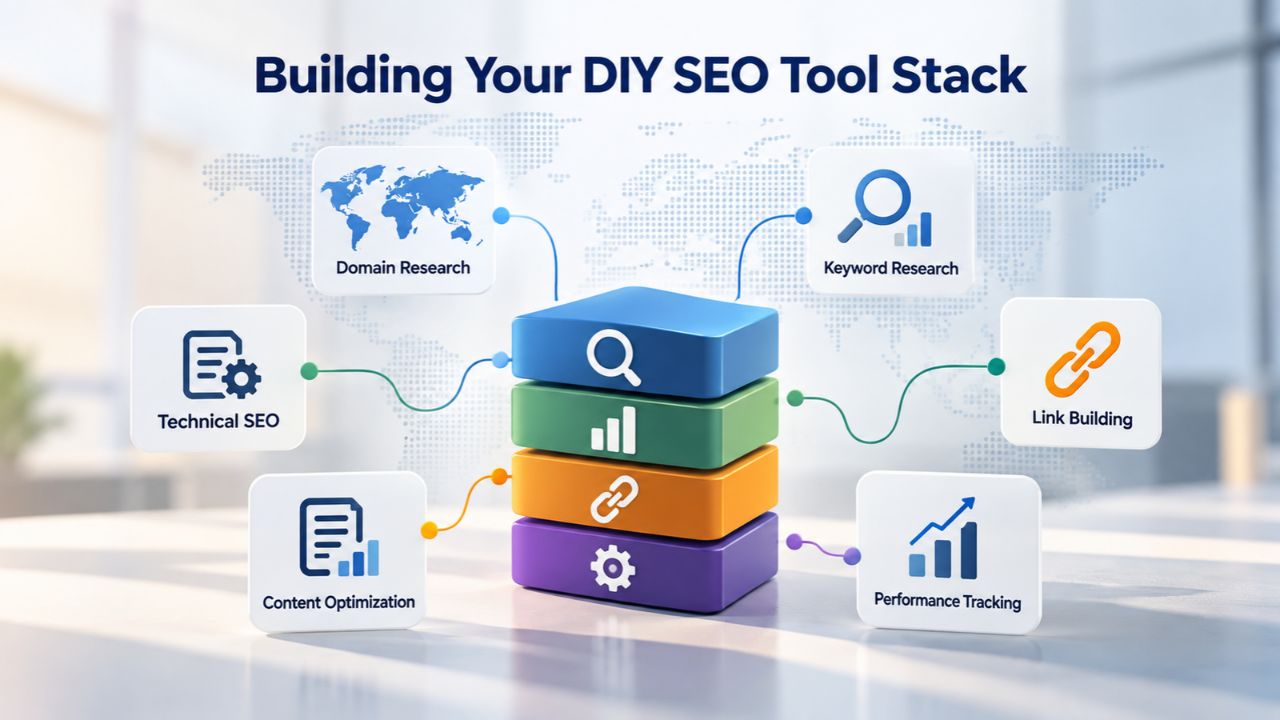
DIY SEO tools fall into several categories, each serving a different function in your overall strategy. Keyword research tools discover high-value search terms and measure their competitive difficulty. Technical audit tools crawl your site and identify ranking blockers. Rank tracking tools monitor your progress week to week. Content optimization tools analyze top-ranking pages and suggest improvements for your own content. Competitor analysis tools show what’s working for sites like yours. Analytics platforms connect your rankings to actual business outcomes.
Many successful DIY SEO operations start with free Google tools (Search Console, Analytics, Mobile-Friendly Test) supplemented by one affordable point tool in their biggest pain area. As you prove the model works, you add more specialized tools. The key is to start small, prove SEO generates results, then scale strategically. This approach keeps initial investment low while letting you learn which tools add the most value for your specific business.
Is DIY SEO Worth the Time Investment?
DIY SEO only makes financial sense if you have available time to dedicate to it. Managing SEO typically requires 5–20 hours per week depending on your goals and competition level. At any hourly rate above your local average labor cost, your time investment becomes substantial. Many small business owners discover that hiring even 5–10 hours per week of freelance SEO support, rather than trying to DIY everything, actually delivers better ROI because it frees them to focus on core business activities. The hybrid approach, using DIY tools to do keyword research and rank tracking yourself while hiring someone to create optimized content, often offers the best balance of control and efficiency.
Ranking Factors Addressed by DIY SEO Tools
This table shows which ranking factors different DIY SEO tool categories address and why each matters:
| Ranking Factor Category | Specific Factors | DIY Tool That Addresses It | Why It Matters for Rankings |
|---|---|---|---|
| On-Page Relevance | Keyword alignment, content quality, search intent match | Keyword Research, Content Optimization | Google ranks pages highest when content directly answers what users are searching for. Targeting wrong keywords means rankings won’t happen. |
| Page Experience | Mobile responsiveness, page load speed, visual stability | Technical Audit, Google PageSpeed Insights | Google confirmed that fast, responsive, stable pages rank higher. Technical issues directly suppress rankings even if content is excellent. |
| Authority & Trust | Backlinks from authoritative sites, site age, topical authority | Competitor Analysis, Rank Tracking over time | Google evaluates whether other authoritative sites link to and trust your content. Newer sites with few backlinks rank lower regardless of content quality. |
| Crawlability & Indexing | Broken links, duplicate content, proper site structure, robots.txt | Technical Audit | If Google can’t crawl your pages or index them properly, they won’t rank at all. Technical blockers are the 1 invisible ranking suppressor. |
| Freshness & Updates | Regular content updates, new content publication | Rank Tracking + Content Planning | Google favors sites that regularly update and publish content. Outdated content ranks lower than actively maintained content on the same topic. |
| User Behavior Signals | Click-through rate from search results, time on page, bounce rate | Rank Tracking + Google Analytics | When users click your result and stay on your page, Google interprets this as your content being relevant. When users bounce immediately, Google demotes your ranking. |
Understanding Costs vs. Agency Services
Full-service SEO agencies typically charge significantly more than DIY tools. However, pricing varies widely based on scope, industry competition, and the agency’s experience level. A basic DIY tool stack costs substantially less than hiring an agency, but requires your ongoing time investment. An agency handles everything but provides less direct control over strategy and process.
The decision isn’t purely financial. Consider whether you have time available, whether you enjoy learning SEO tools, and whether your business can afford to wait while you gain experience. Many growing businesses start with DIY tools, transition to a hybrid model as demand increases, and eventually hire a specialized team as SEO becomes central to growth. The important point is that DIY tools make SEO accessible at any budget level.
Building Your DIY SEO Tool Stack
Most effective SEO operations don’t rely on a single tool. Instead, they combine free foundational tools with paid point solutions focused on specific tasks. Google Search Console, Google Analytics, and Google Mobile-Friendly Test are free and provide essential data directly from Google. These should form the foundation of any DIY SEO strategy because they show how search engines see your site and whether your optimizations are actually improving rankings.
Beyond Google’s free tools, many DIY practitioners add one or more specialized tools focused on their biggest challenge or goal. Some prioritize keyword research because they struggle to identify the right keywords to target. Others focus on rank tracking because they want clear proof that their efforts work. Still others invest in technical audits because they know technical issues are holding them back. Starting with tools that solve your biggest problem creates early wins and builds confidence in the SEO process.
Planning Your Tool Implementation
A realistic first month for DIY SEO involves setting up Google Search Console and Google Analytics, identifying target keywords, running a site audit to find technical issues, and creating a rank-tracking project to monitor your top keywords. These foundational activities require several hours but don’t necessarily require paid tools; you can accomplish much of this with Google’s free offerings. In month two, you implement fixes from your audit, optimize existing pages for your target keywords, and start creating new content around underserved keyword opportunities.
The following table maps different tool categories to the specific problems they solve and when each makes most sense in your SEO journey:
| Tool Category | Problem It Solves | When to Prioritize | Alternative Approach |
|---|---|---|---|
| Keyword Research | Identifying search demand and keyword difficulty | Start here if you’re unsure which keywords have audience demand | Use Google Search Console to see keywords you already rank for |
| Technical Audit | Finding broken links, slow pages, and crawlability issues | Prioritize if your site is over 2 years old or has never had a formal audit | Manually check a sample of pages using Google tools |
| Rank Tracking | Monitoring progress and identifying quick wins | Start after you’ve targeted 10–20 keywords; measure weekly to stay motivated | Use Google Search Console’s average ranking feature |
| Content Optimization | Analyzing top-ranking content for your target keywords | Useful before creating or updating major content pieces | Read the top 5 Google results for your target keyword manually |
| Competitor Analysis | Finding keyword gaps and content opportunities | Very useful if you have established competitors | Search for competitors’ top-ranking content in Google |
| Analytics | Connecting rankings to business outcomes (traffic, conversions) | Essential once you have meaningful ranking improvements | Track traffic patterns manually using Google Analytics 4 |
Choosing Between Free and Paid Tool Options
Google’s free tools solve approximately 70% of DIY SEO problems. Free tools reveal which keywords drive traffic, show technical issues Google can detect, monitor your indexing status, and provide ranking data through Search Console’s average position metric. Free tools fall short in automation, competitive analysis depth, and detailed keyword research that requires analyzing search volume and difficulty across thousands of terms at once.
Paid tools automate tasks that would take hours to do manually and provide deeper insights into keywords and competitors. A paid keyword research tool can analyze 10,000 keywords in minutes; doing this manually would take weeks. A paid rank tracker monitors 100+ keywords daily; manual checking would take hours weekly. The question isn’t whether paid tools are better; they clearly are, but whether the time savings and insight depth justify the cost for your specific situation. Many DIY practitioners find that one affordable paid tool in their biggest pain area delivers immediate ROI through time savings.
Getting Started: A Realistic SEO Timeline
Search engine optimization is not a quick-fix marketing channel. It’s a medium-term investment that compounds over time. The realistic timeline for SEO success spans twelve to twenty-four months for most businesses, though initial results often appear within three to six months with consistent execution. Understanding this timeline prevents frustration and keeps your strategy focused on long-term ranking improvement rather than short-term wins.
The first three to six months of SEO work focus on building the foundation. During this period, you’ll run a comprehensive site audit, identify your core target keywords, fix critical technical issues, optimize your most important existing pages, and publish initial new content around your target keywords. Ranking improvements during this phase are often minimal, which is normal. You’re building the foundation that future rankings rest on. Many businesses feel discouraged during this phase because they don’t see dramatic traffic increases yet, but the groundwork you’re laying is essential for month 6 and beyond.
Month 1–3: Foundation Building
The first month focuses on research and planning. Run a technical audit of your entire site, identify your main ranking blockers, and create a list of 20–30 target keywords organized by priority and difficulty. Set up rank tracking to establish baseline rankings for these keywords. Months two and three involve implementing fixes from your audit (fixing broken links, improving page speed, ensuring mobile compatibility) and optimizing your most important existing pages for your target keywords.
During this phase, expect minimal ranking movement. Google is still re-crawling your site after fixes and re-evaluating pages after optimization. Ranking improvements from this foundation work typically appear in month 4 or 5. Many DIY practitioners lose motivation during these first months because they work hard but don’t see obvious results. This is why rank tracking is valuable: it shows small week-to-week improvements even when major ranking shifts haven’t happened yet. Stay consistent through this phase; month 4 is typically when initial ranking improvements become visible.
Month 3–6: Visible Momentum
By month three, Google has re-crawled your optimized pages and begun re-evaluating them for ranking. Long-tail keywords start ranking for the first time, and existing pages begin improving for targeted keywords. Organic traffic noticeably increases during this phase. You’ll also start seeing “quick wins”, keywords you’re ranking for at positions 11–20 that need just one more push to reach page one. By month six, you should see clear ranking improvements for at least some of your target keywords and meaningful traffic gains.
During months three through six, continue publishing new content around keyword opportunities you’ve identified, and expand your quick-wins strategy by giving borderline-ranking keywords additional optimization support. This might mean adding internal links, updating content to match search intent better, or earning one additional backlink. Many businesses discover that the effort invested in these quick wins generates measurable traffic and ROI, which funds continued SEO investment.
Month 6–12: Compounding Growth
The six to twelve-month mark is where consistent SEO strategy really shows results. Multiple pieces of content are now ranking, your site’s topical authority has increased, backlinks are accumulating, and each new piece of content ranks slightly faster than the previous one. Organic traffic accelerates noticeably during this phase. If your strategy is sound, you’ll see 2–3x traffic growth by month twelve compared to month six. More importantly, you’re now generating measurable conversions or business results from organic search traffic.
During this phase, continue publishing content around new keyword opportunities, reinforce your top-ranking pages with additional internal links and content updates, and monitor competitor activity to stay ahead. The work you did in months 1–3 is now compounding as domain authority increases. Pages you publish in month twelve rank faster and higher than pages you published in month three, because your site has established relevance and authority on your topic.
Month 12 and Beyond: Exponential Returns
Past the one-year mark, consistent SEO strategy produces exponential returns. Each month typically brings multiple new pages ranking, improved rankings for existing pages, and increasing organic traffic. By this point, you’ve likely achieved positive ROI on your SEO investment several times over. Many businesses see 5–10x traffic growth by month 18–24 compared to their starting point.
At this stage, SEO becomes self-reinforcing. New content ranks faster because your site has established authority. More traffic means more opportunities for natural links (people linking to your content). More links increase your authority further. The key is maintaining consistency and continuing to publish quality content around keyword opportunities. Many businesses dramatically scale their content production during this phase because they’ve seen proof that SEO works and they understand which keywords and topics drive value.
Common DIY SEO Mistakes to Avoid
Even with the right tools and knowledge, businesses make predictable mistakes that slow progress. Targeting only high-volume keywords without checking difficulty often results in years of effort with minimal ranking improvement. Writing content for assumed topics rather than keywords with proven search demand creates content nobody searches for. Ignoring technical issues while focusing only on content creates an invisible ceiling: your site never ranks, no matter how good the content is. These mistakes are costly, but they’re also completely preventable.
The most frequent mistake is stopping too early or constantly changing strategy. SEO compounds over time, and changing direction every three months destroys that compounding effect. Many businesses give up just before results appear, not realizing rankings take 3–6 months to show meaningful movement. Rank tracking tools help you stay motivated by showing progress week to week, even when major keyword movements take longer.
Avoiding “Set It and Forget It”
Setting up tools but never reviewing them defeats the purpose entirely. An unexamined rank tracker won’t help you identify quick wins or spot problems. An audit report that sits unread means you never fix the issues hurting your rankings. By monitoring keyword trends over time, you can clearly connect your SEO actions to performance changes, giving you tangible proof that your strategy is working. This feedback loop keeps you motivated and helps you refine strategy based on actual results.
A realistic rhythm is reviewing rank tracking results weekly, planning content monthly based on keyword research, and running technical audits quarterly. This consistent review process helps you spot problems early, capitalize on quick wins before competitors do, and adjust strategy based on data. Spend just 2–3 hours per week on review and strategy, and you’ll maintain enough momentum to keep improvement compounding.
When to Hire Help vs. DIY
DIY tools and self-directed SEO require your time investment, typically 5–20 hours per week depending on your goals. Hiring a freelancer or agency to handle SEO saves time but costs more. For businesses with no in-house marketing capacity or time, hiring is often the right choice despite the cost. For businesses with marketing staff or owners willing to invest time, DIY tools let you handle SEO without outsourcing.
The hybrid approach often delivers the best ROI: use DIY tools to research keywords and track rankings yourself, while hiring a freelancer to write optimized content. You maintain strategic control and understand exactly what’s happening with your SEO, while paying only for execution services. This keeps costs moderate while ensuring quality and consistency in your SEO efforts.
Free Google Tools: The Foundation of DIY SEO
Before spending money on any SEO tools, master the free foundational tools Google provides. These tools are official Google products that give you unfiltered data about how Google sees your website. Google Search Console provides technical status updates on issues affecting your site’s search performance, crawl data showing how Google crawls and indexes your site, performance reports showing which keywords drive impressions and clicks, and Core Web Vitals reports showing your user experience metrics.
Leveraging Search Console for Ranking Insights
Google Search Console’s Performance Report is your primary tool for understanding current rankings without any paid tools. The report shows average ranking position for each keyword, how many impressions each keyword generates, how many clicks you receive, and your click-through rate. Over time, this data reveals which keywords are closest to page one but not quite ranking there- your quick wins. It also shows which keywords drive the most traffic and which ones you should prioritize optimizing.
Setting up Search Console properly involves verifying your site ownership, submitting your XML sitemap, and checking the Coverage report for indexing problems. Monthly reviews of your Search Console data reveal ranking trends, alert you to technical issues Google has found, and show which pages need attention. Many successful DIY practitioners use only Search Console, Google Analytics, and one paid tool focused on their biggest need, avoiding the complexity and cost of all-in-one platforms.
Using Google Analytics to Connect Rankings to Business Results
Google Analytics shows which organic search keywords actually drive traffic to your site, how long visitors stay, which pages they visit, and whether they complete important actions (purchases, signups, contact form submissions). This link between rankings and real business outcomes is critical; a top ranking means little if it doesn’t drive converting traffic.
Setting up Analytics involves creating goals for key actions (purchases, demo requests, newsletter signups) and tracking which keywords and pages drive them. Over time, this data reveals which keywords have high search intent and convert well, versus keywords that drive traffic but no conversions. This insight guides your content strategy: focus on keywords that drive traffic AND conversions, not just traffic volume.
Transform Your SEO Strategy with Niya Digital
Ready to move beyond uncertainty and start measuring your SEO impact weekly instead of guessing yearly? Niya Digital’s DIY SEO platform brings keyword research, technical audits, rank tracking, and competitor analysis into one integrated workspace. See exactly which keywords drive search demand, fix hidden ranking blockers automatically, track progress consistently, and understand what’s working in your competitive landscape.
Frequently Asked Questions
Can I improve rankings without DIY SEO tools?
Yes, but much less efficiently. You could manually search Google for each keyword and track positions in a spreadsheet, read competitor content to understand what ranks well, and manually audit your site for technical issues. DIY tools automate and speed up this work, saving dozens of hours each month.
For anyone serious about SEO, tools provide immediate return on investment through time savings alone. For businesses starting SEO with minimal budget, free Google tools combined with one affordable paid tool deliver excellent value.
How accurate are DIY SEO tool metrics like search volume and keyword difficulty?
DIY SEO tools draw on third-party search and keyword-data sources to generate estimated metrics. These estimates are reliable for comparing keywords, identifying relative difficulty, and spotting opportunities, but they’re not 100% precise for every single keyword. Treat all metrics as directional guides, not absolutes. Always verify important decisions (like building major content around a keyword) by checking your own Google Search Console data for existing performance on that keyword.
What’s the minimum budget to start doing DIY SEO?
Zero to start experimenting. Google Search Console and Google Analytics are completely free. Google Mobile-Friendly Test, PageSpeed Insights, and Google’s free keyword planner provide additional free data.
If you’re willing to do manual rank checking and competitor research through Google itself, you can begin SEO with just free tools. Most practitioners find value in adding one affordable point tool within the first month, but free tools alone can generate results if you’re disciplined.
How many keywords should I target as a beginner?
Start with 10–20 core keywords directly related to your main products, services, or topics. Target a mix of long-tail keywords (three or more words, easier to rank for, lower volume) and one or two short-tail keywords (one to two words, more competitive, higher volume).
Use keyword research to filter by difficulty, targeting keywords where your site’s current authority level gives you a realistic chance to rank. After six months, expand your target list based on quick wins and content gaps you’ve identified.
Should I hire an agency or do DIY SEO myself?
The answer depends on your time availability and budget. Agencies provide expertise and execute everything for you but cost significantly more and give you less direct control. DIY SEO requires your time but lets you learn, control strategy, and keep costs low.
A hybrid approach, handling research and tracking yourself while hiring someone to create optimized content, often offers the best balance. Start with DIY tools to test whether SEO works for your business before committing to higher-cost agency services.
How long before I see rankings in Google Search Console data?
Google Search Console begins showing rank data as soon as Google crawls your site and it’s relevant to some search queries. New websites may take two to four weeks for Google to index them and for ranking data to appear in Search Console.
Existing websites see data immediately. Rank tracking tools may need one to two weeks to gather enough data to show meaningful trends. Don’t expect perfect data in the first month; by week 4–6, you’ll have reliable ranking information.
Can DIY tools guarantee 1 rankings for my keywords?
No tool can guarantee specific rankings. No legitimate SEO tool, service, or person should claim guaranteed rankings because ranking depends on competition, content quality, backlinks, page age, searcher intent, and many other factors outside any tool’s control.
DIY tools help you optimize for ranking factors and measure results, but they reduce guesswork rather than eliminate it. Expect 3–6 months of consistent work before major ranking improvements appear, and even then, results depend on your competition and implementation quality.
What’s the best DIY SEO tool for small business owners specifically?
The best tool depends on your biggest constraint. If you’re unsure which keywords have audience demand, start with keyword research. If your site is slow or technical issues are obvious, start with an audit.
If you want proof that your efforts work, start with rank tracking. Most small businesses find that starting with Google’s free tools plus one affordable specialized tool in their biggest pain area delivers the best results. This focused approach creates early wins and helps you learn before investing in multiple tools.
How often should I check my keyword rankings?
Weekly is ideal for staying informed and spotting trends without overreacting to normal fluctuations. Rank tracking tools update daily or weekly automatically; you review the reports once per week.
Monthly reviews work, but they provide less timely feedback. Checking rankings daily often leads to overreacting to normal noise; significant trends take weeks to emerge. Use weekly reviews to identify trends while avoiding the temptation to panic about minor daily fluctuations.
Can I do SEO alongside other marketing, or does it require full-time focus?
SEO works alongside other marketing channels like email, paid ads, and social media. Most businesses allocate one person part-time to SEO, not full-time, and see strong ROI.
Expect at least 5–10 hours per week for SEO to show measurable results; 10–20 hours per week accelerates progress significantly. You can absolutely do SEO as part of a broader marketing strategy; ensure someone owns it consistently rather than treating it as an occasional project.
What’s the difference between DIY SEO tools and SEO agencies?
DIY tools are software platforms you operate yourself to research keywords, audit technical issues, and track rankings. You handle the strategy and execution. Agencies handle SEO work for you using their own tools and processes.
You maintain less control but save time. DIY tools are more affordable but take more of your time. Agencies cost more but provide expertise and free up your schedule. Freelancers often sit in the middle, more affordable than agencies but more hands-on than pure software tools.
How do I know if my SEO strategy is actually working?
Look at three metrics: rankings improve over weeks and months for your target keywords, organic traffic to your site increases (measured in Google Analytics), and conversions from organic traffic increase (sales, signups, or other key actions).
If all three trend upward, your strategy is working. If rankings improve but traffic doesn’t follow, you may be targeting low-search-volume keywords. If traffic comes but doesn’t convert, you may have a landing page or offer problem rather than a ranking problem.
How long does it typically take to see meaningful SEO results?
Initial measurable results in rankings typically appear within three to six months if you execute consistently. Significant traffic growth and meaningful business results usually take six to twelve months. The timeline depends on your industry competitiveness, current site authority, and consistency of effort.
Less competitive industries might show results in two to three months; highly competitive industries might take twelve to eighteen months. The key is consistency throughout this timeline; stopping after three months guarantees zero results.
What’s the most important SEO factor I should focus on first?
Start with keyword research if you’re unsure what keywords to target. Start with technical fixes if your site has obvious issues (mobile problems, slow load times, broken links).
Start with content if you have fewer than ten quality pages on your main topics. Most businesses benefit from tackling technical issues and keyword research in parallel during months 1–3, then shifting focus to content creation in months 3+. The key is to build a foundation before investing heavily in content.
Glossary
- Backlinks: Links from external websites pointing to your site. Backlinks signal to Google that your content is valuable and trustworthy. They’re a major ranking factor, with links from more authoritative sites carrying more weight.
- Core Web Vitals: Google’s three specific metrics measuring user experience on your website: Largest Contentful Paint (LCP, how fast your page loads), First Input Delay (FID, how quickly your page responds to user interaction), and Cumulative Layout Shift (CLS, how visually stable your page is as it loads). These are confirmed ranking factors.
- Crawlability: The ability of search engine bots to access and read your website’s pages. Technical issues like blocked resources, broken links, poor site structure, or robots.txt restrictions reduce crawlability and prevent Google from fully understanding your content.
- Keyword Difficulty: A metric, usually scored 0–100, estimating how hard it is to rank for a specific keyword based on the authority of existing top-ranking pages. Lower difficulty scores indicate keywords easier for newer sites to rank for.
- Search Intent: The underlying reason why a user enters a specific search query. Intent typically falls into four categories: informational (the user wants to learn), navigational (the user wants to find a specific website), commercial (the user wants to compare options), and transactional (the user wants to buy something).
- SERP (Search Engine Results Page): The page of results displayed by Google or another search engine after a user enters a search query. “Ranking on page one” means appearing in the top 10 results on the SERP for that keyword.
- Technical SEO: The practice of optimizing your website’s technical structure, performance, and architecture to help search engines crawl, understand, and rank your content effectively. This includes site speed, mobile responsiveness, security, proper coding, and clear information architecture.