Every online presence begins with a single choice: which domain extension should you use? The top-level domain landscape has expanded dramatically, offering gTLDs, ccTLDs, and nTLDs as distinct paths forward. Each carries different registration rules, geographic reach, and practical implications. Understanding these differences helps you choose what aligns with your business goals rather than relying on default assumptions.
Understanding the Three Domain Extension Categories
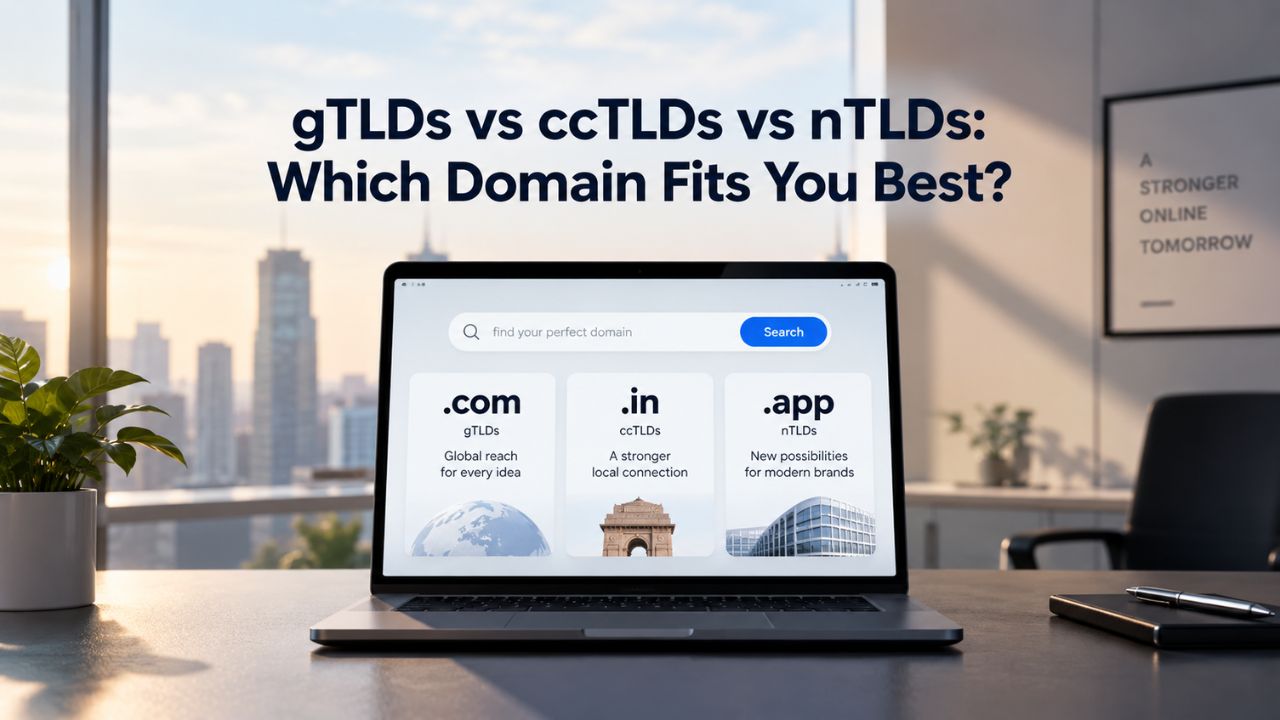
The domain name system has evolved from a handful of extensions into over 1,200 options worldwide. To make sense of this landscape, start with definitions. Generic top-level domains (gTLDs) include legacy extensions like .com and .net as well as newer entries like .cloud or .solutions. Country-code top-level domains (ccTLDs) are two-letter extensions assigned to specific countries and territories, such as .uk for the United Kingdom or .de for Germany. New generic top-level domains (nTLDs) represent the newest category, gTLDs introduced via ICANN’s New gTLD Program starting in 2013, including extensions like .app, .blog, and .io. Together, these three categories now represent the full spectrum of domain choices available to businesses and individuals worldwide. Niya Digital resells domain registration and hosting services in partnership with an ICANN-accredited registrar.
How gTLDs Serve Global Audiences
Legacy gTLDs like .com remain the most recognized domain extension globally. When people encounter a .com address, they instantly recognize it as a domain name, a pattern reinforced by decades of web history. Global domain registrations reached 386.9 million by the end of 2025, with legacy gTLDs accounting for roughly half of all registrations worldwide. This widespread familiarity translates to a trust signal for users.
The true flexibility of gTLDs lies in their neutrality. Unlike ccTLDs, gTLDs send no geographic signal to search engines, meaning you can serve a global audience without algorithmic penalties for reaching beyond a single country. If you want your business to rank in multiple regions, a gTLD paired with tools like Google Search Console’s international targeting settings and hreflang tags gives you control over your audience.
Why nTLDs Are Growing Fastest
New gTLDs posted a 13.5% year-over-year increase as of Q1 2026, far outpacing legacy extensions in adoption. This rapid growth reflects a shift in how businesses view domain names: no longer just a web address, but a branding tool. A .app extension immediately signals a software product; a .blog identifies the site’s purpose without additional description.
Despite their novelty, nTLDs are gaining acceptance across sectors. The .ai domain, originally Anguilla’s ccTLD, crossed 1 million registrations in January 2026 and is growing approximately 1% per week, driven largely by AI startup demand. Extensions like .io have been creatively adopted by tech and startup communities worldwide, transcending their original geographic designation. This trend shows that user perceptions of credibility now extend well beyond .com.

Domain Name Registration
Each and every domain name comes with all you need to get online.
- Domain Forwarding and Masking: Direct any domain name you own to your website. Anyone who types that domain name into their browser is taken directly to your website.
- Domain Locking: Domain locking prevents accidental or intentional transfers of domain ownership and stops anyone from redirecting your nameservers.
- Total DNS Control: Manage your domain nameserver (DNS) records and set your email, FTP, sub-domains and website location all from one control panel.
- Change of Registration: Assign your domain name to someone else or change the contacts for your domain online anytime.
- Status Alerts: Monitor the status of your domain and get instant alerts if there's been a change.
- Auto Renew Protection: No need to watch expiration dates to make sure you renew on time! Auto renew keeps your domains, hosting, website builders, and other products in your name and under your control.
Domain Disclaimers:
- Special savings apply only to first year of registration. You must purchase entire section to qualify for special savings.
- The final price may differ because of additional sales, fees, and promotions.
- Products will automatically renew until cancelled. You may turn off the auto-renewal feature by visiting your account.
- Change of registration may require a fee for certain domains.
Registration Requirements: Open Access vs. Eligibility Rules
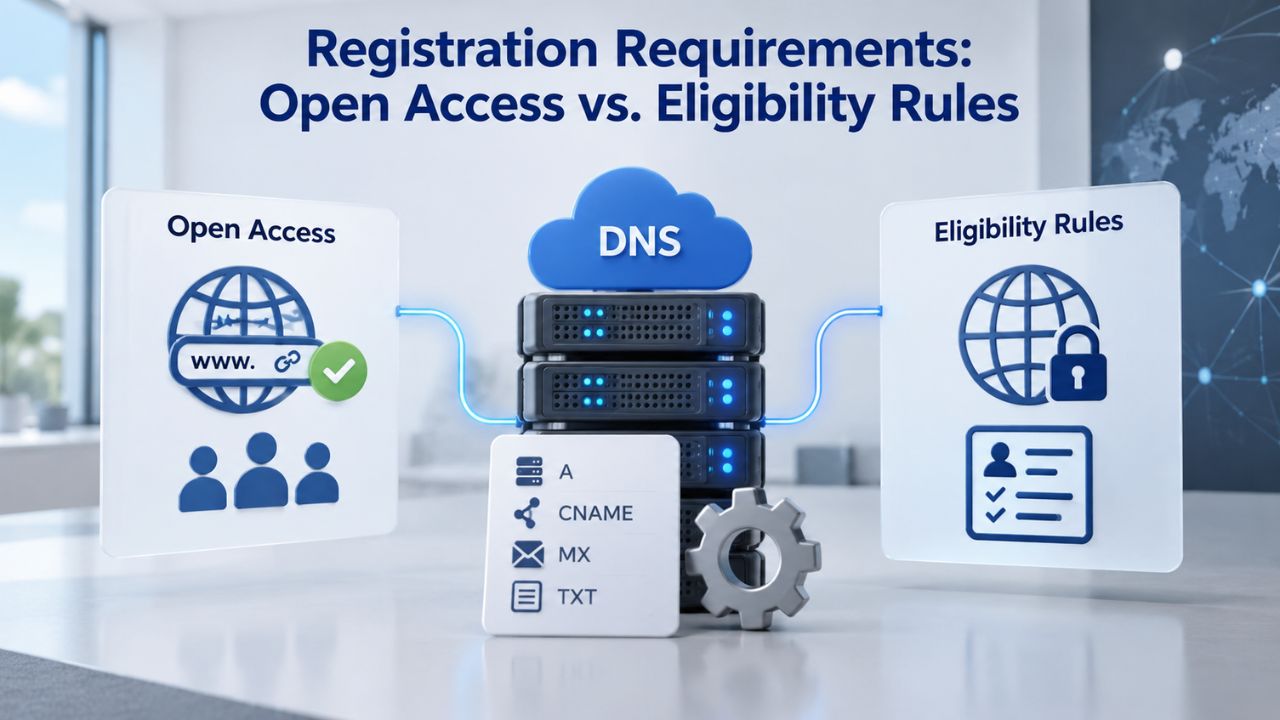
One of the most important practical differences between domain extensions is who can actually register them. Any individual or organization worldwide can register a gTLD without restrictions. You don’t need citizenship, residency, or a local business presence; the barrier to entry is near zero. This universality makes gTLDs the easiest path for global businesses, startups testing markets abroad, or teams operating across borders.
Open ccTLDs: Borderless Options Within Country Codes
Not all ccTLDs impose residency or eligibility requirements. Many open ccTLDs, including .co (Colombia), .io (British Indian Ocean Territory), .me (Montenegro), .tv (Tuvalu), and .cc (Cocos Islands), anyone worldwide can register. These domains offer a middle ground: the brevity and memorability of a two-letter extension without the legal friction of restricted alternatives. Their global accessibility has made them popular for brand-building, especially among technology companies and creative agencies.
The practical appeal of open ccTLDs lies in their scarcity and strength. Two-letter extensions convey authority and compactness; they are easier to remember and type than longer alternatives. For organizations that want a distinctive domain without geographic constraints, open ccTLDs represent a proven choice.
Restricted ccTLDs: Local Presence and Compliance
Many ccTLDs impose strict eligibility requirements, with policies varying significantly from one country-code registry to another. To register a .ca domain for Canada, you must have a Canadian presence, meaning you are a Canadian citizen, permanent resident, or legally recognized Canadian organization. Similarly, .us registrations require a US person or entity with a “bona fide presence in the United States,” and .de domains require a German administrative contact who can receive official or court documents on your behalf.
These restrictions exist by design: country-code registries protect their respective markets and enforce local accountability. Requirements vary by country and fall into two broad categories: registrant eligibility (who can hold the domain) and operational requirements (what local representation or presence the registry demands).
For a business with genuine local operations, a law firm in London registering .uk, or a manufacturer with headquarters in Hamburg registering .de, these requirements are straightforward. For organizations without a local presence, restricted ccTLDs aren’t an option, making them poor choices for global brands seeking broad domain protection.
| Factor | gTLDs (Legacy & New) | nTLDs | ccTLDs (Open) | ccTLDs (Restricted) |
|---|---|---|---|---|
| Registration Eligibility | Anyone worldwide, no restrictions | Anyone worldwide, no restrictions | Anyone worldwide, no local presence required | Local presence, citizenship, or legal entity required; varies by country |
| Geographic Scope | Global (no geographic intent signal) | Global (no geographic intent signal) | Global (no geographic intent signal) | Country-specific (automatic geographic signal) |
| User Recognition | Highest (.com especially); universal trust | Growing (varies by extension type) | Lower than gTLDs; strong in home country | Strongest in home country; trusted locally |
| Available Names | Scarcity moderate (.com very tight) | Better availability (newer extensions) | Better availability than .com (fewer competitors) | Most names available in restricted markets |
| Renewal Price Certainty | Transparent (set in advance) | Transparent unless premium-designated | Varies by registry; audit risks on renewal | Varies by registry; eligibility verification at renewal |
| Transfer Complexity | Simple (ICANN standardized) | Simple (ICANN standardized) | Simple (most follow ICANN rules) | Complex (varying country requirements; local contact changes) |
| SEO Geotargeting | Requires manual configuration (Search Console) | Requires manual configuration | Requires manual configuration | Automatic geographic targeting signal |
| Cost Pattern | Moderate | Moderate | Moderate to high | Low to high (varies widely by country) |
Geographic Targeting and Search Engine Behavior
How search engines interpret your domain extension shapes your visibility across regions. Understanding these signals is essential for any business with multi-country ambitions. Your domain choice directly influences whether you rank competitively in multiple markets or concentrate visibility in a single geographic area, affecting long-term growth potential.
gTLDs and Neutral Geotargeting
gTLDs are geographically neutral; search engines do not assume geographic intent based on the extension alone. A .com website can rank competitively in India, Germany, and Japan at the same time. This neutrality is both a strength and a responsibility: you gain global reach, but you must signal geographic intent through other means. Tools like Google Search Console international targeting settings and hreflang tags give you explicit control, letting you tell search engines which language and region each page targets.
For organizations serious about international SEO, this control is invaluable. You can run subdirectories for different regions (example.com/de/ for German content, example.com/fr/ for French) and use hreflang markup to ensure search engines surface the right version to the right user. The additional configuration effort is offset by centralized domain authority and simplified management.
ccTLDs: Automatic Geographic Signaling
ccTLDs send a strong automatic geographic signal to search engines, boosting local SEO in that specific country without requiring manual configuration. Google and other search engines understand a .de domain as German-focused content; a .uk domain signals UK relevance. This geographic relevance can improve rankings for searches within that country, and it often increases click-through rates because users see the local extension as more trustworthy and relevant.
However, this automatic signal can limit global reach. Using a ccTLD can negatively affect your website’s ranking in other countries, as search engines interpret the extension as a marker of geographic intent. A .fr website designed for an international audience may struggle in the US or UK markets unless you implement additional configuration. For businesses targeting multiple countries, managing separate ccTLDs for each market (example.fr, example.de, example.uk) multiplies complexity and SEO effort.
nTLDs and Industry Positioning
nTLDs are SEO-neutral and offer no direct ranking benefit over legacy gTLDs. A .app domain does not outrank .com by default; search engine algorithms treat both equally. What matters instead is content quality, authority, and user signals. However, nTLDs offer an indirect branding advantage: domain choice can influence user trust and click-through behavior, which can positively impact search performance over time. A .app extension immediately communicates the site’s purpose, which can improve engagement.
Trust, Brand Recognition, and User Perception
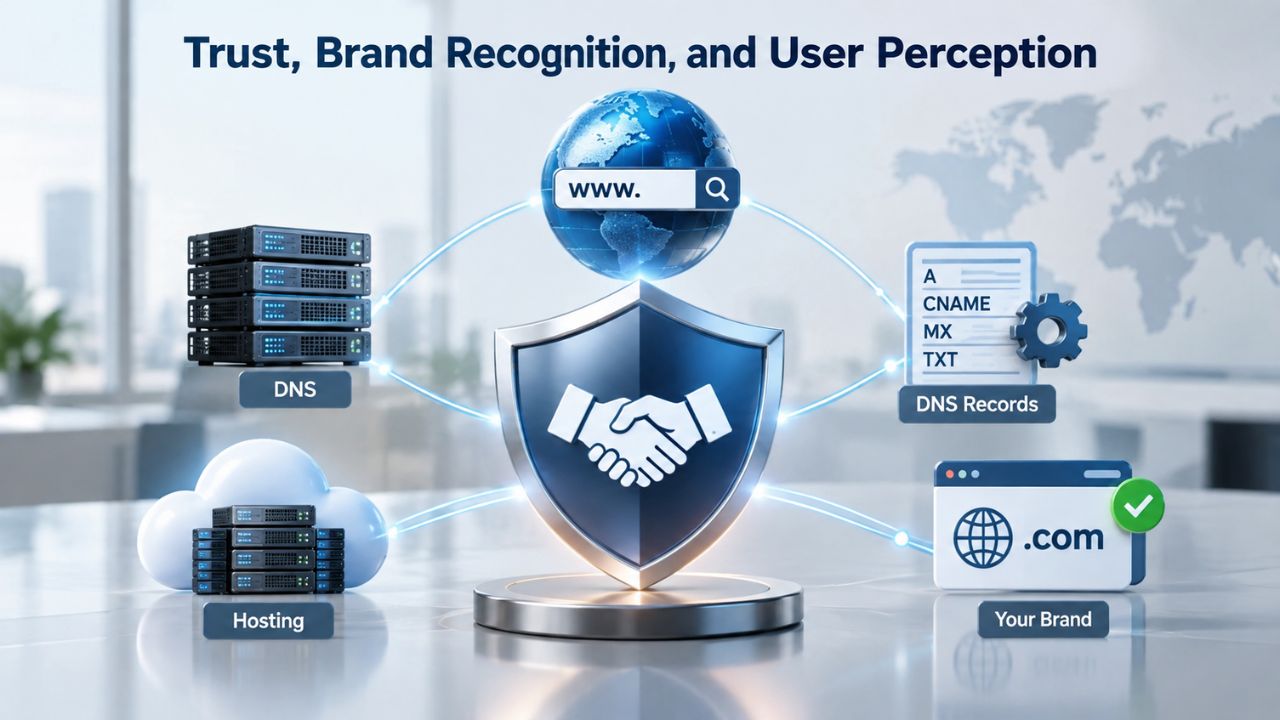
Before SEO algorithms, human psychology comes first. Domain choice affects how visitors perceive your business in their first milliseconds on your site. Users form rapid trust judgments based on domain familiarity, and .com still commands unmatched global recognition. Understanding these perceptions helps you build credibility through your domain choice.
Legacy gTLDs and the .com Standard
The .com domain remains the most popular extension, with 157.2 million registrations globally, nearly eight times more than any other extension. This dominance creates a psychological anchor: many users type .com by default, even when searching for other extensions. Brand recall studies consistently show that users are more confident in .com websites, associating the extension with established, trustworthy organizations.
For startups and growing businesses, the advantage is subtle but real. Registering both your desired domain in your chosen extension and the equivalent .com (even if merely to redirect traffic) is a common defensive strategy. This practice reflects the embedded perception that .com equals legitimacy.
ccTLDs and Local Market Trust
ccTLDs signal local commitment and can improve trust with local audiences by demonstrating dedication to a specific market. A law firm operating exclusively in Dublin benefits from a .ie domain; a Finnish SaaS company builds credibility with a .fi address. For businesses with genuine local operations, the ccTLD proves local presence and accountability.
This advantage inverts when a business attempts to use a ccTLD globally. A consumer in Canada seeing a .de website may perceive the business as foreign or unfamiliar, potentially lowering conversion rates. The trust signal works best when it aligns with the business’s actual geography.
nTLDs and Industry-Specific Positioning
A .dev domain immediately signals to engineers and technical recruits that a company takes technology seriously. A .shop extension communicates e-commerce intent without a single word of marketing copy. nTLDs function as pre-written brand messages; they work best when the extension genuinely reflects your business model. A .cloud hosting provider using a .cloud domain reinforces its market position; a traditional law firm using .law strengthens its professional positioning.
However, nTLDs carry less brand legacy than .com, meaning awareness campaigns or domain verification become necessary. Users unfamiliar with the extension may hesitate to trust an unfamiliar name, requiring you to build credibility through content and reputation rather than relying on domain recognition alone.
nTLD Launch Phases and Pricing Realities
New gTLDs do not simply appear on the market at standard registration prices. Instead, they move through defined launch phases, each with its own eligibility, timing, and cost structure. Understanding these phases- Sunrise, Early Access, General Availability, and Trademark Claims- helps you strategically acquire new domains at optimal price points before public availability.
The Sunrise Period: Trademark Holders First
Every new gTLD begins with a mandatory Sunrise Period, a limited pre-registration window reserved for trademark holders with verified records in the Trademark Clearinghouse (TMCH). This phase can last weeks to months, giving brand owners a chance to secure their branded domains before the public rush.
If your company’s name is registered as a trademark, the Sunrise Period lets you claim the matching nTLD before competitors or squatters do. Registering during Sunrise requires additional fees and administrative work; you must verify your trademark record and often pay a premium price for early access. For well-known brands, this cost is trivial compared to the risk of losing a branded domain to a third party.
Early Access and Landrush Phases
Some registries offer an Early Access Period before the nTLD officially opens, with premium pricing that decreases daily over days to weeks. The first day of Early Access might carry higher premium rates; by the final day before General Availability, pricing may drop substantially.
This structure rewards early movers while letting later arrivals access the domain at declining premiums. Not all registries offer Early Access; some proceed directly from Sunrise to General Availability. Checking your registry’s launch timeline in advance prevents surprises and helps you plan your domain-acquisition strategy.
General Availability: Standard Pricing Begins
Once a new gTLD reaches General Availability (GA), it opens to the public and is priced at standard registry rates. This is when most registrations occur. Desirable names may carry premium pricing, set by the registry and often not disclosed until you attempt to register.
An important caveat: many registries flag nTLD names as “premium,” significantly raising registration costs, and registries set renewal fees independently, often without committing to future pricing in advance. This means a domain you register at standard rates today might renew at higher rates next year if the registry perceives it as high-value. Registries retain full discretion over renewal pricing, with limited transparency.
Trademark Claims and Consumer Protection
Ninety days after GA opens, a Trademark Claims Period begins, notifying both registrants and trademark holders about potential IP conflicts. If you register a domain matching someone’s trademark, both you and the trademark holder receive notification. This does not block your registration, but it formally alerts all parties to a potential dispute and gives trademark holders a clear legal record.
Ready to Register Your Domain?
Selecting the right domain extension is the foundation of your online presence. Whether you are launching a global brand, establishing local market presence, or carving out a specialized niche, Niya Digital helps you find and register the perfect domain. With support for gTLDs, ccTLDs, and nTLDs across over 400 extensions, plus professional DNS management and seamless integration with hosting, you can secure your domain and connect it to your business in minutes.
Market Trends: Which Extensions Are Growing?
Understanding current adoption patterns helps you anticipate where your audience expects to find businesses like yours. Domain registration data reveals clear shifts: legacy gTLDs dominate but slow; ccTLDs stabilize in key markets; nTLDs accelerate rapidly. These trends signal changing market expectations about which extensions convey credibility and industry positioning today.

Legacy gTLDs Hold Dominance But Share Ground.
Legacy gTLDs account for approximately 50% of all domain registrations globally, with .com alone representing 157.2 million registrations. Despite this dominance, .com growth has slowed to 3.7% year-over-year, while new gTLDs are growing at 31.3% year-over-year, roughly eight times faster.
This divergence signals a market shift. Businesses are no longer obligated to chase .com availability; they are increasingly comfortable choosing extensions that fit their niche. The domain market is shifting from universal growth toward specialization and strategic positioning, with companies selecting domains that reinforce their brand message rather than defaulting to .com out of habit.
ccTLD Strength in Key Markets
Country-code registrations have grown to 146.3 million, up 2.4% year over year, with strong renewal rates exceeding 80% in major ccTLDs. This stability reflects genuine business use: enterprises in specific countries consistently renew ccTLDs. China’s .cn leads all ccTLDs with 20.9 million registrations, reflecting the size of the Chinese market and regulatory preferences for local domain registration.
The ccTLD market shows no signs of decline, but growth is modest compared to nTLDs. Organizations with deep local roots maintain ccTLDs; global organizations increasingly favor gTLDs or nTLDs.
nTLDs: The Boom Continues
New gTLDs now represent 12.4% of the global market with 49.6 million registrations as of Q1 2026. Beyond raw numbers, nTLD adoption is concentrated in high-growth sectors: AI (.ai), software (.app), creative industries (.design, .studio, .blog), and e-commerce (.shop). Several nTLDs show premium renewal rate challenges; .shop, for example, carries only a 14.3% renewal rate, the lowest of any top 10 gTLDs, suggesting most registrations are short-term or experimental.
This renewal pattern reveals nTLD reality: many registrations are speculative rather than operationally committed. Businesses that take nTLDs seriously show higher retention; those that treat them as backup or promotional domains often let them expire.
Global Expansion: Choosing Your Strategy
Different business models and geographic strategies favor different domain approaches. A single-country dentist requires different domains than a venture-backed SaaS or multinational corporation. Your expansion roadmap determines whether you anchor on a single gTLD, acquire multiple ccTLDs, or strategically combine extensions. Smart domain strategy enables growth rather than constraining it.
Single-Country Businesses and Restricted ccTLDs
If your business operates exclusively in one country and has no plans to expand abroad, a local ccTLD is a defensible choice. A dental practice in Melbourne might register .com.au and build all its presence there; a law firm in Toronto might anchor on .ca. Local search visibility improves, and local audiences see immediate geographic relevance. The downside is lock-in: if expansion plans materialize, you face a difficult choice between maintaining the local domain or acquiring a new global extension and redirecting traffic.
Niya Digital’ team has found that local businesses often underestimate future growth; many that initially committed exclusively to one market later wished they had registered a global backup early. Securing both the local ccTLD and a global alternative (typically .com or an nTLD) is prudent insurance against this scenario.
Multi-Market Expansion and gTLD Plus Localization
Organizations targeting multiple countries typically benefit from a single gTLD as the primary domain, combined with localized subdomains or subdirectories. Example: company.com with company.com/de/ for German content, company.com/fr/ for French. This approach centralizes domain authority, simplifies management, and allows flexible geographic expansion. When properly configured with hreflang tags and Search Console geotargeting, this strategy supports competitive rankings in multiple regions.
The trade-off is more configuration complexity and no automatic geographic signaling. Local audiences in Germany might find a .com/de address less immediately trustworthy than a .de domain. However, for organizations with limited resources, the centralized management benefit often outweighs this perception challenge.
Specialized Positioning and nTLDs
A SaaS company targeting global developers might register myapp.app and skip .com entirely. A non-profit focused on environmental work might choose .org alongside or instead of a ccTLD. An online magazine might launch on magazine.blog. nTLDs work best when they reinforce your positioning and are paired with strong branding and content marketing.
The risk is user familiarity. Not all audiences recognize .app or .blog as legitimate domains; some users might distrust an unfamiliar extension or struggle to remember it correctly. Successful nTLD adoption requires explicit marketing and consistent reinforcement of your domain in all customer touchpoints.
| Factor | gTLDs (Legacy & New) | nTLDs | ccTLDs (Open) | ccTLDs (Restricted) |
|---|---|---|---|---|
| Registration Eligibility | Anyone worldwide, no restrictions | Anyone worldwide, no restrictions | Anyone worldwide, no local presence required | Local presence, citizenship, or legal entity required; varies by country |
| Geographic Scope | Global (no geographic intent signal) | Global (no geographic intent signal) | Global (no geographic intent signal) | Country-specific (automatic geographic signal) |
| User Recognition | Highest (.com especially); universal trust | Growing (varies by extension type) | Lower than gTLDs; strong in home country | Strongest in home country; trusted locally |
| Available Names | Scarcity moderate (.com very tight) | Better availability (newer extensions) | Better availability than .com (fewer competitors) | Most names available in restricted markets |
| Renewal Price Certainty | Transparent (set in advance) | Transparent unless premium-designated | Varies by registry; audit risks on renewal | Varies by registry; eligibility verification at renewal |
| Transfer Complexity | Simple (ICANN standardized) | Simple (ICANN standardized) | Simple (most follow ICANN rules) | Complex (varying country requirements; local contact changes) |
| SEO Geotargeting | Requires manual configuration (Search Console) | Requires manual configuration | Requires manual configuration | Automatic geographic targeting signal |
| Cost Pattern | Moderate | Moderate | Moderate to high | Low to high (varies widely by country) |
Support, Transfer, and Renewal Logistics
Beyond strategy and positioning, domain management involves practical operational differences across extension types. Transfer complexity, renewal cost certainty, and registrar support availability vary dramatically between gTLDs, ccTLDs, and nTLDs. These operational realities shape your long-term management burden and may influence which extension you ultimately select for your primary domain.
Transfer Policies Across Extension Types
ICANN policy governs domain transfers for gTLDs and nTLDs, ensuring standardized processes across registrars. You unlock your domain at your current registrar, obtain an authorization code (EPP code), and initiate a transfer at your new registrar. The process typically takes 5–7 business days and usually adds a year to your registration.
ccTLD transfers vary by country registry. Some follow ICANN guidelines; others impose additional requirements. Transferring a .ca domain requires verifying Canadian presence; moving a .de domain requires updating the German administrative contact. These steps add friction and delay, making ccTLD transfers far more complex than gTLD or nTLD transfers for organizations without local presence.
Renewal Cycles and Cost Certainty
Legacy gTLDs and most nTLDs offer transparent renewal pricing set well in advance by the registry. You typically see renewal costs before you purchase the domain. Some registries enable automatic renewal at standard rates; others require manual renewal before expiration.
ccTLDs vary widely. Some offer automatic renewal at stable rates; others require manual renewal each year with per-country pricing fluctuations. Some restricted ccTLDs audit registrant eligibility at renewal, potentially blocking renewal if your circumstances change; for example, if a business holding a .ca domain relocates outside Canada, renewal might be denied.
Premium nTLDs introduce uncertainty: registries set renewal fees at their discretion, often without committing to prices at registration. This means your domain might be affordable to renew, or it might become unaffordable based on registry decisions you cannot control.
Support and Issue Resolution
gTLDs and nTLDs are supported by thousands of ICANN-accredited registrars worldwide, creating competitive pressure for responsive support. ccTLDs, especially restricted ones, have far fewer registrars, often only a handful authorized to sell the extension. This limited competition can mean slower issue resolution and fewer support options.
When problems arise- DNS configuration errors, transfer authorization delays, billing issues- the support experience differs markedly. A gTLD registrar knows it competes with dozens of alternatives, creating incentive for fast, competent support. A ccTLD registrar may face less competitive pressure, especially if it is a government-affiliated entity rather than a commercial registrar.
DNS Management and Technical Control
Selecting a domain today shapes your options for years to come. A thoughtful domain strategy anticipates growth and adapts to market changes. Building a cohesive portfolio, monitoring new gTLD launches, and avoiding unnecessary complexity ensure your domain investment supports rather than limits your business ambitions as circumstances evolve.
DNS Fundamentals Across All Extension Types
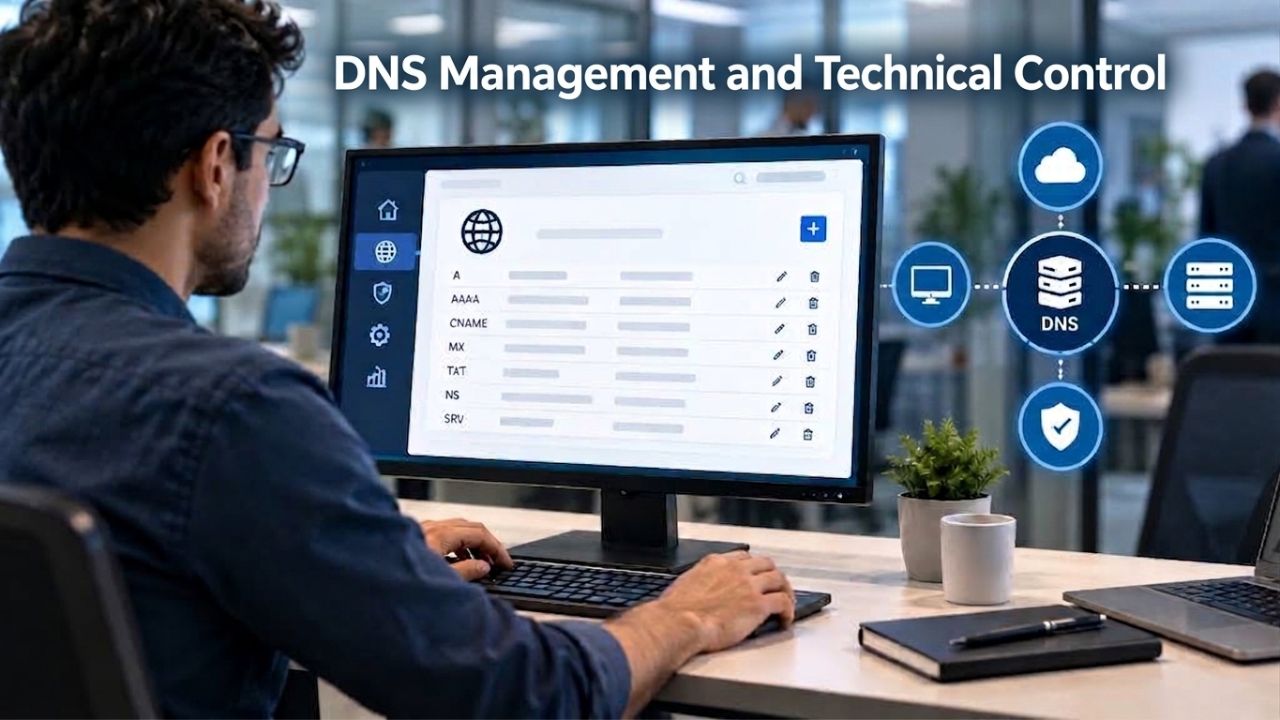
All domain extensions, gTLDs, ccTLDs, and nTLDs, use the same underlying DNS system. When you register a domain, the registrar provides nameserver addresses or a DNS control panel where you can add records. Common record types include A records (pointing to a web server’s IP address), MX records (routing email), and CNAME records (creating subdomains or aliases).
The technical process is identical across all extensions. What varies is the registrar’s interface quality, response time to DNS changes, and availability of advanced features like DNSSEC (DNS Security Extensions). When comparing registrars, evaluate their DNS tools as carefully as their pricing and support availability.
DNSSEC and Security Considerations
DNS Security Extensions (DNSSEC) is a security protocol that protects domain name resolution from certain attacks by ensuring DNS responses are authentic. Not all registries support DNSSEC equally. Legacy gTLDs widely support it; some ccTLDs lag in implementation. If security is a priority, especially for financial institutions, government agencies, or healthcare organizations, verify DNSSEC availability before committing to a specific extension or registrar.
DNSSEC adds complexity to DNS management and requires additional technical knowledge or registrar support. For most small businesses, standard DNS management suffices; for organizations handling sensitive information, DNSSEC provides meaningful protection against DNS hijacking.
Email and Subdomain Configuration
All domain types support professional email addresses (contact@yourdomain.extension) and subdomains (blog.yourdomain.extension, shop.yourdomain.extension). Configuration requires creating MX records (for email) or CNAME/A records (for subdomains) in your DNS control panel. Most modern email hosting providers and website platforms supply pre-built DNS records you copy into your registrar’s interface.
The barrier to entry is low for basic configurations; advanced setups (multiple MX records for redundancy, SPF records for email authentication, etc.) require technical knowledge or guidance from your registrar.
Domain Strategy and Future-Proofing
Selecting a domain today shapes your options for years to come. A thoughtful domain strategy anticipates growth and adapts to market changes.
Building a Cohesive Multi-Domain Portfolio
Many successful organizations own multiple domain extensions. A company might register business-name.com (for broad reach), business-name.co (a shorter alternative), and business-nameapp (for a specific product line). This portfolio approach protects brand identity and opens multiple paths to customers. The cost is modest; the risk mitigation is real.
For startups, securing your brand across a few key extensions early, typically .com plus one or two nTLDs reflecting your industry, costs less upfront than acquiring unprotected names if your success attracts competitors or squatters later. As your business grows and market position solidifies, expanding your portfolio becomes easier and more strategic.
Monitoring New gTLD Launches
ICANN opened a second application window for new gTLDs in April 2026, the first opportunity to apply for new domains since 2012. If your industry or business category has never had a dedicated nTLD, monitoring this process could reveal a perfect-fit extension. Operating a registry requires substantial investment, but acquiring domains in newly launched extensions during Sunrise and Early Access periods is accessible to any business.
Staying informed about new extensions helps you move faster than competitors when ideal domains become available. Subscribe to domain industry newsletters or work with an ICANN-accredited registrar partner that alerts customers to relevant launches.
Avoiding Unnecessary Complexity
Not every business needs five domains. A local service business probably needs one strong local ccTLD or a gTLD; a global SaaS company probably needs a .com and one or two nTLDs that reflect its product line. Over-acquisition of domains creates management burden (renewals, DNS configuration, security) without commensurate benefit.
Define your target audience, geographic scope, and positioning, then select domains that map cleanly to those realities. This focus keeps management simple and ensures every domain you own serves a clear purpose.
Connect Your Domain to Your Hosting Today
Your domain is only the first step toward building your online presence. To get your website live, you need reliable hosting that delivers speed, security, and uptime. Niya Digital makes it easy to register your domain, manage your DNS settings, and connect to professional hosting from a single platform. Whether you’re launching a personal blog, an eCommerce store, or a business website, our scalable hosting solutions and expert support help you grow with confidence.
Frequently Asked Questions
What is the difference between a domain name and web hosting?
A domain name is your website’s address (example.com); web hosting is the server storing your website’s files. They are separate services, though many providers offer both. You can register a domain without hosting (useful for email forwarding or parking), and you can host a website without owning the domain (though this is not recommended). Most businesses benefit from purchasing domain registration and hosting together from an ICANN-accredited registrar partner for seamless management and unified billing.
Can I register a .com domain if I am not in the United States?
Yes. gTLDs like .com have no registration restrictions; anyone worldwide can register them. You do not need a US address, citizenship, or business presence. This open access makes .com the default choice for global organizations. No special documentation is required; you register through any ICANN-accredited registrar.
If my desired name is taken in .com, should I settle for an nTLD?
Not automatically. If your brand identity is critical, consider an open ccTLD like .co (Colombia) or .io (British Indian Ocean Territory) rather than a less relevant nTLD. Alternatively, you can wait; domains expire regularly, and expired .com domains sometimes become available. Many domain marketplaces track expiring domains and alert you when relevant names become available. A strategic nTLD choice (one reflecting your industry) often outperforms a generic backup extension.
Are restricted ccTLDs worth the registration complexity?
Restricted ccTLDs make sense only if you have genuine local operations in the corresponding country. A business with a physical office and employees in France benefits from a .fr domain; a remote-first company without a presence in France gains little from a .fr registration. The added compliance burden, eligibility verification, and transfer friction aren’t worth paying for a domain you cannot meaningfully use.
Do search engines penalize non-.com domains in rankings?
No. Search engines treat gTLDs like .com, .net, and .org equally; no extension has a direct algorithmic advantage. What matters is content quality, site authority, and user signals. ccTLDs do signal geographic relevance, which can improve local rankings but may limit global reach. nTLDs carry no penalty; they are algorithmically neutral. Your domain extension choice affects branding and positioning, not search engine fairness.
Should I register my .com even if I plan to use an nTLD as my primary domain?
Often yes. Many users type .com by default, and brand protection across your key extensions prevents competitors from exploiting similar-sounding alternatives. If mycompany.app is your main website, registering mycompany.com (even as a redirect) captures traffic from users who default to .com and protects your brand. Renewal costs are low; the protection value is real.
How long does a domain transfer take?
For gTLDs and nTLDs, ICANN policy standardizes the transfer process; most transfers complete within 5–7 business days. ccTLD transfers vary by country registry and can take 1–4 weeks if local verification is required. Start transfers well before you need your domain active at a new registrar; unexpected delays are common.
Can I change my domain’s extension from .com to .app?
No. Each extension is technically a separate domain. You would need to register the new extension separately; migrate your website, email, and DNS to the new domain; and eventually let the old one expire. This is complex and risky. If you want to pivot extensions, consider registering both and using DNS redirection, then gradually migrating traffic to the new domain over months.
What happens if I let my domain expire?
When a domain expires, it becomes inactive. Most registries provide a grace period (typically 30–45 days) during which you can renew at standard rates. After the grace period, the domain enters a redemption phase (usually 30 days) where renewal costs are higher but still possible. After redemption expires, the domain becomes available for anyone to register. Set calendar reminders or enable auto-renewal to avoid accidental expiration.
Is WHOIS privacy protection available for all domain types?
WHOIS privacy protection availability varies by extension and registrar; many gTLDs and nTLDs offer it free or at low cost, while some ccTLDs restrict or prohibit it. Privacy protection hides your personal contact information from public WHOIS databases, reducing spam and identity theft risk. Check availability for your specific extension before registering; some registries require public registrant information by law.
How do I know if an nTLD is right for my business?
Choose an nTLD if it genuinely reflects your business model or industry. A software company benefits from .app; a creative studio from .design; a news outlet from .news. Generic nTLDs (.app, .blog) work globally; niche nTLDs (.accountant, .doctor) target specific professions. Avoid nTLDs that feel forced or obscure; your domain should clarify your brand, not confuse it.
Can I use an nTLD during the Early Access Period and change to a .com later?
You can register both. Early Access is designed for premium positioning; acquiring an nTLD then and securing .com as backup provides flexibility. However, redirecting traffic between extensions is technically sound but operationally complex. Make a deliberate choice for your primary domain; use others as backups or brand protection.
Are there hidden renewal costs I should expect?
Renewal costs should match registration costs (or the registrar should disclose them upfront). The one exception is premium nTLDs, where registries retain discretion to set renewal pricing independently, sometimes without advance notice. Request renewal pricing in writing before registering a premium nTLD. Standard (non-premium) registrations renew at predictable rates.
Do country-code TLDs require a local business license?
Requirements vary per ccTLD registry. Some demand only a local address; others require proof of business registration, VAT ID, or citizenship. Before registering a restricted ccTLD, contact the registrar or check the registry’s official policies to confirm the required documentation. Misunderstanding requirements can delay registration or cause eligibility issues at renewal.
Is it better to register with a large registrar or a smaller niche provider?
Both models work. Large registrars offer breadth (all TLDs, competitive pricing, extensive support), but support quality can vary. Niche registrars often specialize in specific TLDs or regions, offering deeper expertise but potentially limited extension catalogs. Evaluate registrars on support responsiveness, interface usability, security practices, and renewal-price transparency rather than size alone.
How do I verify my registrar is ICANN-accredited?
ICANN publishes an official list of accredited registrars on its website. If your registrar is not on this list, it is not authorized to sell gTLDs or nTLDs directly; it may be a reseller working through an accredited partner. Resellers are legitimate, but verify the accredited partner backing their service. Your registrar should openly identify its ICANN accreditation status.
Glossary
- ICANN (Internet Corporation for Assigned Names and Numbers): The international organization responsible for coordinating domain names, IP addresses, and root nameservers that form the technical foundation of the Internet.
- Registry Operator: An organization that operates and maintains a specific top-level domain (TLD), sets its policies, manages its root nameservers, and determines eligibility and renewal rules for domains within that TLD.
- Registrar: An entity accredited by ICANN or a registry to sell domain names to the public and manage registrations on behalf of registrants. Registrars handle customer support, DNS management, and billing.
- Nameserver: A server that translates domain names (example.com) into IP addresses, directing Internet traffic to the correct location where a website or service is hosted.
- hreflang Tags: HTML markup that signals to search engines which language and geographic region a page targets, improving search visibility for international websites using gTLDs or shared subdomains.
- DNS (Domain Name System): The decentralized system that translates human-readable domain names into IP addresses, enabling Internet routing and email delivery.
- Trademark Clearinghouse (TMCH): A central repository for registered trademarks used during new gTLD Sunrise Periods, allowing trademark holders to register matching domains before public availability.