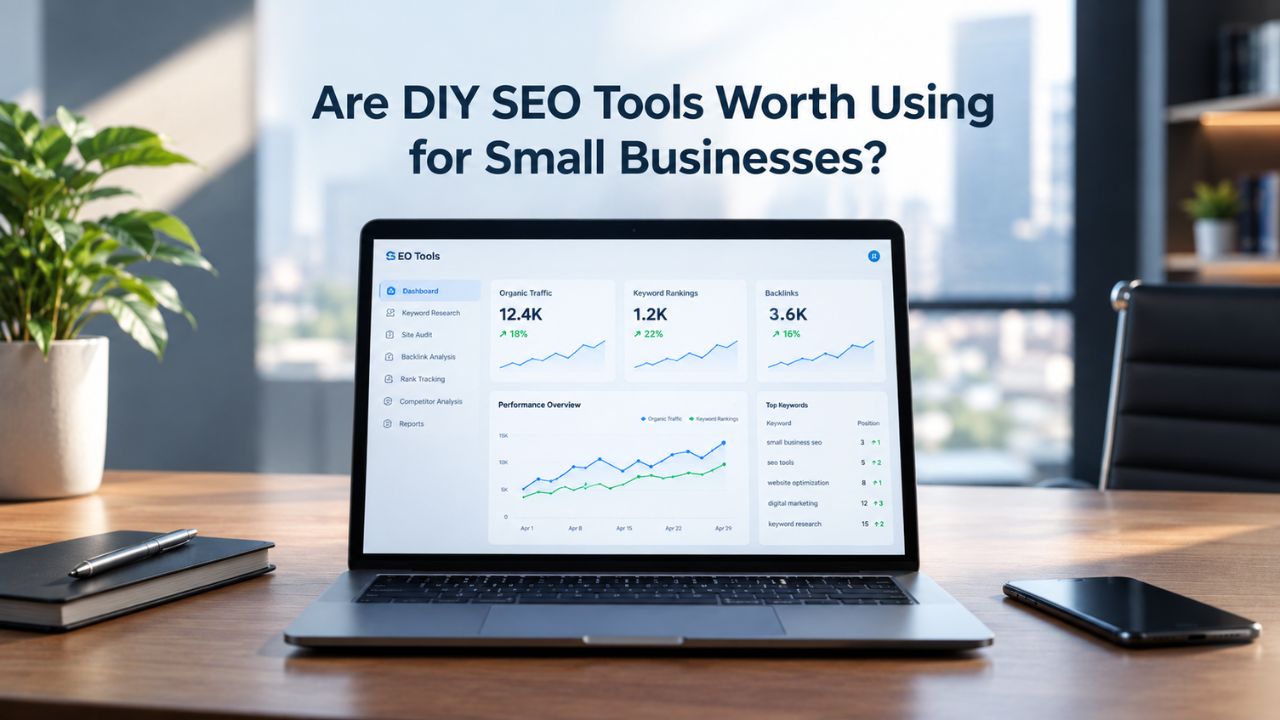
Small businesses face a dilemma: improve search visibility affordably or accept online invisibility. Many turn to DIY SEO tools to manage search optimization independently without committing to expensive retainers. But success requires honest assessment of your time, skill, and realistic expectations about when results arrive. Niya Digital’s DIY SEO tool draws on third-party search and keyword-data sources to power keyword research, technical audits, competitor analysis, rank tracking, and reporting features, the same foundation all SEO tools use to generate their insights.
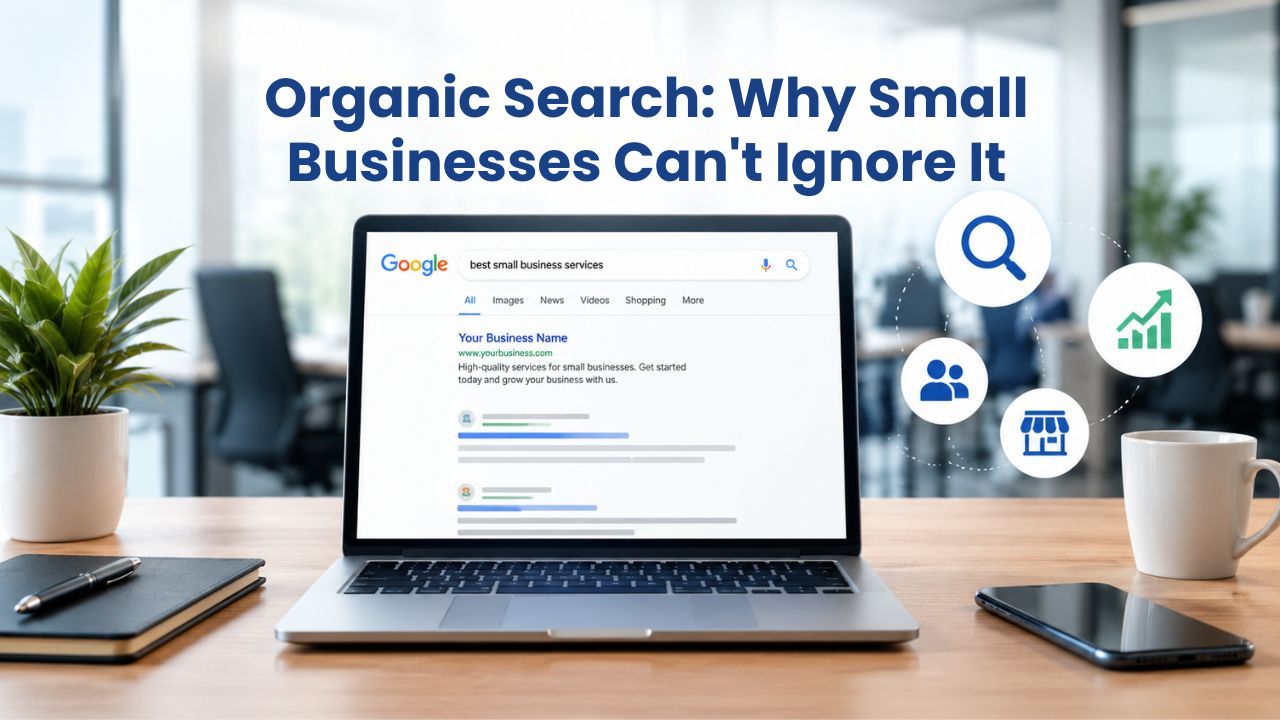
Organic Search: Why Small Businesses Can’t Ignore It
The business case for SEO is clear and compelling. Most online discovery begins with a search engine, and organic search drives more than half of all website traffic. Yet despite this reality, nearly two-thirds of small businesses say appearing in search results is critical to their success, even though most remain hesitant to commit to sustained SEO investment. This gap exists because traditional agency partnerships feel prohibitively expensive for lean operations, leaving many business owners wondering if they can manage SEO on their own.
Why Small Businesses Turn to DIY Solutions
Budget constraints drive the initial decision, but the appeal runs deeper. When you manage your own SEO, you maintain complete control over your strategy, data, and timeline. You don’t depend on an agency’s availability, priorities, or communication style. You can make fast decisions and test ideas without going through a third party. You also build internal expertise; the knowledge stays within your organization rather than walking out the door when an engagement ends.
There’s also a philosophical element. Many small business owners want to understand how their online visibility works rather than treating it as a black box. DIY SEO satisfies this curiosity and creates a sense of ownership over results. When you build your own rankings, the satisfaction of seeing a keyword you optimized break into the top five feels tangibly different from receiving a ranking report from an agency. This ownership mindset often translates into more consistent long-term effort.
The Real Value Proposition of DIY Tools
DIY SEO platforms consolidate tasks that would otherwise require multiple specialists into one workspace. A single tool can provide keyword research, identify technical issues, track rank changes, and analyze competitors. This bundling saves money compared to hiring separate freelancers for each task. It also reduces context-switching: you work in one place rather than jumping between five tools. AI-powered features in modern DIY platforms automate repetitive work like keyword research and content recommendations, saving time that would be lost to manual analysis.
But the real value proposition is capability democratization. A decade ago, meaningful SEO work required either hiring expensive specialists or spending six months learning the fundamentals yourself. Today, a DIY platform puts sophisticated tools in the hands of any business owner willing to invest time in learning. These tools don’t replace expertise, but they significantly lower the barrier to entry. A motivated small business owner can now accomplish in three months what previously required either an agency engagement or a year of self-teaching.
Search Engine Optimization Plans & Pricing
Choose the right SEO plan for your website. Improve search engine visibility, discover relevant keywords, monitor rankings, and access customized optimization services to support your business growth.
Search Engine Optimization (SEO)
Bring more traffic to your website with Search Engine Optimization.
- Search Optimization: Improve search engine rankings with keyword and suggested topics tool
- Keyword suggestions: Get personalized phrases and words to add to increase traffic to your website and help it rank better.
- Tracking your ranking: Track the progress of your website’s rank on Google over time
- Create your sitemap: Customize, create and submit a site map to aid search engines in crawling your site.

Customized SEO Plan
Get Customized Plan For your Business Website SEO (Search Engine Optimization)
- On-Page & Off-Page Optimization: Update Meta Tags, Titles, Descriptions, Alt Tags, Schema / JSON-LD / Microdata Format, HTML + TXT + XML Sitemap, Robots.TXT, Google Analytics & Google Search Console integration
- Keyword Research & Analysis: Improve Keyword Effectiveness Index (KEI) with main heading & sub-heading tags, Content Review by professional content editor
- Competitor Research & Analysis: Compare and Compete with competitors search engine ranking positions, Track and analyse competitor trends
- Diversify Back Link Profile: Relevant Business Directory Submission, Article Submission, Blog Creation, Web 2.0 asset creations, Author Profile Links, Social Book Marking links
- Monthly Task Review & Progress Reporting: Get Monthly SERP Reports and Task Performance Reports
What DIY SEO Tools Actually Deliver
DIY SEO platforms typically bundle four core capabilities, each addressing a different step of developing and executing an SEO strategy. Understanding what these tools do, and what they don’t, helps you assess whether DIY is realistic for your situation.
Keyword Research and Discovery
Keyword research is the foundation of SEO because it identifies what your customers are actually searching for. A DIY tool lets you discover search terms your target audience uses, understand how frequently those terms appear in search, and assess how difficult it would be to rank for each keyword. This process used to require purchasing expensive keyword databases and manually analyzing results. Today, a DIY platform does this analysis instantly, surfacing opportunities you wouldn’t discover through intuition alone.
The practical value shows up when you’re deciding what to write about. Instead of guessing that blog posts about “plumbing” will drive traffic, a DIY tool reveals that your customers are actually searching for “emergency plumber in Denver” or “how to fix a leaky kitchen faucet.” The tool also surfaces long-tail keywords, longer, more specific phrases with lower search volume but higher intent and conversion rates. Many small businesses overlook these opportunities because they don’t sound as impressive as high-volume terms, but long-tail keywords are often where DIY practitioners win fastest.
Technical Site Audits and Competitive Intelligence
Behind every high-ranking website is a solid technical foundation. Common technical SEO problems include missing or duplicate title tags, weak meta descriptions, poor heading structure, missing image alt text, broken internal links, and overly long or confusing URLs. These issues accumulate silently, especially after website redesigns or content migrations. Most small business owners never discover them because fixing them manually requires crawling your entire site page by page.
A DIY audit tool crawls your entire website in minutes, scanning thousands of pages and flagging technical issues in a prioritized list. This visibility alone is transformational for many small businesses. The tool shows you which problems affect the most pages and which fixes will move the needle fastest, so you can work efficiently rather than randomly patching issues. Understanding how competing websites in your niche rank for keywords, what content they target, and which external websites link to them provides crucial context for your own strategy. A DIY competitor analysis tool lets you research your competition systematically to see which keywords competitors rank for that you don’t, revealing content gaps.
Time Investment: The Learning Curve Isn’t Free
Before committing to DIY SEO, you need a realistic picture of how much time it will require. This is where many small business owners underestimate the investment and then quit in frustration when they realize how much work is actually involved.

Initial Learning Phase vs. Maintenance Work
The first eight to twelve weeks require intensive learning. You’re not just setting up a tool; you’re learning keyword research methodology, understanding site structure principles, grasping technical SEO fundamentals, and interpreting rank-tracking data correctly. You’re also making mistakes in this phase: wrong keyword targets, missed technical issues, content that doesn’t match search intent. These early mistakes cost time because you’re not yet productive enough to move fast.
Only after this foundation phase does your weekly time investment normalize. Once you’ve run your first complete site audit and published five to ten optimized pieces of content, the process becomes clearer. You develop templates and workflows that speed up your work. You learn to recognize patterns: which types of content rank fastest, what technical issues are worth fixing first, and how to structure a piece for maximum optimization. But nobody starts at this level of efficiency. Expect fifteen to twenty hours per week for the first two months, declining to eight to ten hours weekly after you’ve built process and rhythm.
Staying Current and Managing Algorithm Changes
Google implements thousands of algorithm changes annually. Some are minor tweaks; others significantly shift how content ranks. DIY operators must track these updates and adjust strategies accordingly. An agency’s job includes monitoring algorithm changes and adjusting strategy for you; it’s part of what you’re paying for. With DIY, you either stay informed by following SEO news and testing emerging tactics, or you risk your optimization work becoming outdated. This is an ongoing investment, not something you learn once and then never revisit.
Staying current doesn’t require hours daily, but it does require consistent attention. You need to follow SEO publications, understand what’s changing, and test whether new tactics apply to your situation. You also need to monitor your own data, watch your rank tracking and traffic closely to identify when algorithm changes affect your site. Most DIY practitioners spend two to three hours monthly on this maintenance and learning component, in addition to core SEO work like publishing content and fixing technical issues.
Time Investment Reality by Phase
The time commitment isn’t consistent throughout your DIY journey. It starts heavy and gradually normalizes, but your total time commitment extends much further than most small business owners initially expect.
| Phase | Hours per Week | Key Activities | Duration |
|---|---|---|---|
| Audit & Foundation | 15–20 hours | Set up Google Search Console and Analytics, run initial site audit, create keyword strategy map, document baseline metrics | Weeks 1–3 |
| Learning & Strategy Development | 12–15 hours | Learn platform deeply, analyze competitors, research keywords, map content gaps, design strategy | Weeks 4–8 |
| Initial Content Publication | 10–15 hours | Publish first optimized content, fix critical technical issues, build internal linking, set up rank tracking | Weeks 9–16 |
| Scaling & Refinement | 10–12 hours | Publish new content on schedule, analyze what performs best, refine keyword targeting, adjust strategy | Weeks 17–24 |
| Ongoing Maintenance & Growth | 8–10 hours | Publish consistently, review rank tracking weekly, track metrics, make incremental improvements, adapt to changes | Month 7+ |
| Staying Current & Learning | 2–3 hours | Follow SEO news, test emerging tactics, adjust for algorithm changes, maintain competitive awareness | Ongoing |
Across all these phases, you’re building expertise. The time investment in month one might feel wasted because you’re not yet productive. By month six, you move faster and get more done in fewer hours. By month twelve, you’ve built substantial internal expertise and processes.
Timeline to Results: When Does SEO Actually Work?
One of the most common reasons small business owners abandon DIY SEO is that they lack patience for how long meaningful results take. Understanding this timeline in advance helps you stay committed when the early months feel unproductive.
Months 1–6: Foundation Building Through Early Movement
In the first 90 days, you’re setting up your SEO infrastructure and creating your first optimized content. You’re setting up Google Search Console and Google Analytics, running your initial site audit, fixing obvious technical issues, and publishing your first pieces of optimized content. Google discovers these pages and crawls your site more frequently, but you won’t see meaningful traffic yet. Your ranking position for target keywords stays flat during this period. Impressions might increase slightly in Google Search Console, but click volume typically remains low.
This is where most DIY efforts fail. The work feels productive, but the metrics stay frustratingly flat. Business owners check their rank tracking and see their target keywords still sitting at positions thirty to fifty. They see organic traffic numbers unchanged. They conclude that either SEO is broken, their tool is worthless, or they’re doing something wrong. In reality, Google is exactly where it should be in the evaluation phase.
By month four or five, if your fundamentals are sound, you’ll see initial movement. A few of your target keywords break into the top twenty on Google. Organic impressions increase noticeably in Google Search Console, even if click volume is still modest. A very small amount of organic traffic begins flowing to your site, maybe ten to twenty visitors monthly if you’re in a low-volume niche. This is the inflection point where many practitioners decide to keep investing because they can finally see forward progress.
Months 7–12: ROI Emergence and Compounding Growth
By month nine, meaningful results typically appear. Multiple keywords rank on Google’s first page. Organic traffic grows predictably month over month. You can now tie specific leads or sales back to organic search, making ROI visible and defensible. The nine-to-twelve-month window is when most DIY businesses hit ROI-positive status. This doesn’t mean you’ve “finished” SEO; you haven’t. You’ve finished the foundation-building phase and entered the compounding phase. Your efforts are now paying off in ways you can measure and explain to stakeholders.
After year one, your site has accumulated meaningful authority. New content ranks faster than it did in month three. Topical clusters compound as you publish deeper content across related topics. Backlinks and brand mentions accumulate steadily. Your cost of acquiring organic traffic drops because you’ve built systematic SEO muscles and authority in your niche. A new article might rank in one to two months in month thirteen, whereas in month three it took four to eight months. The curve continues steepening into year two and beyond.
This is why patience-based DIY SEO works for determined operators. The investment is brutally back-loaded. The misery is front-loaded (low results, high effort). The rewards are back-loaded (high results, lower effort). If you can make it past month six, momentum switches in your favor. If you can stay consistent through month twelve, the compounding effects kick in hard.
Common Pitfalls: Why Small Businesses Fail at DIY SEO
Knowing these mistakes in advance helps you avoid them or recognize them early when you make them.
Targeting Wrong Keywords and Spreading Effort Too Thin
Many DIY operators make the same critical mistake: they chase high-volume, high-competition keywords because those keywords sound important. “I want to rank for ‘plumber'” sounds more impressive than “emergency plumber in Denver” or “how to fix a leaky kitchen faucet.” But ranking for highly competitive keywords requires months of authority building and significant SEO effort. Ranking for specific, intent-driven long-tail keywords takes far less time and often delivers better-qualified leads. The DIY operators who succeed fastest find the unsexy, specific keywords their customers are actually searching for, and own those first. Then, once they’ve built authority around those specific niches, they gradually expand to broader keywords.
DIY practitioners often spread their effort too thin across too many priorities at once. They publish some blog content while also attempting rank tracking, local optimization, technical fixes, and competitor analysis, all while learning the fundamentals. This diffusion of effort dilutes impact and significantly delays results. Focus wins in DIY SEO. Pick one customer segment and one keyword cluster, own it completely, then expand. Unfocused effort spread across a dozen unrelated goals guarantees mediocre progress everywhere. Similarly, many DIY operators expect faster results than SEO actually delivers. They publish one piece of optimized content and expect top rankings within weeks. When that doesn’t happen, they assume DIY isn’t working and quit. In reality, Google’s evaluation process takes time.
Inconsistent Publishing and Ignoring Local SEO
Consistency is one of the most important success factors in DIY SEO, yet it’s also the first thing to slip when business gets busy. Many small business owners start strong, publishing weekly blog posts, optimizing aggressively, tracking results closely. But as business picks up or other priorities demand attention, publishing frequency drops to monthly or stops entirely. Meanwhile, competitors continue publishing consistently. Consistent operators build authority, while inconsistent ones fall behind.
Many businesses concentrate on broad national keywords while forgetting that local customers search for nearby services. A plumber in Denver doesn’t need to rank nationally for “plumber”; they need to rank locally for “plumber near me” or “Denver plumber.” If you’re a local service business, not optimizing locally is a massive missed opportunity. A fully optimized Google Business Profile can drive more leads than months of blog content creation. The gap between understanding its importance and consistently investing in SEO implementation catches many small business owners.
Ready to Build SEO Momentum for Your Business?
Stop wondering if DIY SEO is worth your time. Niya Digital’s DIY SEO tool gives you the data and guidance to decide with confidence. Test the platform for free, run your first keyword audit, and see if the approach fits your workflow. Most small business owners learn within a week whether DIY SEO fits their capacity and goals.
Skills You’ll Need to Develop
DIY SEO is partly about the tooling and partly about building practical expertise. Understanding what skills matter most helps you prioritize your learning and focus on high-impact knowledge.
Keyword Research Methodology and Technical Foundation
Understanding keyword research methodology is different from running a keyword research tool. You need to grasp search intent, whether someone searching for a keyword is looking for information, trying to make a purchase, or seeking a specific business. You need to differentiate between informational and transactional queries. You need to identify keyword clusters where multiple related keywords should be targeted together. You need to spot opportunities where your site can realistically rank given your current authority level. This expertise takes practice. Your first twenty keyword analyses will be rough; you’ll miss nuances and misidentify intent. Your hundredth analysis will be intuitive; you’ll spot patterns instantly and know whether a keyword is worth targeting.
You don’t need to write code to understand technical SEO, but you do need to recognize when a site has problems. You need to understand crawlability, whether Google’s bot can actually reach and read all your pages. You need to grasp indexation, which pages Google should include in search results and why some pages get de-indexed. You also need a basic understanding of Core Web Vitals, page speed, responsiveness, and visual stability, because Google ranks faster sites higher. A DIY audit tool flags these issues and explains them in plain English, but understanding why they matter helps you prioritize fixes and work effectively with developers if needed.
Content Optimization and Authority Building Through Strategy
Writing content that ranks isn’t just about keyword placement and frequency. It’s about matching search intent and understanding what the searcher actually needs. It’s about providing unique value that sets your content apart from what already ranks. It’s about building topical depth by covering related topics comprehensively rather than writing isolated posts. A DIY tool can suggest focus keywords, but you decide how to structure content, which questions to answer, and how to differentiate from competitors already ranking. This is where experience matters most.
Your first ten pieces of content teach you more than any tutorial can. You’ll learn by tracking which pieces rank fastest, which get shared most frequently, and which actually convert visitors into customers. You’ll notice patterns: certain content structures rank faster, certain question formats get answered differently in search results, and certain angles attract more citations from other sites. After publishing twenty to thirty optimized pieces, you’ll internalize these patterns and start predicting which content will win before you even publish it.
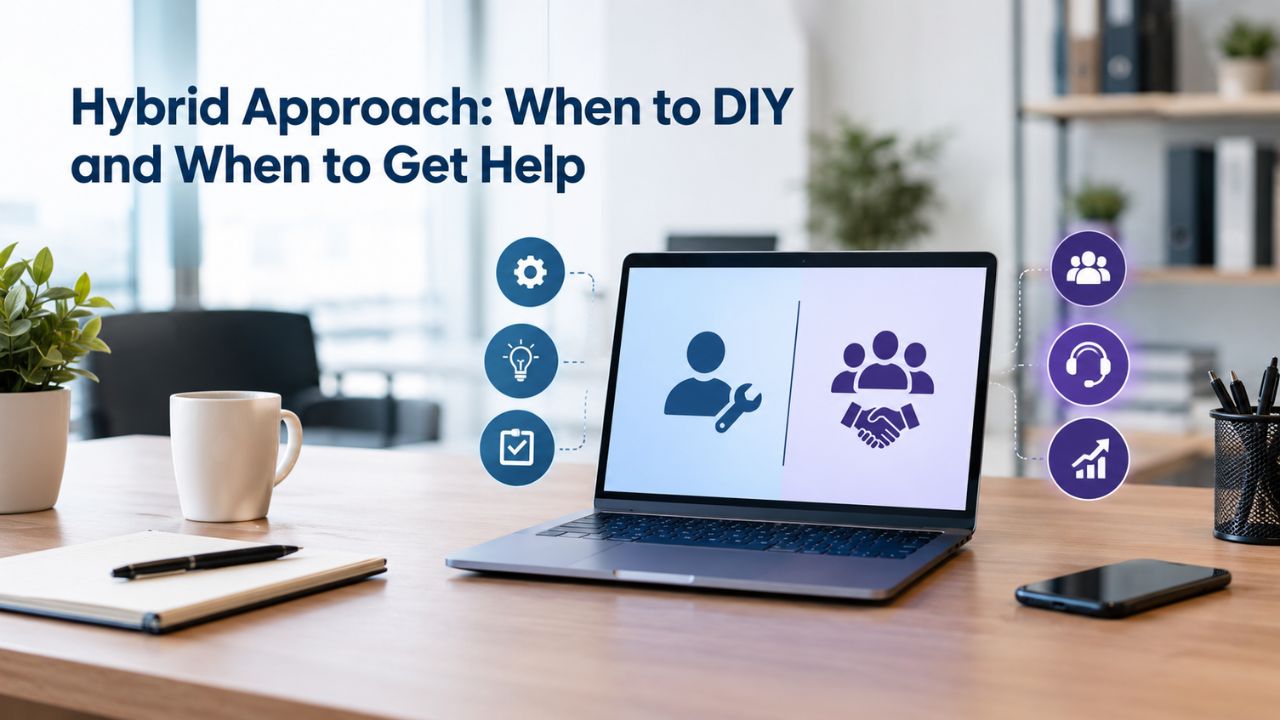
Hybrid Approach: When to DIY and When to Get Help
Pure DIY isn’t the only path to SEO success. Many of the most successful small business SEO efforts blend strategic DIY work with selective professional help. Understanding where to draw this line helps you maximize results while managing time and budgets efficiently.
High-Leverage Tasks Worth Doing Yourself
Start with high-leverage, repeatable tasks that don’t require deep expertise. Optimize and maintain your Google Business Profile; this single task, done well, can drive thirty to fifty percent of your local search traffic with minimal effort. Update it monthly, upload new photos from completed jobs, respond to reviews, and post seasonal updates.
This work is straightforward, and the payoff is enormous for local businesses. Create and optimize content around topics you understand deeply. Write the first draft in your voice, then use a DIY tool to optimize for keywords and identify internal linking opportunities. This keeps your content authentic while ensuring it’s technically optimized for search.
When to Hire Specialists for Bottleneck Work
Hire a technical SEO specialist for a one-time comprehensive audit if your site has accumulated technical debt. They’ll cost a flat project fee for a thorough audit and remediation roadmap, far less than an ongoing engagement but bringing professional expertise to problems you might miss. Similarly, hire a content strategist to review your content strategy and keyword positioning if you’re unsure you’re targeting the right opportunities or competing in a highly competitive niche.
Link building is another smart area for selective help. Building relationships with relevant websites, earning citations, and gaining quality backlinks is time-intensive and relationship-based work. A freelancer experienced in your industry can accelerate this work faster than you learning from scratch. Part-time support for a few hours weekly adds enough leverage to accelerate authority building significantly without requiring a full-time employee. This blend balances speed and cost effectively. You handle repeatable, ongoing work yourself- the tasks that require no deep expertise and benefit from your intimate knowledge of your business. Specialists handle deep, complex work or bottleneck tasks where expert knowledge accelerates results significantly.
Assessment: Is DIY SEO Right for Your Business?
Before committing to DIY SEO, ask yourself these questions honestly. Your answers determine whether DIY is realistic or whether an alternative approach might work better.

Evaluate Time Availability, Budget, and Market Position
Calculate your true hourly value. If you’re billing clients, closing sales, or spending time on revenue-generating work, every hour spent on DIY SEO is an hour not spent earning money. If you have genuinely uncommitted time- afternoons when you’re not serving customers or prospects- then DIY makes sense from a time-value perspective. If you’re already squeezed and every hour is accounted for in revenue-generating activities, the time you’d spend on DIY SEO might cost you more in lost income than the results are worth. Be honest about your schedule. Many small business owners think they have spare time until they actually try to carve out fifteen to twenty hours weekly for DIY SEO work.
In low-competition niches, specialized B2B services, local markets with few competitors, and unusual product categories, DIY tools are powerful, and results come faster. You can own your keyword space in six to nine months because you’re competing against fewer opponents, many of whom aren’t doing SEO well. In hyper-competitive markets- national finance services, e-commerce, major metropolitan markets- the learning curve and time investment often exceed the benefits you can realistically achieve. Evaluate your specific market honestly. Research what your top competitors are doing. If they’re ranking with thin content and poor technical optimization, DIY has good odds. If they’re ranking with comprehensive, well-optimized content and active link-building efforts, you’re in a genuinely competitive situation.
Commit to Long-Term Effort and Evaluate Learning Style
SEO is not a ninety-day game. If you’re looking for quick results or testing SEO as a marketing tactic, DIY will frustrate you profoundly. You need to commit to twelve months of consistent work before you’ll see meaningful ROI. If your business model requires faster marketing payback, you need leads within three months, paid advertising might serve your constraints better than organic search. This twelve-month commitment isn’t about working full-time on SEO. It’s about consistent effort over the duration. Publishing monthly content for twelve months beats publishing weekly for three months then disappearing.
Some people thrive on learning independently, reading documentation, watching tutorials, testing hypotheses, learning from mistakes. Others freeze when faced with a DIY tool and hundreds of configuration options. Be honest about your learning style. If you need structured training and hands-on guidance, self-education may cost more time than strategic consulting. If you love learning independently and exploring tools, DIY leverages your strengths. Consider your past learning experiences. When you’ve learned something complex before, did you do it independently or with guidance? How long did it take? What made learning stick for you?
Getting Started: Your First 30 Days
If you’ve decided DIY SEO makes sense for your situation, start strategically. Your first month sets the foundation that everything else builds on.
Metrics to Track Weekly, Monthly, and Quarterly
| Metric | What It Measures | Weekly Check | Monthly Comparison | Quarterly Review |
|---|---|---|---|---|
| Google Search Console Impressions | How often your site appears in search results | Review trend; identify newly appearing keywords | Compare to previous month; look for growth trajectory | Assess seasonal patterns and overall visibility growth |
| Click-Through Rate (CTR) | Percentage of impressions resulting in clicks | Identify low-CTR queries needing title/description optimization | Benchmark against industry averages (typically 2–5%) | Track whether optimizations improved CTR over time |
| Average Ranking Position | Where your target keywords rank on Google | Monitor which keywords are moving up or down | Identify which content is ranking fastest | Assess progress on primary target keywords |
| Organic Traffic Volume | Total visitors from organic search | Watch daily/weekly volatility; flag sudden drops | Compare to previous month; calculate growth percentage | Project annual traffic based on quarterly growth rate |
| Content Performance | Which pieces rank fastest and convert best | Flag underperforming content for optimization | Identify top-performing content to replicate | Double down on winning content angles and topics |
| Backlink Growth | Quality external links pointing to your site | Monitor new linking domains | Track link velocity and quality of referring sites | Assess whether link-building efforts are accelerating authority |
| Keyword Ranking Improvements | Progress on your target keyword list | See which keywords moved up in rankings | Count how many keywords entered top 20 and top 10 | Measure total keywords ranking vs. baseline |
Weeks 1–3: Audit Current State and Develop Strategy
Set up Google Search Console and Google Analytics if you haven’t already. Run a free technical audit using Google PageSpeed Insights to identify any immediate speed or performance issues. Document your baseline metrics:
How many organic visitors do you get monthly?
Which keywords do you currently rank for among your top twenty?
Do you have a content strategy in place?
Do you have a publishing rhythm?
This baseline takes a few hours to gather but is invaluable for measuring progress later. Before buying or committing to a DIY SEO tool, explore what Google’s free tools provide. Google Search Console shows how your website performs in Google search, which keywords bring visitors, how many impressions and clicks you get, technical problems Google encounters when crawling your pages, and security alerts. Spend time understanding each report.
Create a keyword strategy document focused on one customer segment and one product or service. Pick one keyword cluster, five to ten related keywords around a single topic or solution. Map out four to eight pieces of content you could write over the next three months covering this topic comprehensively. Keep it focused rather than spreading thin across a dozen unrelated topics. Research your top five competitors in this keyword space.
What content are they publishing? What keywords are they ranking for?
Are there obvious gaps, questions they’re not answering, topics they’re not covering?
Identify three to five unique angles or questions you could answer that competitors aren’t addressing. This competitive analysis prevents you from working in a vacuum.
Week 4 Onward: Publish and Establish Tracking Habits
Write and publish your first piece of optimized content. Use a DIY tool’s keyword recommendations to inform structure and section planning, but write in your authentic voice. Optimize the title and meta description for your target keyword. Use proper heading structure. Add image alt text. Include relevant internal links to other pages on your site. This first piece teaches you the end-to-end process, from research to publication, without committing to a full content calendar yet. Analyze what happens after you publish. Watch Google Search Console for impressions and clicks on this piece. Track its ranking position over the next month. Notice whether it ranks fastest for certain keywords or takes longer for others.
Set a weekly habit: thirty minutes reviewing Google Search Console. Check impressions, clicks, and ranking positions for your target keywords.
Look for patterns: which queries are getting impressions but no clicks (potentially title and description optimization opportunities)?
Monthly: compare your organic traffic to the previous month. Track whether it’s growing, flat, or declining.
Quarterly: review which content performed best and double down on winning topics.
This regular review habit is boring but powerful. It keeps you connected to your data and prevents you from wasting months pursuing strategies that aren’t working.
Real-World Expectations: Building Momentum Over Time
Understanding what success actually looks like in DIY SEO helps you stay motivated through the slower early phases and make smarter decisions about which tactics to pursue.
Why Early Results Feel Invisible
The first few months of DIY SEO are genuinely boring in terms of results. You’re publishing content that no one is reading yet. You’re fixing technical issues that don’t immediately impact rankings. You’re building an internal linking structure that won’t show ROI for months. The work feels productive because you’re busy and learning constantly. But the external metrics- traffic, rankings, leads- stay relatively flat. This invisibility is normal. It’s not a sign that something is wrong.
What’s actually happening during these months is Google evaluating your site and content. The search engine is crawling your pages, understanding your content, comparing you to competitors, and gradually determining where your site belongs in rankings. This evaluation takes time. For new sites with no existing authority, it might take three to four months before you see meaningful movement. For established sites with some authority, it might take four to eight weeks. But almost all sites experience this “invisible progress” phase.
How to Measure Progress When Metrics Are Flat
If you’re waiting for organic traffic to increase, you’ll feel frustrated for months. Instead, measure different signals that indicate progress is happening. Track impressions in Google Search Console; this shows how often your site appears in search results. Early-stage impressions indicate Google is considering your site for rankings, even if it hasn’t ranked you high yet. Track indexation and confirm that new pages you publish get indexed within a week or two of publication. Track keyword position changes: if your keywords move from position 50 to position 35, that’s progress, even if you’re not on the first page yet.
These intermediate metrics help you stay motivated during the early phases. They’re real signals that optimization is working, even if they haven’t translated to traffic yet. Most DIY practitioners who succeed track these intermediate metrics religiously and understand that top-page rankings and traffic growth will follow once the foundation is solid.
Recognizing When Momentum Actually Accelerates
The inflection point where DIY SEO suddenly feels worth the effort typically comes between months four and six. This is when a few keywords break into the top twenty, when monthly impressions jump noticeably, when you start seeing organic visitors in your traffic reports. The jump isn’t usually dramatic, maybe from ten visitors monthly to fifty, or from zero rankings on page one to three keywords on page one. But the directional shift is unmistakable. Before month four, the question is “Is this working?” After month six, the question becomes “How do I scale this?”
This momentum shift is crucial psychologically. Most DIY practitioners who quit do so right before this moment arrives. They’ve spent three to four months getting minimal results and conclude the strategy isn’t working. They abandon the effort just as Google’s evaluation period is ending and rankings are about to improve. Those who push through month six see the momentum shift and gain the confidence to keep going. Understanding this pattern helps you stay committed through the slowest phases.
Ready to Take Control of Your SEO?
Niya Digital’s DIY SEO tool simplifies this process by bundling keyword research, technical audits, competitor analysis, and rank tracking into a single platform designed for small business owners. Start by exploring features that match your immediate needs: keyword research if you’re unsure which terms to target, or a technical audit if you want a baseline of your current site health before beginning optimization work.
Frequently Asked Questions
What is the difference between DIY SEO tools and hiring an SEO agency?
DIY SEO tools put you in control of strategy and execution; you own the work and drive timelines. An agency executes strategy for you with dedicated teams managing keyword research, content, link building, and reporting. DIY requires your time investment but costs less overall. Agencies cost significantly more but free up your bandwidth for other priorities. The best choice depends on your budget constraints, available time, market competition, and whether you prefer hands-on control or outsourced execution.
How long does it take to see results from DIY SEO?
Plan for three to six months to see early signals like increased impressions in Google Search Console and a few keywords breaking into top twenty rankings. Meaningful results, consistent traffic growth, top-page rankings, and measurable ROI typically emerge at six to twelve months. Exponential growth happens after year one when domain authority compounds. Timeline varies significantly based on niche competitiveness, your site’s age and existing authority, technical health, and consistency of effort.
Can I use free SEO tools instead of paying for a DIY platform?
Absolutely. Google Search Console, Google Analytics, and Google Business Profile are free and powerful. You can find free keyword research tools, site audit tools, and rank-tracking tools online. Free tools provide basic functionality; paid platforms add convenience, automation, and advanced features. Many small businesses start free, then add a paid tool once they’ve built momentum and can justify the investment based on the results it generates.
What’s the biggest mistake small businesses make with DIY SEO?
Expecting instant results and quitting before month six. SEO is fundamentally compounding; early effort shows minimal payoff, but consistency after month three compounds exponentially. Other common mistakes include targeting high-competition keywords instead of long-tail opportunities with better ranking chances, neglecting local SEO, ignoring critical technical issues, publishing inconsistently, and spreading effort too thin across too many projects at once.
Should I hire an agency instead of doing DIY SEO myself?
If your hourly value is high and your market is competitive, an agency often costs less in opportunity cost than DIY. If you’re bootstrapped, have uncommitted time, and compete in a low-competition niche, DIY wins financially. Calculate your true hourly rate, multiply by the time you’d spend learning and executing DIY SEO, and compare to agency costs. Many growing businesses find a hybrid- DIY for repeatable tasks, professional help for specialized one-time work- strikes the best balance.
Can I rank for competitive keywords with DIY SEO?
Yes, but it takes longer than targeting low-competition keywords. Ranking for highly competitive national keywords requires eighteen-plus months of authority building and sustained effort. Ranking for competitive keywords in a local market is faster, six to twelve months, because local competition is typically smaller. The smartest DIY strategy: own specific long-tail keywords first to build authority, then expand gradually to broader, more competitive keywords.
What’s a realistic monthly time investment for DIY SEO?
After your initial learning phase ends around month three, expect eight to fifteen hours monthly for ongoing work: publishing new content on schedule, reviewing rank tracking data, analyzing which content performs best, and optimizing based on results. Factor in two to three additional hours monthly for staying current with SEO trends and algorithm updates. Many small business owners find ten hours monthly a reasonable ongoing investment once they’ve built process and rhythm.
Which DIY SEO tool is best for small businesses?
The best tool depends on your specific needs and learning style. Niya Digital’s DIY SEO platform is purpose-built for small business owners, bundling keyword research, technical audits, competitor analysis, and rank tracking into an accessible interface. Try the tool with its free trial or free tier before committing to a paid plan. The platform that matches your workflow and learning style is the one you’ll use consistently.
Is technical SEO knowledge required to use DIY SEO tools?
No. Modern DIY platforms like Niya Digital are designed for non-technical users. The tool flags issues and explains them in plain English; you don’t need coding skills to use them. However, understanding why an issue matters, even at a basic level, helps you prioritize fixes and coordinate effectively with developers if you need technical support.
What’s the best first step if I want to try DIY SEO?
Audit your current state: set up Google Search Console and Google Analytics, run a free technical audit using Google PageSpeed Insights, and document your baseline organic traffic and current keyword rankings. This three-hour investment costs nothing and answers “where am I now?” Then pick one keyword cluster and publish one optimized piece of content. This first cycle teaches you the full process without a huge time investment.
Can I do DIY SEO while running my business full-time?
Yes, but expect slower progress than if you focused full-time on SEO. Prioritize high-leverage, repeatable tasks: Google Business Profile optimization, consistent content publishing, and weekly rank-tracking review. Delegate or outsource lower-leverage work like technical fixes. Many small business owners succeed with five to ten hours of focused DIY SEO each week, combined with occasional professional help for bottleneck tasks.
How do I know if my DIY SEO strategy has stopped working?
If you’re three months in and seeing zero impressions or clicks, something is wrong. Diagnose:
(1) Is your site indexed in Google? (Check Google Search Console.)
(2) Are you targeting keywords people actually search for? (Verify search volume.)
(3) Is your content optimized for target keywords? (Run an on-page audit.)
(4) Do technical issues prevent crawling? (Run site audit.)
Most “not working” situations are fixable: bad keyword targeting, missing technical fixes, or indexation problems. Diagnostic thinking reveals the issue.
Should I invest in SEO training before buying a DIY tool?
You don’t need formal training, but reading one good SEO resource, Google’s own Search Central documentation, a recent SEO book, or a comprehensive guide, before starting adds value. This five- to eight-hour investment sets realistic expectations, teaches foundational concepts, and helps you use your DIY tool more effectively. Consider it part of your foundation-building phase, not a prerequisite barrier.
How often should I adjust my DIY SEO strategy?
Review strategy monthly based on rank tracking and traffic data. Adjust quarterly: double down on content that works, pivot away from low-performing areas. Stay informed about algorithm updates and emerging tactics; this is a two- to three-hour monthly task. The combination of rapid, data-driven iteration and patience for long-term results is key to sustainable DIY success.
What’s the difference between DIY SEO and just publishing blog posts?
Publishing blog posts without an SEO strategy is like throwing content at a wall and hoping something sticks. DIY SEO applies strategy: you research keywords your audience searches for, optimize content for those keywords, fix technical issues preventing Google from indexing your content, track results to see what works, and iterate based on data. Strategy transforms random content into an organized system for improving visibility and generating leads.
Glossary
- Long-tail keywords: Longer, more specific keyword phrases (for example: “best plumber for emergency repairs near me”) instead of broad terms (for example: “plumber”). Long-tail keywords typically have lower search volume but higher intent and conversion rates. They’re often easier to rank for and attract more qualified customers because they indicate clearer search intent.
- Technical SEO: Optimization of website infrastructure, backend elements, and indexation, including XML sitemaps, site crawlability, Core Web Vitals, mobile-friendliness, structured data markup, and robots.txt rules. Technical SEO improvements help search engines discover, crawl, and rank your pages more effectively.
- Competitor analysis: Researching how competing websites in your niche rank for keywords, what content they target, their backlink sources and volume, and their overall content strategy. This research identifies gaps, missed opportunities, and ways your site can differentiate from what competitors are already doing.
- Rank tracking: Monitoring your website’s search engine position for target keywords over time to measure SEO progress, identify trends, and adjust strategy based on what’s working. Tracking reveals which keywords are improving, which are stagnating, and where to focus effort.
- Organic search / organic traffic: Search engine results earned without paying for advertising. Visitors arriving at your site via unpaid search results. Organic traffic is valued because it reflects genuine search interest and costs nothing to acquire once earned through optimization.
- On-page SEO: Optimization of individual page elements including title tags, meta descriptions, headings, body content, image alt text, and internal links. On-page optimization aligns content with target keywords and user intent, helping search engines understand what a page is about.
- Domain authority: A measure of how much credibility and influence a website has in its industry or niche. Websites with higher domain authority rank for competitive keywords more easily. Authority builds over time through quality content, backlinks, and consistent presence.