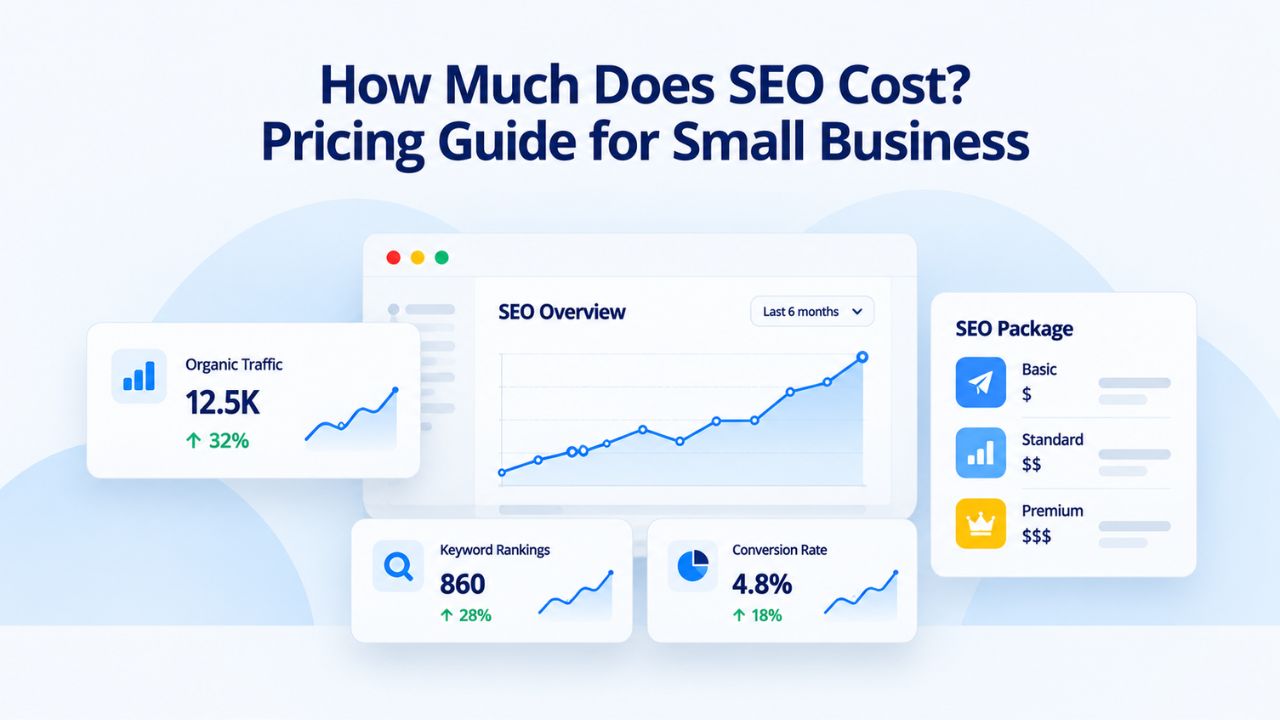
Small business owners often hesitate to invest in SEO because the true cost feels uncertain. Some claim SEO is cheap; others warn it’s expensive. The reality is more nuanced. SEO cost depends on several independent factors that compound: your business size, industry competition, website condition, geographic reach, and how you choose to execute.
The Hidden Cost Drivers: Why SEO Pricing Varies Dramatically
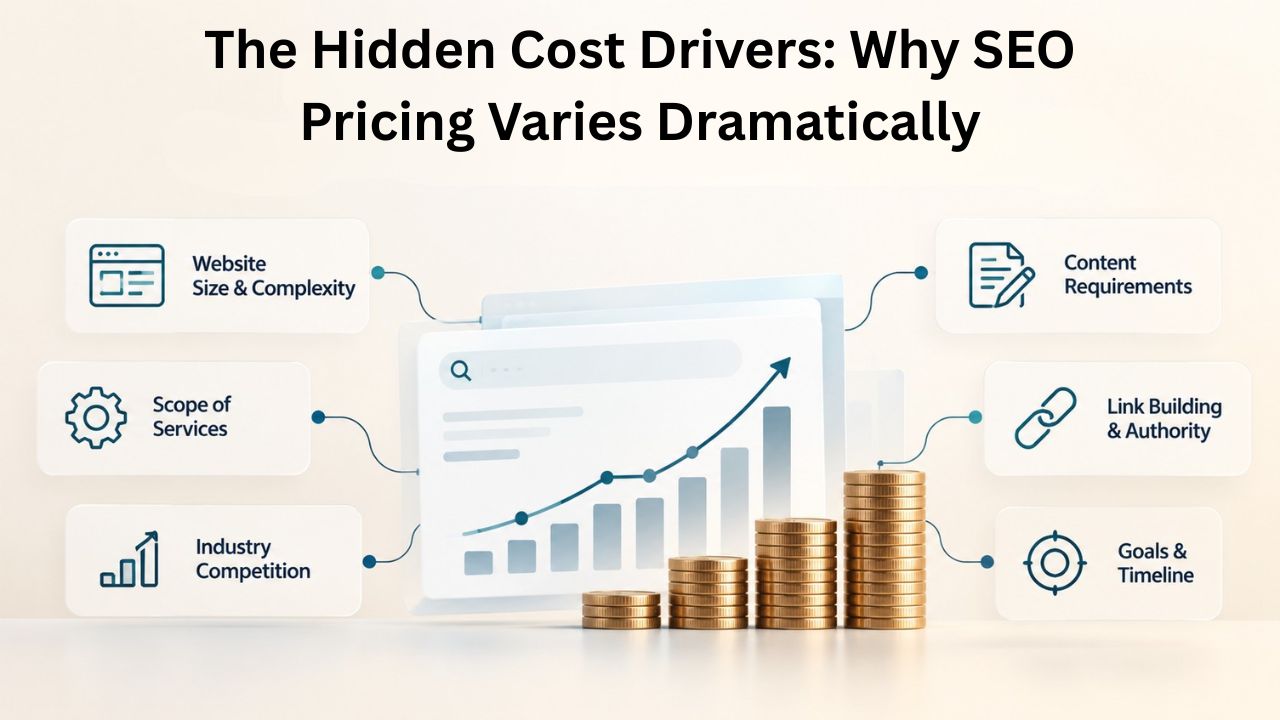
SEO is not a standardized service with one-size-fits-all pricing. No two businesses face the same search landscape, and understanding why costs differ helps you budget realistically rather than chasing false bargains. Five major factors independently influence what you’ll spend on SEO, and when they combine, they create vastly different investment requirements across different businesses and industries.
How Business Size and Industry Competition Shape Your Budget
Your business size, measured by website pages, product lines, and geographic reach, directly determines the volume of SEO work required. A local service business with fifty pages needs fundamentally less optimization work than a national e-commerce platform with five thousand product pages. However, industry competitiveness often matters even more than business size. Your current website position and the goals you want to achieve are crucial factors that influence SEO process price. A new accounting practice entering a local market faces far less keyword competition than a SaaS startup launching in a crowded productivity space.
Competition determines keyword difficulty, how hard it is to rank for terms your customers search for. Personal services, local trades, and specialized B2B niches typically face less competitive keywords than e-commerce, technology, or finance sectors. Higher keyword competition means more foundational work, longer timelines, and greater investment before meaningful ranking movement occurs. Understanding your industry’s competitive landscape helps you anticipate realistic budget requirements rather than being surprised by unexpected costs later.
Website Condition and Technical Health as Cost Multipliers
A website built on solid technical foundations costs less to optimize than one requiring significant backend work. Technical SEO debt, outdated content, or poor site architecture increases audit and optimization costs; sites with existing quality content and clean technical foundations cost less to optimize. If your site loads slowly, lacks mobile responsiveness, has indexing issues, or uses outdated technology, your SEO efforts must first fix those foundational problems before ranking improvements can take effect. This remediation work adds time, complexity, and overall investment to your SEO strategy.
Conversely, a site that already loads quickly, displays properly on mobile devices, has quality existing content, and maintains good technical health allows an SEO strategy to focus directly on keyword targeting, content expansion, and link building. The cleaner your starting position, the faster you can improve rankings and the lower your total investment curve becomes. Auditing your site’s technical health before committing to SEO helps you distinguish genuine project requirements from optional optimizations.
SEO Cost Drivers and Impact
| Factor | Description | Impact on Investment |
|---|---|---|
| Business Size | Number of pages, products, services | Larger sites need more optimization work |
| Industry Competition | Keyword difficulty, competitor count | Highly competitive niches require more effort |
| Website Condition | Current technical health, content quality | Poor condition requires foundation work first |
| Geographic Scope | Local, regional, national, or international | Broader scope exponentially increases complexity |
| Payment Model | DIY, freelancer, or agency | Different models create different cost profiles |
| Time Commitment | Available hours per week for SEO effort | More time available = lower outsourcing costs |
| Current Rankings | Starting position for target keywords | Better starting position = lower investment needs |
Search Engine Optimization (SEO) Plans & Pricing
Choose an SEO plan designed to support your website’s search visibility and growth goals. Whether you need keyword research, technical SEO audits, competitor analysis, rank tracking, or ongoing optimization support, our flexible plans provide the tools and insights you need to build a stronger SEO strategy and improve your online presence.
Search Engine Optimization (SEO)
Bring more traffic to your website with Search Engine Optimization.
- Search Optimization: Improve search engine rankings with keyword and suggested topics tool
- Keyword suggestions: Get personalized phrases and words to add to increase traffic to your website and help it rank better.
- Tracking your ranking: Track the progress of your website’s rank on Google over time
- Create your sitemap: Customize, create and submit a site map to aid search engines in crawling your site.

Search Engine Optimization (SEO)
- Search Optimization: Improve search engine rankings with keyword and suggested topics tool
- Keyword suggestions: Get personalized phrases and words to add to increase traffic to your website and help it rank better.
- Tracking your ranking: Track the progress of your website’s rank on Google over time
- Create your sitemap: Customize, create and submit a site map to aid search engines in crawling your site.
Customized SEO Plan
Get Customized Plan For your Business Website SEO (Search Engine Optimization)
- On-Page & Off-Page Optimization: Update Meta Tags, Titles, Descriptions, Alt Tags, Schema / JSON-LD / Microdata Format, HTML + TXT + XML Sitemap, Robots.TXT, Google Analytics & Google Search Console integration
- Keyword Research & Analysis: Improve Keyword Effectiveness Index (KEI) with main heading & sub-heading tags, Content Review by professional content editor
- Competitor Research & Analysis: Compare and Compete with competitors search engine ranking positions, Track and analyse competitor trends
- Diversify Back Link Profile: Relevant Business Directory Submission, Article Submission, Blog Creation, Web 2.0 asset creations, Author Profile Links, Social Book Marking links
- Monthly Task Review & Progress Reporting: Get Monthly SERP Reports and Task Performance Reports
DIY SEO Tools vs. Hiring an Agency: Understanding the Core Trade-off
The choice between managing SEO yourself and hiring external help isn’t purely financial; it’s a fundamental trade-off between your time and money. Understanding what each approach demands helps you choose what fits your business reality, not just your budget preferences.
DIY SEO Tool Costs and the Time Investment Reality
Self-service SEO tools for keyword research, rank tracking, and site auditing come in different feature levels and price points. Google Search Console and Google Analytics, both free, provide essential performance data. Beyond Google’s free tools, mid-market SEO platforms offer competitive feature sets at modest costs.
The hidden cost of DIY SEO is your time. Even using tools, effective DIY SEO demands consistent weekly effort for keyword research, content optimization, technical fixes, and performance monitoring. DIY SEO makes sense when you enjoy the process, your niche requires deep subject-matter expertise no tool can replicate, and your hourly rate is below $30. If your time is worth more than that, the opportunity cost of DIY efforts often exceeds what you’d pay an outside expert to handle the work.
DIY SEO also requires learning. You’ll spend time understanding search engine mechanics, learning tool interfaces, interpreting analytics, and staying current with algorithm changes. Many business owners underestimate this learning curve, thinking a tool subscription is the only investment required. In reality, the educational investment and sustained effort often represent the highest true cost of DIY SEO. For owners who genuinely enjoy digital marketing and want to build in-house expertise, DIY can be rewarding. For those viewing it as a necessary evil, the time burden often becomes overwhelming.
Agency and Freelancer Models: Delegation and Expertise
Hiring external SEO professionals, whether full-service agencies or specialized freelancers, shifts the work from your shoulders to theirs. This delegation lets you focus on running your business instead of learning SEO details. Agencies typically provide keyword research, competitor analysis, on-page optimization, technical audits, content strategy, rank tracking, and monthly reporting. Freelancers often specialize in specific services; one might focus on technical SEO, another on content optimization, allowing you to build a custom team that matches your needs.
The professional model trades your time for expertise and scale. An SEO professional brings cross-industry experience, proven strategies, access to tools, and accountability for results. They can move faster than DIY because they’ve done similar work hundreds of times. The downside is the cost of their labor and the responsibility of managing an external relationship. You’re relying on someone else’s execution quality and timeline. Choosing between these approaches depends on your constraints: if time is your scarcest resource, hiring makes sense; if budget is the constraint, DIY becomes necessary despite the time demand.
DIY SEO Platform Example: GoDaddy’s Tool-Based Approach
For small business owners wanting a structured, beginner-friendly entry into self-serve optimization, GoDaddy offers a DIY SEO tool designed specifically for owners without marketing backgrounds. The tool is a basic DIY option for improving your site if you already host with them. Essentially, it’s a keyword-focused SEO tool that also tracks rankings. The platform guides users through SEO fundamentals, identifies optimization opportunities, tracks ranking progress, and provides ongoing recommendations.
GoDaddy’s tool’s strength lies in its simplicity and guided workflow; it’s designed for owners with zero SEO experience who want a straightforward path to basic optimization. Paired with Niya Digital’s support and onboarding, as GoDaddy’s authorized reseller, the platform becomes more actionable for small business owners who want guidance on interpreting results and prioritizing next steps. The tool’s limitations include basic competitor analysis depth and limited technical audit sophistication. You’ll need Google Search Console and Google Analytics alongside the platform for complete visibility into performance.
Pricing Models and Payment Structures: How You Pay Shapes What You Get
Different SEO service providers use different pricing models, each with distinct advantages and drawbacks. Understanding these models helps you choose the structure that best fits your budget predictability, commitment comfort, and cash flow constraints.
Monthly Retainers: Predictability Through Ongoing Commitment
Monthly retainers are one of the most common pricing models for ongoing SEO work. This pricing model is ideal for businesses that require continuous SEO support and strategy. Under a retainer model, you pay a fixed amount each month for a guaranteed number of hours, specific deliverables, or outcome-based commitments. Retainers lock in cost certainty; you know exactly what you’ll pay on day one, making budgeting straightforward. Most retainers bundle keyword research, on-page optimization, rank tracking, monthly reporting, and strategic guidance.
The main advantage of retainers is cost predictability and the agency’s commitment to your account. When an agency knows you’re a multi-month client, they invest more heavily in your success. The main disadvantage is long-term commitment: retainers typically require three- to six-month minimums, and you risk paying even if results don’t materialize as expected. Many small businesses like retainers because the bundled approach often costs less per task than paying separately for audits, optimization, and tracking.
Hourly Consulting and Project-Based Pricing
Hourly consulting works well for specific advice, training, or limited-scope work like a one-time audit or keyword strategy setup. You pay only for hours used, making this model ideal for businesses unsure of long-term SEO needs or looking for guidance alongside in-house execution. Project-based pricing applies fixed fees to defined deliverables: a technical audit for a flat fee, initial keyword research and strategy for another amount, and content optimization for a third. This model provides cost certainty for specific work but doesn’t scale well for ongoing optimization.
Neither hourly consulting nor project-based pricing works effectively for long-term ranking growth because SEO is iterative. You establish strategy, measure results, identify what’s working and what’s not, and continuously refine. Fixed-project models typically end once the deliverable is complete, leaving you to execute ongoing optimization alone. For long-term ranking improvement, retainers or ongoing DIY management make more sense than one-time project engagements.
Building Your Own DIY SEO Tool Stack on a Lean Budget
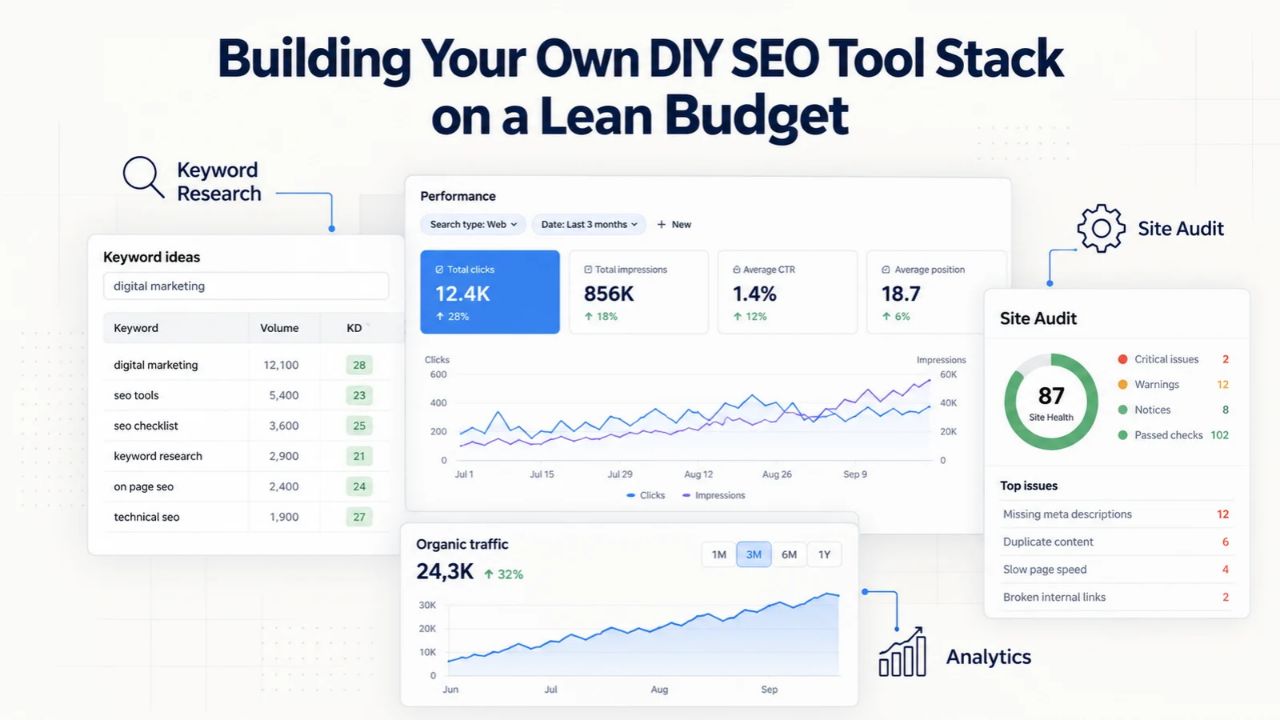
If you commit to DIY, you don’t need expensive all-in-one platforms to cover the basics. A lean tool stack combining free Google tools with carefully selected paid tools can provide comprehensive keyword research, rank tracking, analytics, and technical audit capabilities.
Essential Free Tools and Strategic Paid Additions
Start your DIY stack with Google Search Console (free), which provides indexing status, keyword ranking data, search performance metrics, and technical issue alerts directly from Google’s servers. Add Google Analytics (free) for traffic analysis, user behavior tracking, and conversion measurement. These two free tools provide more actionable data than most small businesses can process effectively. Together, they form a complete foundation at zero cost.
For additional capabilities, mid-market keyword research tools provide search volume estimates and keyword difficulty scoring that Google’s free tools don’t offer. Rank tracking platforms let you monitor your site’s position for target keywords over time and automatically alert you to ranking changes. A technical SEO tool can scan your site for common issues like slow load times, mobile responsiveness problems, and indexing errors. Building this stack with mid-tier tools keeps costs low while providing full SEO visibility. Many small businesses find this budget-friendly combination covers their needs, even if premium tools offer extra features they’d rarely use.
What This Budget Stack Can and Cannot Deliver
A lean tool stack provides keyword research, ranking position tracking, traffic insights, and technical issue identification. It doesn’t provide deep competitor content analysis, sophisticated backlink research, or AI-powered optimization suggestions that premium platforms offer. For local SEO or small businesses targeting 50 to 100 keywords, the budget stack provides sufficient functionality. For national campaigns targeting hundreds of keywords across multiple product categories, you’ll likely hit tool limitations and need to upgrade.
Niya Digital’s team has found that small business owners often struggle to prioritize between keyword research and content creation, missing high-impact opportunities while spending time on minor optimizations. Understanding your actual SEO needs- what decisions require data, what work is truly important- helps you select tools matching your real requirements rather than paying for features you’ll never use. Many businesses waste money on premium tool subscriptions while neglecting the basic work that actually drives results.
SEO Approaches Comparison
| Approach | Time Investment | Expert Knowledge Required | Best Situation | Primary Trade-off |
|---|---|---|---|---|
| DIY with Free Tools | 5–10 hours/week | Learning required | Budget-constrained, time-available | Slower results, learning curve |
| DIY with Paid Tools | 5–10 hours/week | Learning required | Local business, specific niches | Tool costs + significant time |
| Freelancer (Project-Based) | 5 hours/week oversight | Moderate (freelancer has expertise) | Specific projects, limited scope | Inconsistent availability |
| Freelancer (Ongoing) | 2–3 hours/week oversight | Moderate | Hands-on involvement, growth phase | Scaling limitations, cost escalation |
| Agency (Small Retainer) | 1–2 hours/week oversight | None (agency owns expertise) | Competitive niches, delegation preference | Higher cost, loss of control |
| Agency (Full Service) | 1 hour/week oversight | None | Aggressive growth, complex strategy | Substantial investment required |
Local vs. National SEO: How Geographic Scope Determines Complexity and Investment
Geographic reach fundamentally determines SEO difficulty because it sets both keyword competitiveness and the breadth of work required. Local and national campaigns are entirely different undertakings with distinct complexity levels and investment profiles.
Local SEO: Lower Competition, Faster Results
Local SEO tends to cost a little less than other SEO strategies because it’s more finite, while international SEO tends to cost more because the work is more complex. A plumber targeting “emergency plumbing in Denver” competes against far fewer ranking sites than a software company targeting “project management tool” nationally. Local keywords have geographic qualifiers that automatically narrow the competitive set. Local businesses can often see meaningful results because the keyword universe is smaller, competition is bounded by geography, and Google’s local results explicitly favor relevance and local authority over massive domain authority.
Local SEO work is also more straightforward to execute. Optimizing your Google Business Profile, building local citations, generating positive reviews, and creating location-specific content form the core of local SEO strategy. The technical and content work is lighter than national campaigns, the results timeline is shorter, and success is directly measurable through calls, visits, or appointments. Local businesses new to SEO should expect faster progress and lower total investment than counterparts pursuing national visibility.
National and International Campaigns: Exponential Complexity Growth
National campaigns targeting broad keywords require substantially more work, sophistication, and investment than local efforts. For medium-sized businesses needing more comprehensive strategies, including content marketing, link building, and more advanced technical SEO, the cost typically ranges significantly higher because you’re competing against established sites with years of authority. Competing for national keywords means ranking against large competitors with massive content libraries, extensive link profiles, and years of search engine trust. To move the needle, you need comprehensive content strategies, significant link-building campaigns, and advanced technical SEO.
International campaigns add complexity, including language considerations, regional regulatory requirements, cultural adaptation, and market-entry dynamics. Different countries have different search behaviors, competitive landscapes, and ranking factors. International SEO requires either multilingual content creation or separate regional strategies, which can exponentially increase content and optimization workload. Your choice between local and national approaches should heavily influence your SEO investment plan. A small business competing locally might achieve meaningful results with modest investment; that same business pursuing national visibility would face entirely different resource requirements.
Start Building Your DIY SEO Foundation Today
You now have a clear picture of how to assemble a lean, effective DIY SEO tool stack without premium platform overhead. The question isn’t whether you can afford to start; free Google tools prove cost isn’t the barrier. The real question is whether you’re ready to commit the time and focus required for DIY success. Niya Digital, as GoDaddy’s authorized reseller, offers DIY SEO platform access, setup guidance, and ongoing support to help small business owners execute effectively without agency costs. Start your DIY journey with simplified tools and expert onboarding support.
The Real Timeline: When You’ll Actually See Business Impact from SEO
Understanding realistic SEO timelines prevents the common mistake of abandoning efforts too early or expecting unrealistic quick results. Search engine ranking is fundamentally a long-term game, and recognizing the typical progression helps you maintain commitment through the early phases when results are invisible.
Months 1–3: Foundation Building Phase (Expect Invisible Progress)
Initial results typically appear in 3–6 months, with significant ROI in 6–12 months, and exponential growth after year one. The first three months of SEO are entirely foundational. Your SEO partner or tool performs keyword research to identify target opportunities, conducts a technical audit of your site’s health, and develops an optimization roadmap. You won’t see ranking changes or traffic increases yet. No sales are generated from SEO during this phase. That is why many businesses quit prematurely: they spend money but see nothing to show for it. This phase is normal, expected, and necessary. Skipping it or rushing through it typically results in poor strategy choices and wasted effort later.
During months one through three, foundational work includes technical fixes, initial on-page optimization, content gap analysis, and strategy documentation. This work may not generate immediate results, but it lays the groundwork that enables results in subsequent months. Businesses that understand this phase don’t panic when month-two analytics show minimal change. They trust the process because they understand the typical progression.
Months 4–6: Initial Movement and Proof of Concept
Around months four through six, you’ll typically notice some target keywords entering the top twenty to thirty search results. Organic traffic will tick upward, potentially twenty to fifty percent if you had existing baseline traffic. Some businesses hit their first consistent business impact here. Others see measurable ranking movement but no immediate revenue impact. This phase serves as proof of concept: you’re seeing that the strategy works, keywords are responding to optimization, and organic visibility is genuinely improving.
This phase is psychologically important because visible results emerge after months of unseen work. Stakeholders see evidence that the investment is paying off. The ranking signals and traffic increases reassure you that you’re on the right path. However, significant business impact may still not be apparent; leads, sales, or appointments might still lag behind ranking improvements. Knowing ranking improvements precede business impact by several months helps you stay realistic.
Months 6–12: Real Business ROI and Accelerating Growth
Many sites reach their first consistent SEO ROI at this stage, with tangible increases in sales. By months six to twelve, meaningful business impact should be visible. Organic traffic growth becomes substantial and consistent. Target keywords appear on the first page of search results. Business metrics- calls, leads, sales, appointments- show measurable increases tied to organic search. This is the inflection point where SEO investment starts generating positive return. The accumulating effort from months one through six begins compounding into real business results.
This phase is when many businesses decide whether to scale their SEO investment or maintain current levels. Those seeing strong results often increase investment, expanding keyword targets or content strategies. Those seeing modest results might maintain current investment while monitoring performance. This phase typically represents the point where you can measure ROI with confidence and make informed decisions about future SEO commitment.
Year 2 and Beyond: Compounding Returns and Exponential Growth
Most established campaigns compound to 140–800% traffic growth, with median SEO ROI reaching 748%. Year two and beyond is where organic SEO’s true value emerges. Your accumulated content, established authority, and comprehensive keyword targeting compound over time. Competitors may not have matched your effort, leaving you more visible than competing sites. Your organic traffic becomes a permanent, low-cost channel generating leads continuously. The ROI curve turns exponential: you maintain investment while returns grow substantially.
Many business owners mistake month-to-month performance for true SEO value, which causes them to underestimate SEO’s long-term worth. When you zoom in on single months, progress appears incremental. Zooming out to a year-two and year-three perspective reveals the dramatic business impact. Organic traffic that seemed modest in month twelve often doubles or triples by month twenty-four. This compounding nature is why SEO differs from paid advertising: you’re building an asset that grows over time rather than renting visibility that stops the moment you stop paying.
Is SEO Worth the Investment? Understanding Real-World ROI
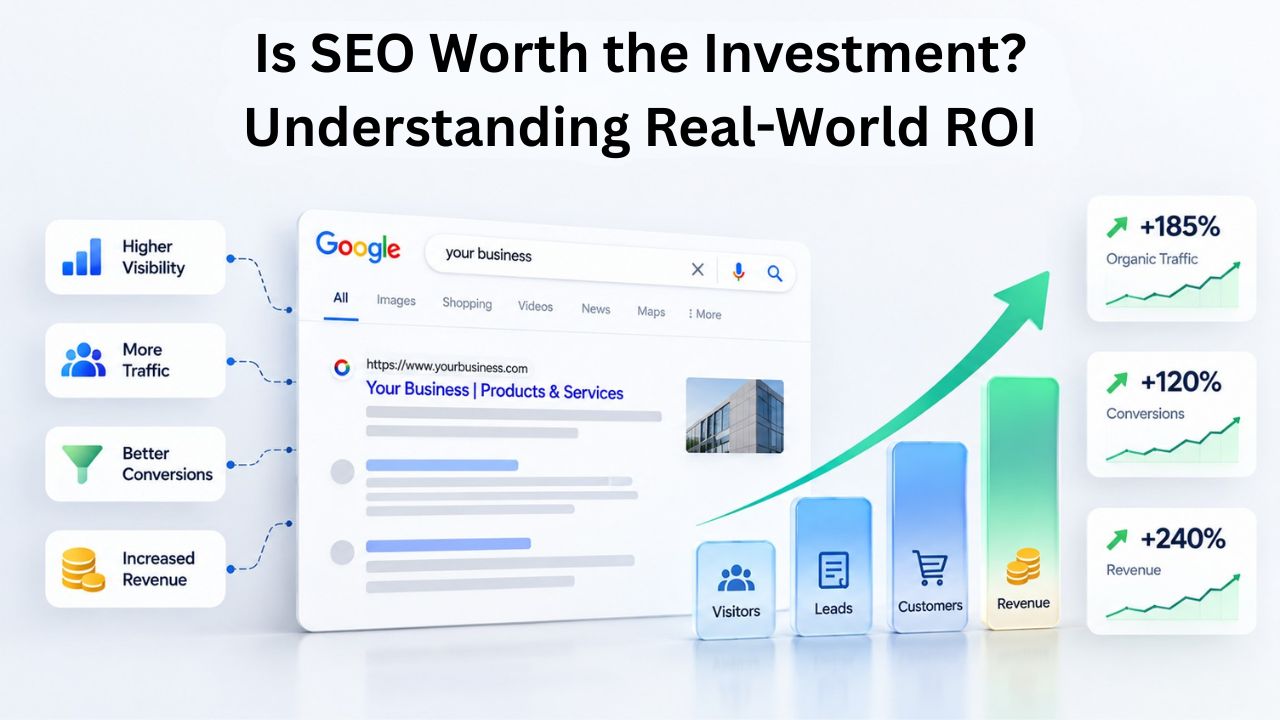
The question every business owner asks is straightforward: “Will I make more money than I spend?” Research-backed evidence consistently shows the answer is yes, if you invest long enough and execute effectively.
How SEO ROI Compares to Other Marketing Channels
Paid search advertising generates immediate traffic but requires constant spending; stop spending, and traffic stops immediately. Hiring an agency typically costs around $2,500 per month with a fixed rate. Over twelve months, constant spending generates leads during those twelve months. But the moment you stop spending, you have no leads from that channel. SEO, by contrast, requires upfront investment but continues generating organic traffic even when you’re not actively investing. After establishing strong organic visibility, you can reduce SEO spending while maintaining traffic levels, creating a compounding ROI advantage over time.
Consider a business generating organic revenue by month twelve and then maintaining that organic visibility into year two. The SEO investment from year one continues generating returns throughout year two without additional spending. Paid advertising requires continuous year-two spending to maintain year-one’s lead volume. This fundamental difference, SEO’s compounding nature versus advertising’s constant-spend requirement, explains why SEO ROI eventually exceeds paid advertising ROI despite slower initial returns.
Timeline to Break-Even and First Positive Return
Break-even, where cumulative revenue from organic search exceeds total SEO investment, typically occurs between month six and month twelve. For businesses with high customer lifetime value (B2B services, high-ticket products, recurring subscriptions), break-even arrives earlier. For businesses with low lifetime value (thin-margin e-commerce, one-time purchases), it takes longer. The typical small business reports that a twelve-month SEO investment generates two to ten times that investment in incremental revenue by month eighteen.
The critical caveat is that SEO works best for businesses selling solutions people actively search for. If your ideal customer doesn’t use Google to find solutions in your category, SEO’s ROI will disappoint. Conversely, if your customers actively search for solutions you provide, and you rank for those searches, organic ROI often exceeds what the business anticipated. Understanding whether your customer base uses search engines to find businesses like yours is the first step in evaluating SEO investment.
Hidden Costs and Overlooked Expenses Beyond the Headline Budget
Most small business SEO budgets fail because they ignore indirect costs beyond the headline tool subscription or agency retainer. The true cost of SEO often far exceeds the contracted amount.
Content Creation, Copywriting, and Professional Writing
SEO demands content. Content remains king in SEO. If your website already has content, your SEO consultant may suggest optimizing it to improve rankings or updating outdated information, which adds to ongoing costs. Optimizing existing pages may require professional copywriting if your current content is thin or poorly written. Creating entirely new content for keyword opportunities requires researched, professionally written material. These writing costs often eclipse the platform or agency fees when you add them up across multiple pieces of content.
Content creation also extends beyond writing. SEO content often requires original research, expert interviews, data visualization, and custom imagery to stand out in competitive search results. A single high-quality, comprehensive content piece designed to rank for competitive keywords can cost several times more than a basic article. Budgeting for content creation separately from SEO service fees is essential; many small businesses are shocked when they realize optimization work is only a fraction of true SEO costs.
Learning Curve, Tool Adoption, and Ongoing Monitoring
DIY SEO requires learning. Courses, industry certifications, and staying current with algorithm changes add up to represent costs. Even with an agency, you’ll spend time in kickoff calls, strategy reviews, and interpreting reports, time that’s not billable to clients or dedicated to core business operations. SEO isn’t a set-it-and-forget-it effort; ongoing monitoring and adjustment are required monthly. Competitors targeting your keywords, Google algorithm changes, and seasonal demand shifts require continuous strategy refinement. Many small businesses underestimate the ongoing maintenance cost; when calculated honestly, this hidden expense often matches the visible service fees.
Niya Digital, as GoDaddy’s authorized reseller, recognizes that most small businesses underestimate SEO’s true scope. Successful businesses treat SEO as an ongoing practice that requires continuous attention and refinement, not a one-time optimization project. This understanding shapes their approach to supporting customers through the full SEO journey, not just the initial tool setup.
Choosing Your SEO Path: A Framework for Making the Decision
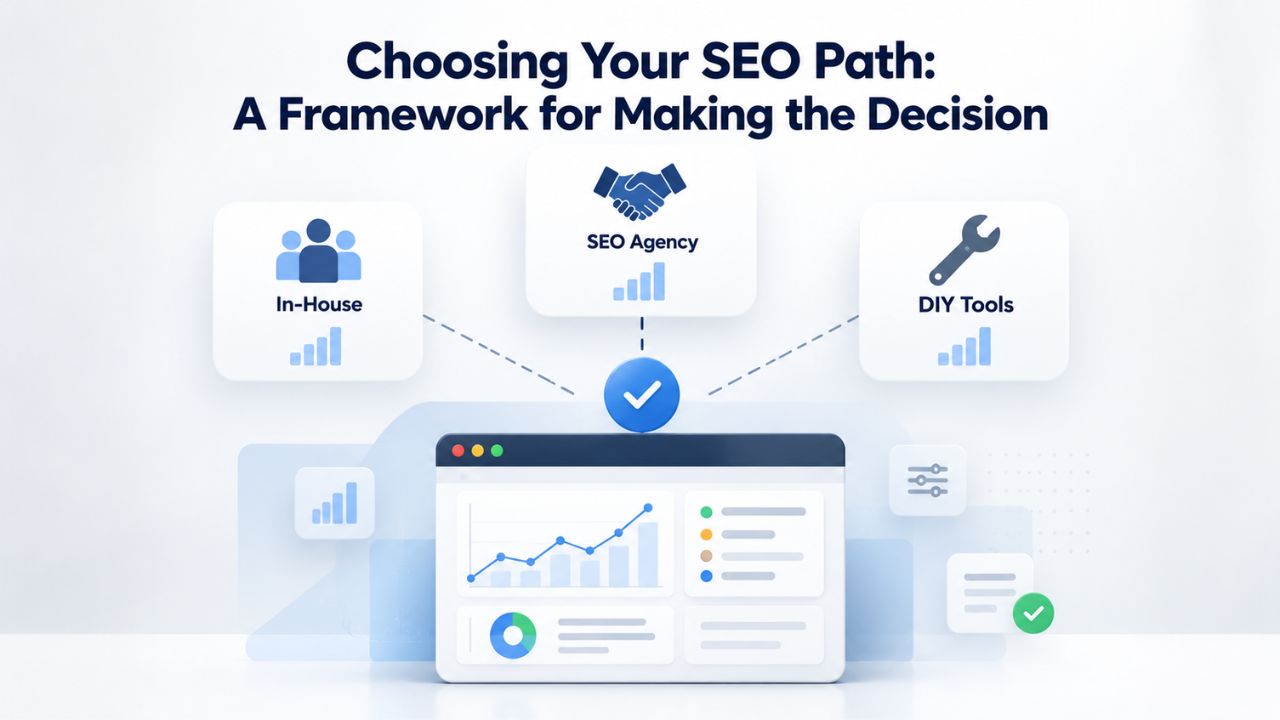
With all this information, the remaining question is: DIY, freelancer, or agency? The right choice depends on your specific constraints and business situation.
DIY: Best for Time-Rich, Budget-Constrained Owners
Choose DIY if you have five to ten hours weekly to invest in SEO, your hourly time value is under fifty dollars, your niche has low keyword competition, and you’re willing to invest time learning SEO fundamentals. DIY works best for local service businesses, solopreneurs, and newer e-commerce stores where you have time and direct knowledge of your business and customers. The advantage is low cost; the disadvantage is a substantial time commitment and a slower path to results than with experienced professionals.
Niya Digital supports owners on the DIY path by providing access to GoDaddy’s DIY SEO platform, educational resources, and basic optimization guidance. DIY doesn’t mean you’re entirely alone; a good reseller, online community, or mentor can fill key knowledge gaps and help you avoid common mistakes that waste time and money.
Freelancers: Best for Specific Projects with Defined Endpoints
Choose freelancers if you have a specific, well-defined project (technical audit, keyword strategy, content optimization) with a clear endpoint, or if you want part-time support without full retainer commitment. Freelancers excel at focused work and often cost less than full-service agencies. They work best when you’re specific about deliverables; “improve my rankings” is too vague; “audit my technical SEO and provide a thirty-page improvement roadmap” is clear and achievable.
Freelancers are ideal for businesses with basic needs, bootstrapped startups, and owners who want expert guidance alongside execution. Many businesses start with freelancers for specific projects, then either scale to larger problems or hire an agency once SEO becomes a priority. Freelancer engagement is more flexible than agency retainers, but it can also be inconsistent if the freelancer takes on other clients or has availability constraints.
Agencies: Best for Hands-Off, Long-Term Commitment
Choose an agency if you want someone else to own the results, you can commit to a six- to twelve-month partnership, your business is complex or operates in competitive niches, or you have the budget to invest in scaling. Agencies shift responsibility to their team, freeing you to focus on running your business. Agencies typically offer broader expertise than freelancers; they can handle technical SEO, content strategy, link building, and overall strategy at the same time.
The primary advantage of agencies is comprehensive service and accountability for results. The primary disadvantage is cost and loss of control; you’re relying on someone else’s execution quality. Vet agency references carefully, understand their process for small businesses specifically, and confirm their hands-on involvement (not outsourced work) before committing.
Ready to Move Forward with SEO Strategy Clarity?
You now understand the factors determining SEO investment, realistic timelines for results, and the trade-offs between DIY and professional approaches. The next step is assessing your business situation honestly- your size, competitive landscape, available time, and budget constraints- then selecting the path that aligns with your reality. Niya Digital, as GoDaddy’s authorized reseller for the DIY SEO platform, supports small business owners beginning their SEO journey with simplified tools, clear guidance, and hands-on onboarding to help you optimize effectively without agency overhead.
The Opportunity Cost of Waiting: What Inaction Costs You
Many small businesses skip SEO because they perceive it as expensive or uncertain. But what’s the actual cost of inaction? While you wait, competitors rank for the keywords your customers search. For small businesses, effective SEO strategies can drive more online traffic, higher engagement rates, and ultimately, more sales. Every month without an SEO strategy represents missed visibility and lost leads that competitors are capturing.
If organic search represents forty percent of traffic in your industry and you’re not visible in search results, you’re effectively conceding forty percent of potential business to competitors who are. One high-value customer, worth thousands in revenue, often justifies twelve months of SEO investment. Most small businesses land several such customers per year once they achieve strong organic visibility. The real question isn’t whether you can afford to invest in SEO; it’s whether you can afford to ignore it.
When to Reconsider or Pivot Your SEO Strategy
Review your SEO progress annually. Are rankings improving for target keywords? Is organic traffic growing consistently? Is the lead quality meeting your expectations? If yes across all three, your strategy is working; continue and consider scaling. If no after six to twelve months, the strategy or execution needs adjustment. Many businesses make the mistake of abandoning SEO entirely when results lag, when often the solution is strategy refinement rather than complete termination.
Business owners often underestimate SEO’s compounding power because they measure month-to-month progress. Zooming out to a year-two and year-three perspective reveals the dramatic cumulative impact. This long-term thinking prevents the false economy of skipping SEO because it feels expensive in months one through six, when actually it’s delivering ongoing value for years.
Recognizing When to Scale vs. When to Pause
Not every business situation calls for continuous SEO scaling. Some benefit from pausing investment temporarily to digest results and plan next phases. Others benefit from aggressive scaling once a proof of concept emerges. Understanding which approach fits your business prevents wasted spending on premature scaling or missed opportunities from excessive caution.
If your first-year SEO generates ten to fifty leads per month at reasonable cost, scaling content investment and keyword targets often returns exponential results. Conversely, if first-year results lag expectations, pausing to analyze what went wrong before increasing investment prevents compounding the original mistakes. Honest assessment of results, not emotion or impatience, should drive scaling decisions.
Frequently Asked Questions
What’s the minimum investment needed to see meaningful SEO results?
Most businesses new to SEO need to sustain effort for six to twelve months before meaningful results emerge. The absolute minimum investment level depends heavily on your niche’s competitiveness and your website’s current authority. Local businesses in low-competition niches can see results with lean budgets; national businesses in competitive spaces need substantially more investment. Anything less than a six-month commitment significantly reduces the likelihood of tangible results, because the first three months are purely foundational work.
Does hiring an expensive provider guarantee faster results than a budget option?
Not necessarily. Result speed depends far more on strategy quality, keyword selection, current website authority, and industry competition than on the provider’s price point. Sometimes expensive agencies waste money on inefficient processes; smaller providers focused on small businesses often deliver better value. Always ask for case studies in your industry and contact references; providers willing to share specific examples of success typically deliver better results than those offering generic claims.
Is SEO cost-effective compared to paid advertising?
Over eighteen to twenty-four months, yes. Paid advertising delivers immediate visibility but requires constant spending; SEO requires upfront investment but compounds over time. Many successful businesses run both simultaneously; paid ads generate immediate leads while SEO builds sustainable long-term visibility. The combination often outperforms either channel alone, though it requires managing two separate strategies and budgets.
How much should I budget for content creation versus SEO services?
If you hire an agency, you’re primarily buying labor expertise, not content creation. Content writing, design, and expertise often cost separately or are billed as add-ons. For DIY SEO, allocate roughly twenty to thirty percent of your SEO budget to tools and sixty to seventy percent to content creation or freelance support. Understanding this split helps you avoid the trap of subscribing to expensive tools while neglecting the content work that actually drives rankings.
Can I do effective SEO entirely for free?
Partially. Google Search Console, Google Analytics, and Google Keyword Planner are genuinely free and sufficient for basic SEO. WordPress SEO plugins (if you host your site there) are available for free. But truly effective SEO demands time; five to ten hours weekly is typical. If your time is worth anything, free tools still come with substantial real cost. Free SEO tools are great for starting; they won’t effectively scale a competitive campaign.
Why does local SEO cost less than national SEO?
Local campaigns target fewer keywords, face less competition, and require a narrower content scope. Ranking locally typically takes three to four months; national campaigns take nine to twelve months or longer. Lower keyword competition means less work, faster results, and lower investment. If you expand nationally later, expect budget increases proportional to increased keyword competition and content requirements.
When should I hire an agency instead of trying DIY?
Hire when your time is worth more than seventy-five dollars per hour, you’ve tried DIY and hit frustrating limitations, your niche is highly competitive, or you want to scale aggressively. DIY’s advantage is low financial cost; an agency’s advantage is delegation and faster results. Choose based on your constraint: if time is scarce, hiring makes sense; if budget is the constraint, DIY becomes necessary.
Are extremely cheap SEO packages worth the investment?
Usually no. Packages significantly below market rates are typically either tool subscriptions (useful but incomplete), agencies undercutting their actual value (unsustainable), or link-building schemes (potentially harmful). Real SEO services- keyword research, content optimization, tracking, and reporting- require meaningful labor. Cheap packages often deliver cheap execution and poor results.
How long before I see any keyword rankings at all?
Initial keyword rankings (top twenty to thirty positions) typically appear two to three months into consistent optimization efforts. First-page rankings often take six to twelve months depending on keyword difficulty and competitive intensity. If you’re not seeing any keyword movement after six months of consistent optimization, the strategy or execution deserves review.
Should I expect positive business ROI in the first year?
Possibly. Median SEO ROI across campaigns reaches over 700% for established efforts. But first-year ROI depends on your customer lifetime value, conversion rates, and industry competitiveness. High-value services (B2B, consulting, professional services) often see positive ROI by month nine to twelve. Lower-margin e-commerce may take twelve to eighteen months. Ask providers for realistic first-year projections based on your specific industry.
What if my budget is too tight for agency retainers?
Start with a one-time SEO audit identifying priority improvements. Then hire freelancers for highest-impact work only. Or commit to DIY with free and low-cost tools while learning as you execute. Many successful businesses started lean and scaled investment as revenue grew. Starting imperfectly beats waiting for perfect budget conditions.
How can I evaluate whether an SEO provider is actually delivering value?
Request specific metrics: how many keywords are you targeting? What’s your baseline ranking position? What’s your target position? What’s the monthly improvement? Ask for detailed monthly reporting showing keyword changes, traffic changes, and work performed. Providers should explain their strategy clearly and show progress through documented metrics. Vague providers typically deliver vague results.
Does my website’s current rank position affect the true cost of SEO?
Yes, significantly. Sites ranking nowhere for target keywords need foundation work, competitor analysis, keyword research, and technical fixes. A site already ranking number fifty for strong keywords needs refinement to reach number five. The first scenario requires more foundational work than the second. Budget accordingly based on your starting position.
Can I negotiate SEO pricing or service terms?
Absolutely. Agencies often discount longer commitments (twelve months versus month-to-month). Many bundle services at discounts. Freelancers typically negotiate more readily than large agencies. Always ask; at minimum, they’ll explain their pricing rationale. Negotiate value and deliverables, not just the headline price; cheaper providers that deliver slowly can cost more than expensive ones that deliver fast results.
Should I expect provider fees to increase after the first year?
Possibly. As your rankings improve and competition increases, your provider may propose expanded services, additional content, paid link-building, higher tool usage, adding cost. Or they may increase fees annually for inflation. Review deliverables annually and push back on increases not justified by new scope. Good providers explain increases upfront; bad ones surprise you mid-year.
Glossary
- Keyword Difficulty (KD): A metric scoring how hard it is to rank for a specific search term, usually on a scale of zero to one hundred. Higher scores mean stronger, more established competitors already occupy top positions, making that keyword harder to rank for. Lower-difficulty keywords are easier to rank for but often have lower search volume.
- Organic Traffic: Visitors who discover your website through unpaid search engine results. Organic traffic is the free clicks you receive from search engines after your site ranks for relevant keywords. This differs from paid traffic (from ads) and referral traffic (from other websites).
- Return on Investment (ROI): The profit or return you gain relative to the amount you invest, typically expressed as a percentage. A business generating $100,000 in revenue from a $10,000 SEO investment represents 900% ROI, or a 10-to-1 return.
- Retainer: A fixed monthly or annual fee paid for ongoing services. SEO retainers guarantee a set number of hours, specific deliverables, or outcome commitments each month. Retainers lock in cost predictability but typically require multi-month commitments.
- Search Engine Results Page (SERP): The page of search results displayed by Google or another search engine in response to a user’s search query. Ranking on the first SERP (top ten results) generates far more clicks than second page positions. Each additional page beyond the first represents dramatically fewer clicks.
- Technical SEO: Optimizing your website’s backend elements, site speed, mobile responsiveness, crawlability, indexing, structured data, SSL security, and Core Web Vitals so search engines can efficiently discover, understand, and rank your content.